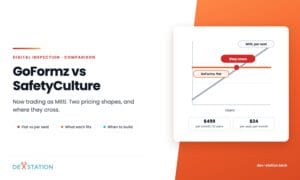
GoFormz vs SafetyCulture (iAuditor, now Mitti): Which Fits Your Inspections
A factual comparison of GoFormz and SafetyCulture, now trading as Mitti: pricing shapes checked in September 2026, what each is built for, and when to build instead.
Co-Founder of Dev Station Technology

A factual comparison of GoFormz and SafetyCulture, now trading as Mitti: pricing shapes checked in September 2026, what each is built for, and when to build instead.
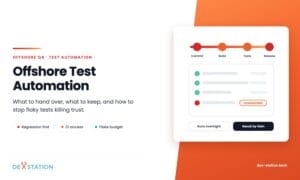
What offshore test automation is good at, the six things to settle before the first script, how embedded testing changes the shape, and a ninety day path.
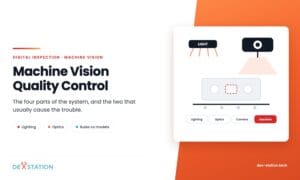
The four parts of a machine vision quality control system, when rules beat trained models, what an end of line cell really costs, and how to evaluate one.
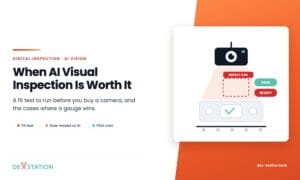
A fit test for AI visual inspection: the five conditions that decide it, when rule-based vision or a gauge is the better answer, and what a pilot really costs.
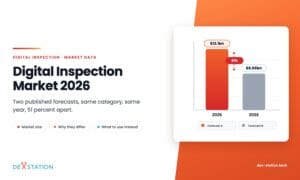
Published forecasts for inspection management software disagree by more than half for 2026. What the figures say, why they differ, and which numbers belong in a business case.
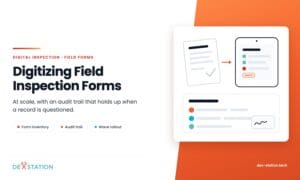
A practical path for digitising a large form estate: the inventory first, the six parts of a real audit trail, form rebuild rules, and a wave rollout.
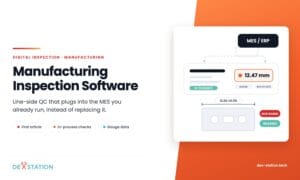
How line-side quality inspection differs from field inspection, the six connections to an existing MES, and a pilot that proves the case on one line.
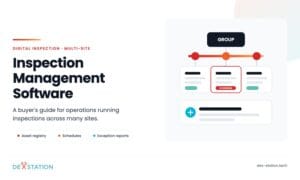
How inspection management software differs from an inspection app, the data model that decides whether it scales past ten sites, and a procurement path for multi-site operations.
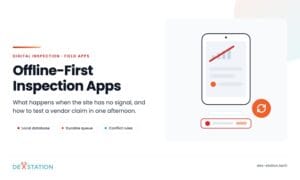
What vendors mean by offline, what an offline-first inspection app needs underneath, the five ways offline sync fails in the field, and an afternoon test that settles any vendor claim.

A buyer guide to mobile inspection apps: the six field realities that decide off-the-shelf versus custom, what it really costs over three years, and how to test before you sign.
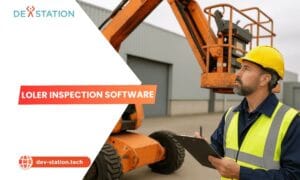
LOLER inspection software explained: the six and twelve month intervals, required report contents, retention rules and the features UK duty holders actually need.
Key Takeaway Autonomous AI agents execute multi-step B2B workflows across CRMs, ERPs, and APIs without human intervention, reducing operational costs by up to 38% within