IoT in Retail Industry: 5 Ways It Shapes Future
Key Takeaway Definition. IoT in retail uses connected sensors, tags, and devices to create intelligent store ecosystems that automate operations and personalize customer engagement. Problem.

Co-Founder of Dev Station Technology

Key Takeaway Definition. IoT in retail uses connected sensors, tags, and devices to create intelligent store ecosystems that automate operations and personalize customer engagement. Problem.
Key Takeaway Definition. IoT applications in manufacturing embed sensors and connected devices across factory assets to collect real-time data on equipment health, production output, energy
Key Takeaway Real-time production monitoring uses IoT sensors, gateways, and cloud/edge computing to deliver live visibility into every machine and process on the factory floor.
Key Takeaway Definition. A digital twin is a dynamic, real-time virtual replica of a physical asset, process, or system that is continuously updated with live
Key Takeaway IoT energy management connects factory machinery with sensors and analytics to monitor, control, and optimize power consumption in real time. Factories typically save
AI vision quality control in smart factories fuses deep learning models with high-resolution industrial cameras to inspect, classify, and triage defects in real time, replacing
Key Takeaway Predictive maintenance with IoT uses sensor data and machine learning to forecast equipment failures before they occur, reducing unplanned downtime by up to
IoT supply chain visibility in manufacturing transforms how operations track raw materials, work-in-progress, and finished goods from origin to delivery. By deploying connected sensors, RFID
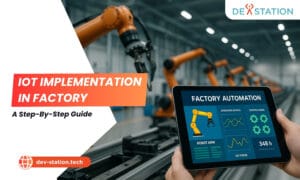
Key Takeaway IoT implementation in factory environments connects sensors, machines, and analytics platforms to deliver real-time production visibility. A structured rollout: define goals → assemble
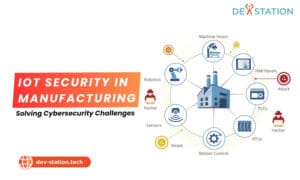
IoT security in manufacturing has become mission-critical as connected factories adopt Industry 4.0 technologies at scale. The convergence of Information Technology (IT) and Operational Technology
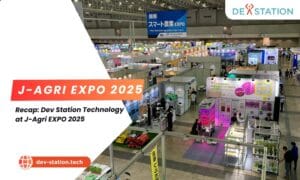
Key Takeaway Dev Station Technology exhibited at J-Agri EXPO 2025, showcasing smart agriculture solutions including IoT farm monitoring, AI-powered crop analytics, and precision farming dashboards.
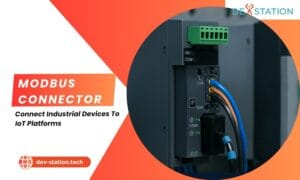
Key Takeaway A Modbus connector is a hardware gateway or software bridge that translates data from Modbus RTU/TCP industrial devices (PLCs, sensors, energy meters) into