







Dev Station Technology

Digital elevator inspection

Statutory lift inspections that survive an audit

We build inspection platforms for companies responsible for lifts across a portfolio of buildings: scheduled examinations, defect to repair tracking, and certificates a regulator will accept.

Periodic examination, car 2 of 3

Suspension ropesWear and lay length: pass
Safety gear and overspeedTested under load: pass
Landing door interlocksAll 9 floors: pass
Brake testBelow spec: repair order raised
Next examinationDue in six months

The defect becomes a job before the engineer leaves the site.

6 monthsLOLER interval for a lift carrying people
12 monthsFor goods-only lifting equipment
10 to 14 weeksA pilot on one building
OfflineExaminations captured in shafts with no signal
What we build

Six things a lift inspection platform has to get right

From the asset register to the certificate
Assets
Register down to the carSite, building, lift, car, component
Examination scheduleSix and twelve-monthly cycles
On site
Offline captureRecords queue in the shaft
Instrument readingsLoad, brake and overspeed values
After
Defect to repairA failed check raises a job
CertificateIn your format, with examiner credentials

Software carries no LOLER certification of its own. It has to produce a record your competent person and insurer accept.

Fit check

Should you build, or buy a product?

Pick us when

  • Your own competent person writes the schedule of examination
  • Certificates must follow a format an insurer or regulator dictates
  • Engineers work for hours in basements with no signal
  • A defect must become a job in your own system automatically

Look elsewhere when

  • A standard service schedule and job sheet covers the work
  • Your certificate can look however the vendor prints it
  • You manage tens of units, not thousands
  • Nothing has to be read from test equipment
Two different records

Examination and maintenance behave differently

Software that treats an examination as another job type will fight you
Maintenance

Keeps the lift running

  • Produces a job sheet
  • Scheduled by the service contract
  • Signed by the engineer who did it
Thorough examination

Checks it is safe to keep using

  • Produces a report an insurer may read years later
  • Interval set by LOLER Regulation 9 or a written scheme
  • Signed against a competent person record

In the US the cycle follows ASME A17.1, with a Category 1 test each year and a Category 5 full-load test every five years.

How the work runs

One building running before you commit to the portfolio

From schedule to rollout
Weeks 1 to 2

Read the schedule

Your schedule of examination and current certificate, with the person who signs them.

Weeks 3 to 4

Design asset and workflow

Asset hierarchy, cycles, defect severities and the certificate layout.

Weeks 5 to 12

Build and pilot

One engineer, one building, real examinations. Demo every two weeks.

Ongoing

Roll out

Region by region, then the link into job management or finance.

We have not yet delivered a lift-specific platform. We have shipped the three hard parts of one.

Technologies

What we build on

None of this is exotic. The difficulty is a basement with no signal and a report that has to be right.

Builds

The nearest thing we have built

Digital testing platform for anchor and torque checks built by Dev Station
Case study, United Kingdom

Statutory testing of anchors and torque, in the field

Scheduled examinations against a defined procedure, capture where signal is unreliable, pass and fail logic tied to load values, and a certificate at the end the duty holder can file.

CertificatesProduced at sign-off, in the client format
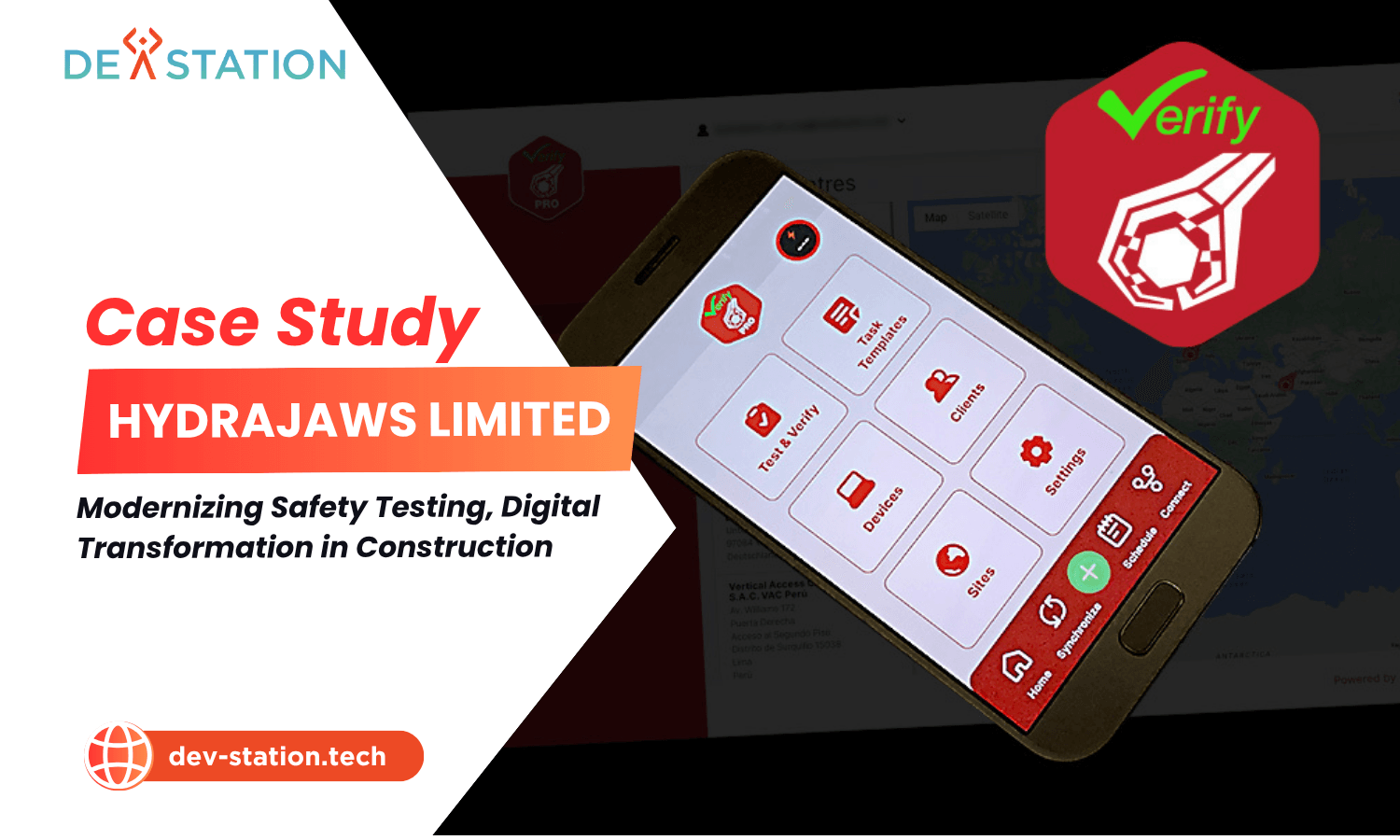
Hydrajaws safety testing app built by Dev Station
Case study, United Kingdom

Readings taken from the instrument

We integrated the KTC SDK so torque and pull readings land in the record as measured. The same approach covers load, brake and overspeed values.

500%Rise in potential clients after launch

Tell us what you inspect

Three fields. An engineer reads it, and you get an answer within one working day.

  • We look at your schedule of examination and your certificate
  • You get a written view on buy or build, with a budget range
  • No obligation, and no phone number needed to start
FAQs

Questions we get on the first call

Have you built a lift inspection system before?

No lift-specific platform yet. We have built statutory inspection for work-at-height anchor and torque testing, which shares the same shape: a defined procedure, offline capture, pass and fail against measured values, and a certificate.

How often does a lift have to be examined?

In the UK, LOLER 1998 Regulation 9 sets at least every six months for a lift carrying people and every twelve for goods-only equipment, or the interval a written scheme sets. The HSE guidance covers who counts as a competent person.

Can a failed check raise a repair job automatically?

Yes, inside the platform or pushed into the job system you already run, including older systems with no modern interface.

Can it replace our CAFM system?

Usually it should not. If a CAFM or CMMS already holds the estate, the cheaper build sits beside it and pushes defects across as jobs.

Send us your schedule of examination

That document plus a sample certificate tells us almost everything. Thirty minutes and you will know whether building is worth it for your portfolio.

Let's Talk