Planned inspection rounds
Routes across a portfolio with evidence captured for each asset.
Planned rounds across a portfolio, statutory checks with the escalation clock built in, and remedial actions tracked to a contractor and a date.
Facilities software is usually sold on work orders. What gets a client sacked is the compliance register being wrong on the day somebody asks for it. We build backwards from that document.
Which means the record has to carry enough for a stranger to continue.
Some obligations start a timer the moment a fault is found. That belongs in the software, so nobody has to remember it on shift.
Routes across a portfolio with evidence captured for each asset.
Fire, water, gas and lifting, each with its own interval and its own proof.
Every defect tied to a contractor, a date and a closing photo.
Offline first, because plant rooms and basements are where the checks happen.
Issued, time-boxed and closed, with the audit trail attached to the asset.
One view of what is compliant, what is due and what is late across every site.
Two of these are timers. Software that treats them as fields will miss them.
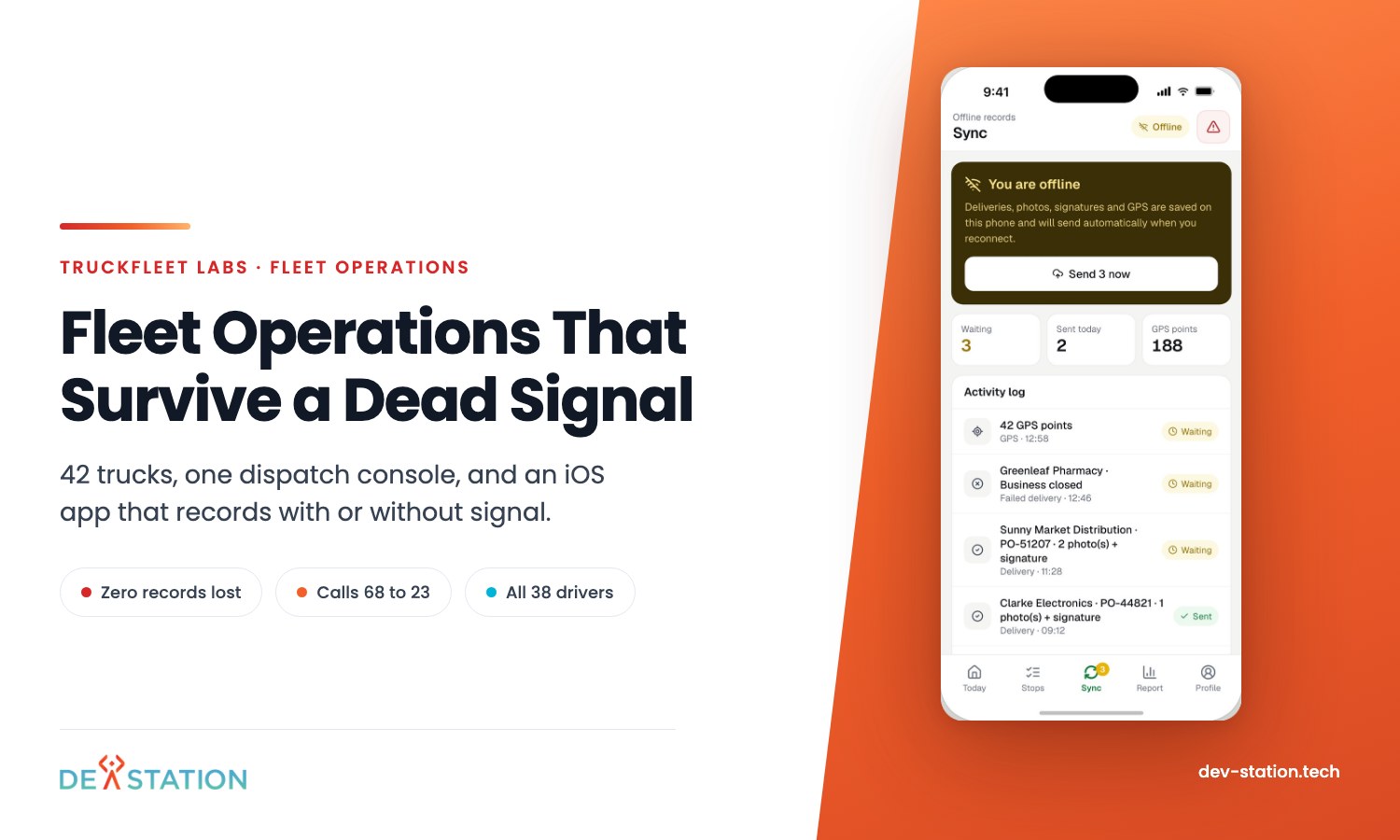
Different sector, same hard part: people working where the signal drops, producing records somebody disputes later. Every record is written to the device first and drained from a queue the user can watch.
Portfolios where the compliance register is the thing that gets audited.
Firms delivering planned maintenance against obligations that belong to the client.
Where statutory checks and resident reports land in the same queue.
Universities, hospitals and corporate estates running their own engineers.
Related reading: safety inspection apps, field inspection digitisation and offline-first apps.
Usually not. The common job is making the statutory side correct and feeding the result into the CAFM you already run.
That is normally a requirement, and it shapes how permissions and seats are designed from the start.
Different intervals on the same round is the normal case. The model has to carry the interval per asset type.
You do, from the first commit. Repositories and cloud accounts stay in your name.
Thirty minutes with the engineers on what you have to prove, how often, and where the evidence currently lives.