Charge point monitoring
Status and faults per connector in near real time.

Charge point monitoring, fault tracking and the open data a public network has to publish. Built on the self-hosted IoT platform we delivered to a client who owns every record.
The Public Charge Point Regulations set a reliability level for rapid charge points and require contactless payment, a helpline and open data. An operator can only meet them if it measures uptime per connector and can show the figures.
a self-hosted, multi-tenant IoT platform with role-based access and reporting built in
We have no published EV charging case. We say so on the first call and show the closest work.
Status and faults per connector in near real time.
Uptime calculated the way the regulations measure it.
Charger data over MQTT, with a broker in front.
Payment flows joined to the session record.
Location and status published in the format the rules ask for.
Faults assigned and closed in the field, offline.
These come from gov.uk guidance on the Public Charge Point Regulations 2023.
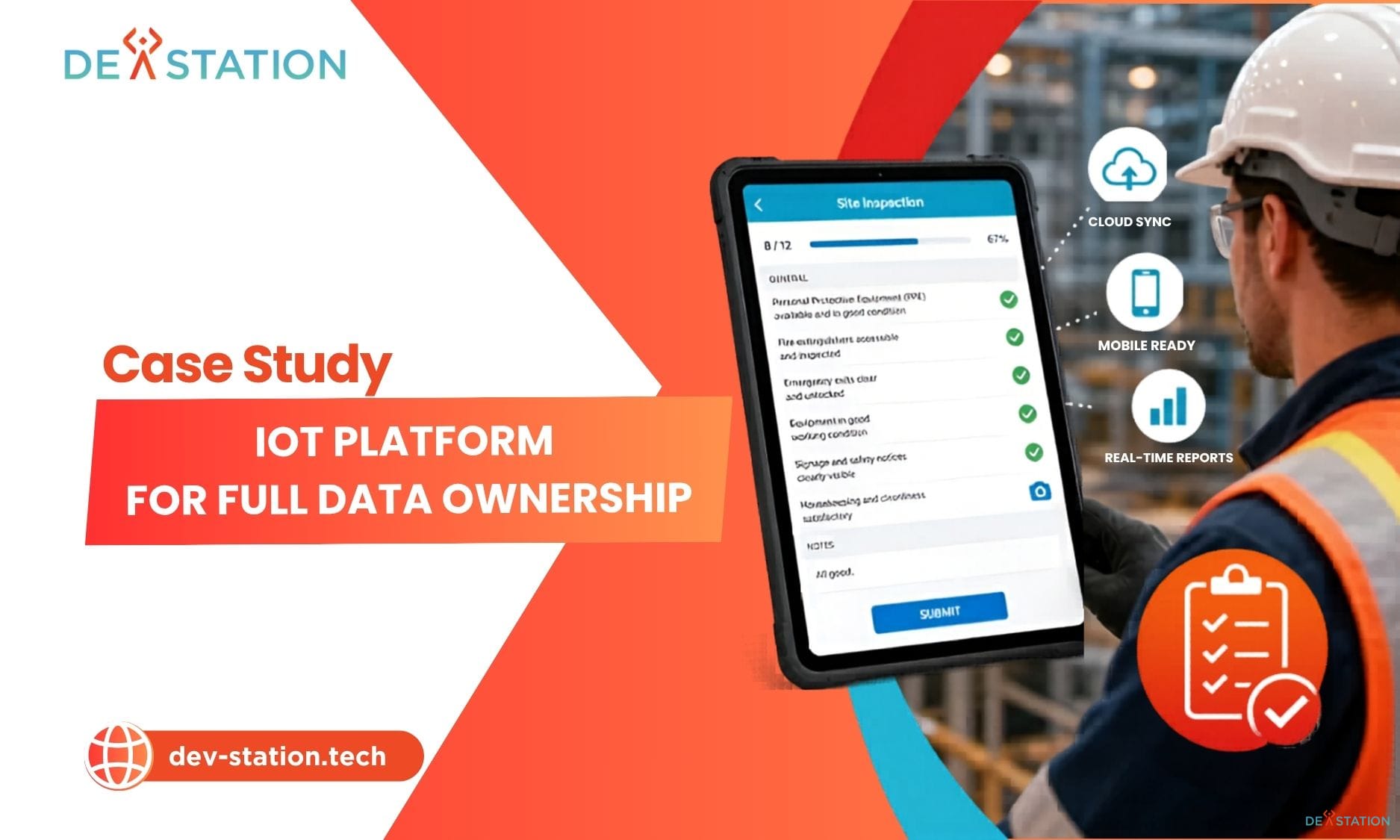
The client wanted off third-party IoT SaaS without losing the enterprise features their own customers expected. We built a self-hosted, white-labelled platform on an open-source base, with role-based access, single sign-on and reporting built in.
Networks that need reliability figures they can defend.
Sites with many chargers and few engineers.
Landlords who host chargers and owe the data.
Product teams who need a monitoring platform under their own brand.
Related reading: energy and utilities software, e-scooter software and automotive software.
Not yet published. We say so on the first call and show the closest work, which is a self-hosted IoT platform with telemetry ingest.
Usually over OCPP, the maker API or MQTT. Send the models and we will say what we can read.
No. That advice comes from your compliance team and the Office for Zero Emission Vehicles. We build the measurement they specify.
You do, from the first commit. Repositories and cloud accounts stay in your name.
Thirty minutes with the engineers on your hardware, how uptime is measured now and what you report.