Dev Station Technology

DevOps

Kubernetes consulting from a team that ships containers first

We have no published Kubernetes build. We have shipped a Docker multi-stage deployment and an auto-scaling microservices platform on AWS, and we say plainly where that stops.

0Published builds on Kubernetes
1 yearPatch support per minor version, about
1.34Reached end of life on 27 Oct 2026
1.35Next to leave support, on 28 Feb 2027
What we build

What we would take on with Kubernetes

Container images first

Multi-stage Docker builds, as on TruckFleet.

Cluster upgrades

Staying inside the three minor versions the project supports.

Services that scale apart

Split services, as on the AWS microservices platform.

Delivery pipelines

Daily CI/CD deployments, as on the same platform.
Architecture

Where Kubernetes would sit

The nearest published work, with Kubernetes drawn in
Images
Docker logo
Docker multi-stage buildTruckFleet Labs
Orchestration
Kubernetes logo
KubernetesWhere it would sit
Services
.NET logo
.NET microservicesCrypto platform
Cloud
AWS logo
AWS KinesisResilient, auto-scaling

Illustration. A dashed outline marks where the technology would sit. We have no published build on it.

Versions

Which Kubernetes release is supported

End-of-life dates for the supported minors
27 Oct 2026

1.34 end of life

Already out of the three-version window.

28 Feb 2027

1.35 end of life

The next version to leave support.

28 Jun 2027

1.36 end of life

Supported until then.

28 Oct 2027

1.37 end of life

The newest supported minor.

Source: kubernetes.io/releases, checked 2 November 2026. The project maintains release branches for the three most recent minor versions.
Builds

The closest builds we can show you

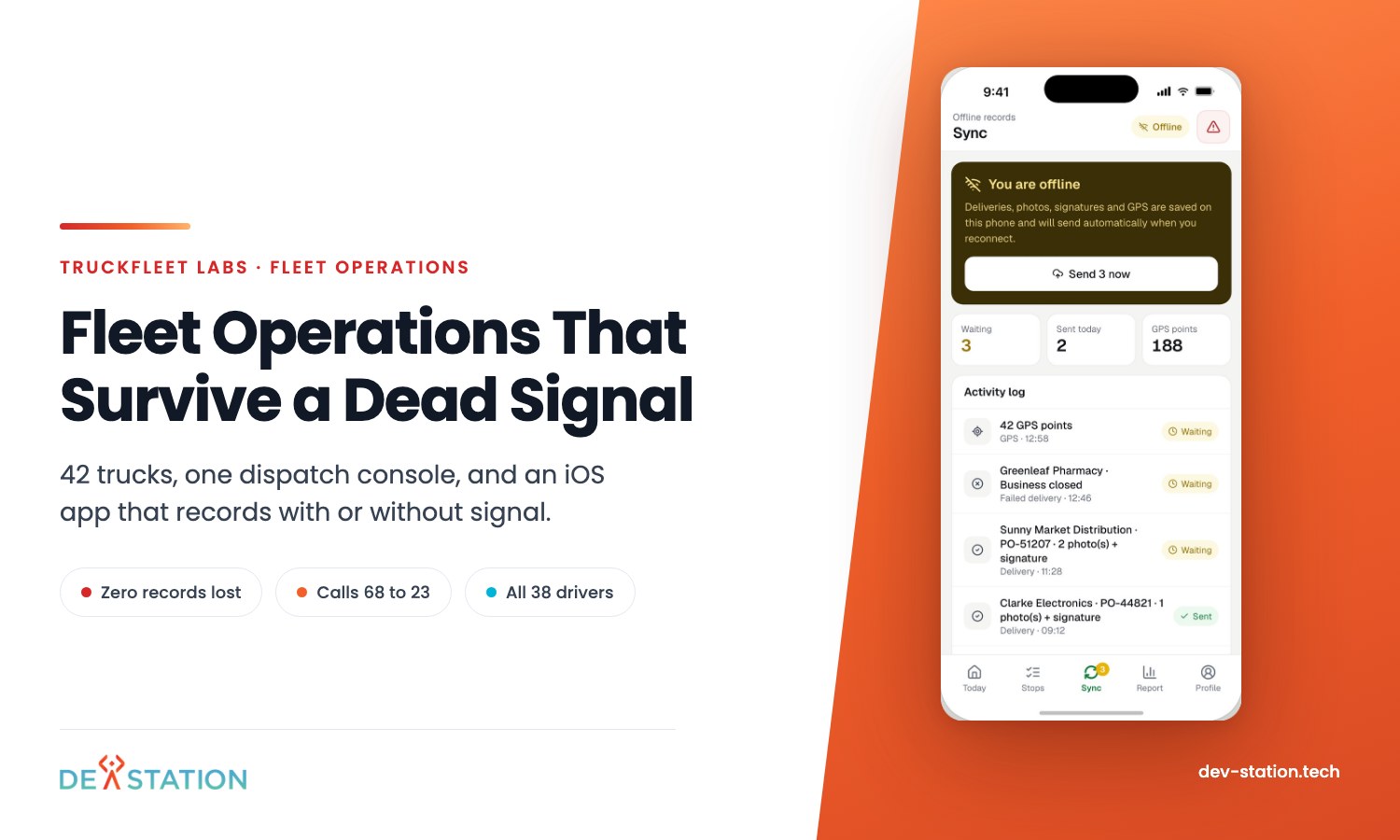
TruckFleet Labs dispatch console and driver app built by Dev Station
Logistics, fleet operations

TruckFleet Labs

The container half of the job: a Docker multi-stage build with Docker Compose behind a FastAPI back end.

38Drivers on the app by week three
Cryptocurrency marketing platform built by Dev Station
Fintech, Hong Kong

Cryptocurrency marketing platform

The scaling half: microservices on AWS Kinesis, daily CI/CD deployments, 30,000+ concurrent users.

30,000+Concurrent users the platform had to support
Fit check

When Kubernetes is the right call

Pick Kubernetes when

  • Many services must scale on their own
  • You already run containers and outgrew one host
  • Your team can own a cluster, or you want help to plan one

Look elsewhere when

  • A few services on one host, where Docker Compose is enough
  • You need a published Kubernetes build to inspect, which we do not have
  • Nobody on your team will run the cluster
Stack

What Kubernetes usually sits beside

Docker logoDocker
AWS logoAWS
Azure logoAzure
Terraform logoTerraform
Google Cloud logoGoogle Cloud
.NET logo.NET
FAQs

What buyers ask first

Which Kubernetes versions are supported?

The project maintains the three most recent minor versions: 1.37, 1.36 and 1.35, with about one year of patch support each. Version 1.34 reached end of life on 27 October 2026.

Do you have a published Kubernetes build?

No. We say so on the first call and show the nearest work, which is a Docker Compose deployment and a microservices platform on AWS.

Do we need Kubernetes at all?

Sometimes. Our published platform deploys with Docker Compose. We look at your service count and your team before recommending a cluster.

Who owns the code and the cloud accounts?

You do, from the first commit. Repositories and cloud accounts stay in your name.

Tell us how many services you run

Thirty minutes on your containers, your hosts and your team. No sales pitch.

Let's Talk