Network asset inspection
Dispersed assets, small teams, and evidence that has to come back from places with no coverage.
Network inspection, meter and sensor telemetry, and the pipelines that turn survey data into something a planner can act on. We have built a self-hosted IoT platform a client owns outright.
The check itself is rarely hard. Getting the evidence back from a substation, a pole or a pumping station with no coverage, and turning a day of survey footage into a decision, is where utility projects actually fail.
A drone flight produces more data in an hour than the inspection logic will handle in a week. Plan the pipeline before the clever part.
A monitoring platform you rent is a platform somebody else can reprice. The one we built runs on-premise, private cloud or hybrid.
Dispersed assets, small teams, and evidence that has to come back from places with no coverage.
Ingest, storage and triage for capture volumes that break a normal upload.
Readings arriving faster and less reliably than a request cycle tolerates, handled over MQTT.
Multi-tenant, white-labelled, and deployed where you want it.
Consumption and condition data joined to the asset it came from.
The result belongs in the system of record.
Two of these moved recently, and most asset teams have not caught up.
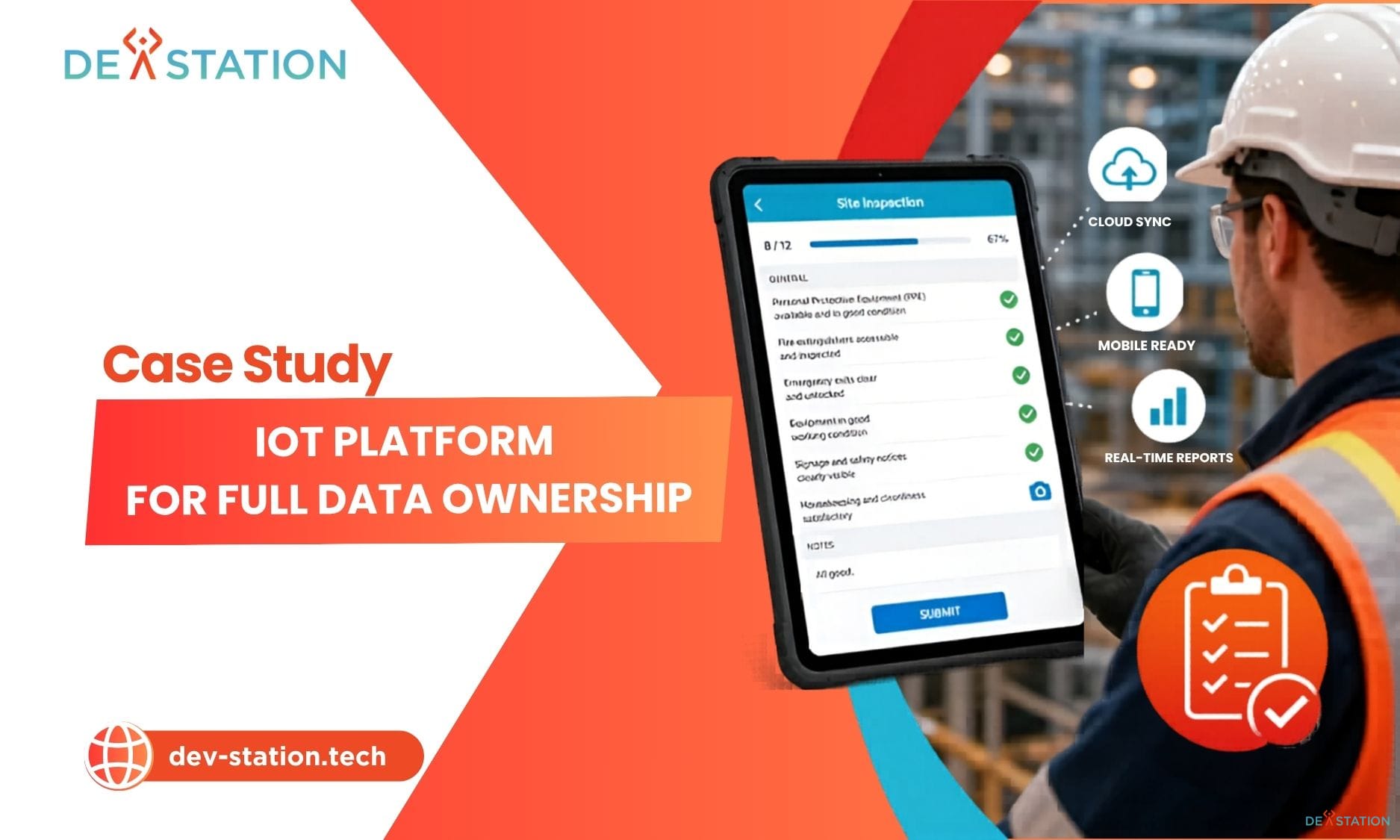
The client wanted off third-party IoT SaaS without losing the enterprise features their own customers expected. We built a self-hosted, white-labelled platform on an open-source base, with role-based access, single sign-on and reporting built in, features SaaS vendors usually keep for the top tier.
Electricity, water and gas networks inspecting assets spread across a region.
Wind and solar, where the asset is remote and the downtime is the cost.
Firms inspecting and maintaining on behalf of the network owner.
Product teams who need the platform under their own brand.
Related reading: smart utility solutions, drone inspection data and energy monitoring.
That is usually the first thing we scope. The pipeline, storage and triage decide whether the programme scales.
No, but you can. The platform we built runs on-premise, in a private cloud or hybrid, and the client owns the whole stack.
Yes, and it should. A survey result that does not reach the register is a second system to reconcile.
You do, from the first commit. Repositories and cloud accounts stay in your name.
Thirty minutes with the engineers on what you inspect, how the evidence gets back, and where it has to land.