iOS and Android from one codebase
One app for both stores, as on our React Native build.

We have no published Flutter build. We have shipped React Native, .NET MAUI, Xamarin and native iOS apps, and we help you choose with that evidence on the table.
One app for both stores, as on our React Native build.
A mobile app and a web app planned together.
A straight answer on Flutter, React Native and .NET MAUI for your app.
Manual and Selenium testing, as on our React Native build.





Illustration. A dashed outline marks where the technology would sit. We have no published build on it.
Source: docs.flutter.dev, Flutter 3.47 release, 12 August 2026, and our published case studies.

A React Native app beside React, Node.js and .NET, the cross-platform build nearest to Flutter.

A .NET MAUI field app with Bluetooth LE, GPS and photo capture, the cross-platform build with device work.
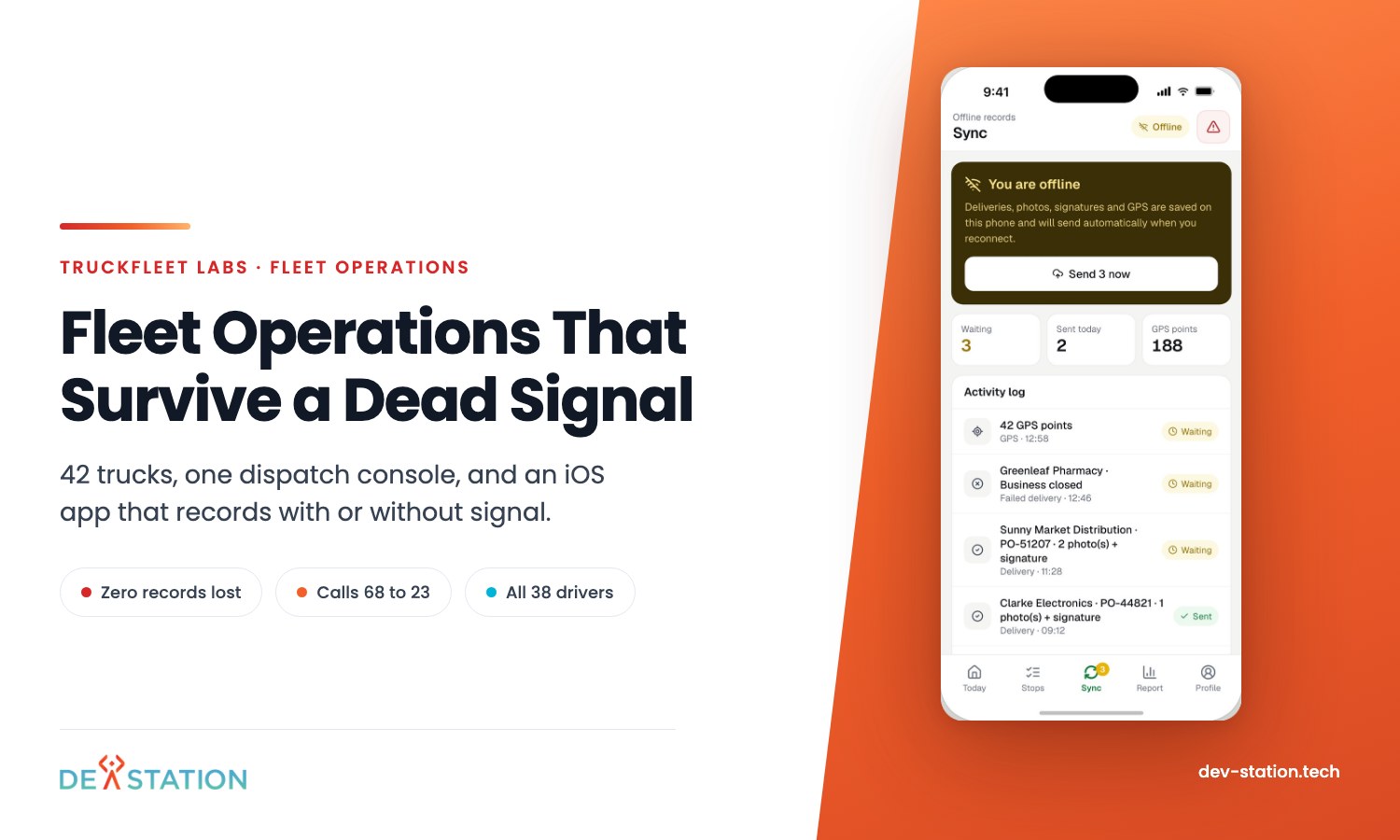
A native iOS driver app that works with no signal, the build where we chose native over cross-platform.
React Native Xamarin
 iOS
 AndroidNode.jsAWS
Flutter 3.47, released on 12 August 2026. Widget Previews became stable in that release.
No. We say so on the first call and show the nearest work, which is a React Native app, a .NET MAUI app and a native iOS app.
Choose React Native when your web team writes React. Choose .NET MAUI when the app sits on a .NET back end and talks to Bluetooth devices. Flutter is worth a look when screens and animation drive the product.
You do, from the first commit. Repositories and cloud accounts stay in your name.
Thirty minutes on your app, your team and the toolkits on the table. No sales pitch.