Site and cabinet inspection apps
Checks with photo evidence, working at the foot of a mast with no signal.
Site inspection, asset records and a monitoring platform you host yourself. Built on the self-hosted IoT platform we delivered to a client who owns every record.
The Electronic Communications (Security Measures) Regulations 2022 and the Telecommunications Security Code of Practice put staged duties on public telecoms providers. The evidence for many of them sits in sites, cabinets and masts that engineers visit.
a self-hosted, multi-tenant IoT platform that feeds the systems an operator already runs
We have no published telecom case. We say so on the first call and show the closest work.
Checks with photo evidence, working at the foot of a mast with no signal.
What is installed where, when it was last inspected and by whom.
Multi-tenant, white-labelled and deployed where your security team wants it.
Readings from site equipment over MQTT, with a broker in front.
The inspection result has to reach the system the work order lives in.
Contractors see their sites and nothing else, with sign-in handled for you.
These come from the DSIT page on the regulations and Code of Practice, published on gov.uk.
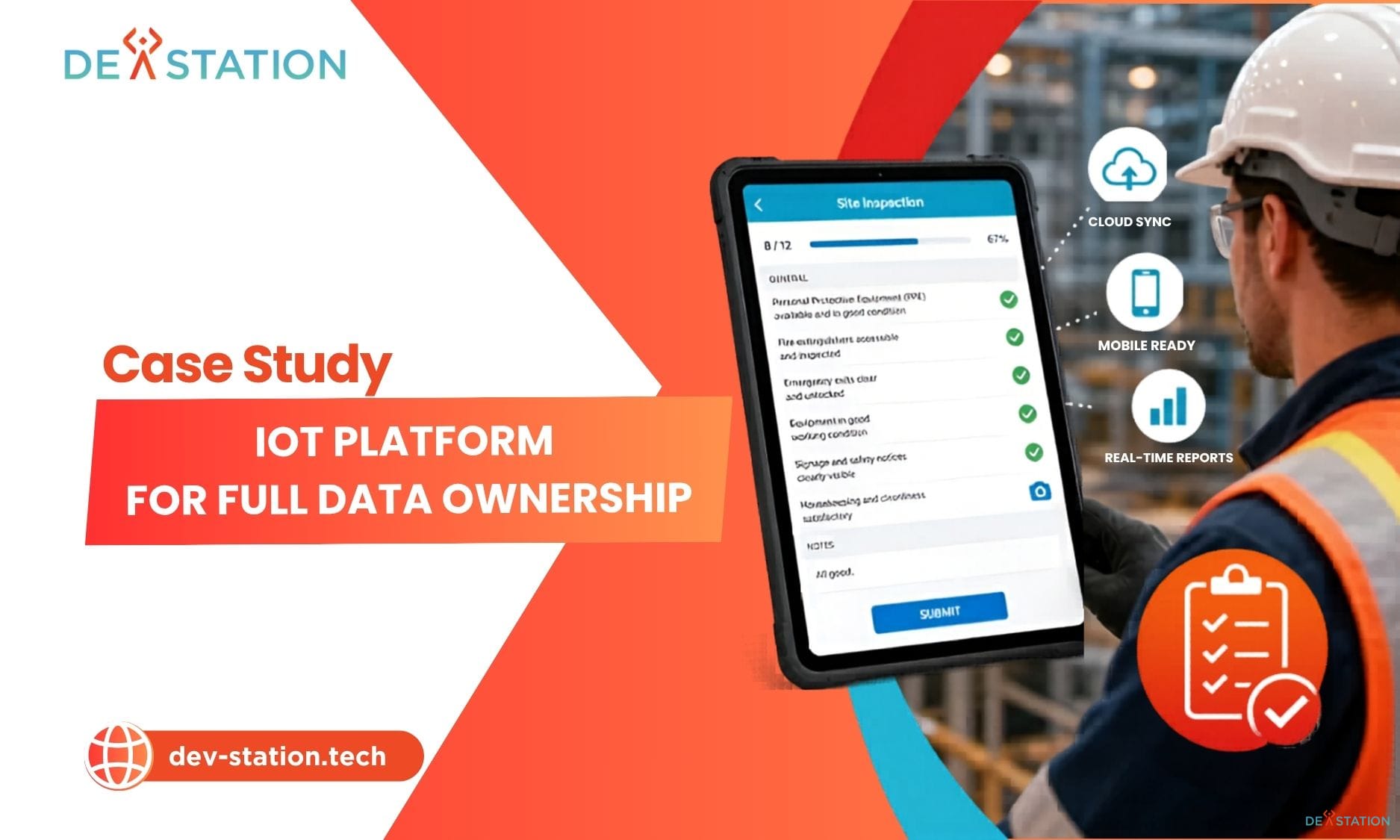
The client wanted off third-party IoT SaaS without losing the enterprise features their own customers expected. We built a self-hosted, white-labelled platform on an open-source base, with role-based access, single sign-on and reporting built in, features SaaS vendors usually keep for the top tier.
Providers that must evidence security measures across many sites.
Asset owners with inspection teams spread across a region.
Teams visiting sites on behalf of the network owner.
Companies that need the monitoring platform under their own brand.
Related reading: energy and utilities software, manufacturing software and SaaS software.
Not yet published. We say so on the first call and show the closest work, which is a self-hosted multi-tenant IoT platform.
No. That sits with your security and compliance team and Ofcom. We build the records and systems they specify.
Yes. The platform we built runs on-premise, in a private cloud or hybrid.
You do, from the first commit. Repositories and cloud accounts stay in your name.
Thirty minutes with the engineers on what you inspect, how the evidence gets back and where it has to land.