In-line quality inspection
Pass and fail logic per part, captured at the cell while the part is still in hand.
In-line quality checks, machine telemetry and the platform underneath both. We have built a self-hosted IoT platform a client owns outright.
A quality check produces a record somebody audits later. A machine produces a reading somebody acts on now. Both fail in the same place, which is the handover into the system that already runs the plant.
A platform you host is a platform nobody can reprice. We built one on an open-source base so the client owns every device, dashboard and record.
ERP, CMMS and SCADA are where the value lands. Treating them as phase two is how pilots stay pilots.
Pass and fail logic per part, captured at the cell while the part is still in hand.
The trail from a failed part to the action taken, in a form an auditor can follow.
Ingest, storage and alerting for readings that arrive faster than a request cycle tolerates.
Multi-tenant, self-hosted, and carrying your brand.
The result has to reach the system the plant already runs on.
Defect and presence detection where the defect is visible and the image volume justifies a model.
These decide the data model long before anyone argues about dashboards.
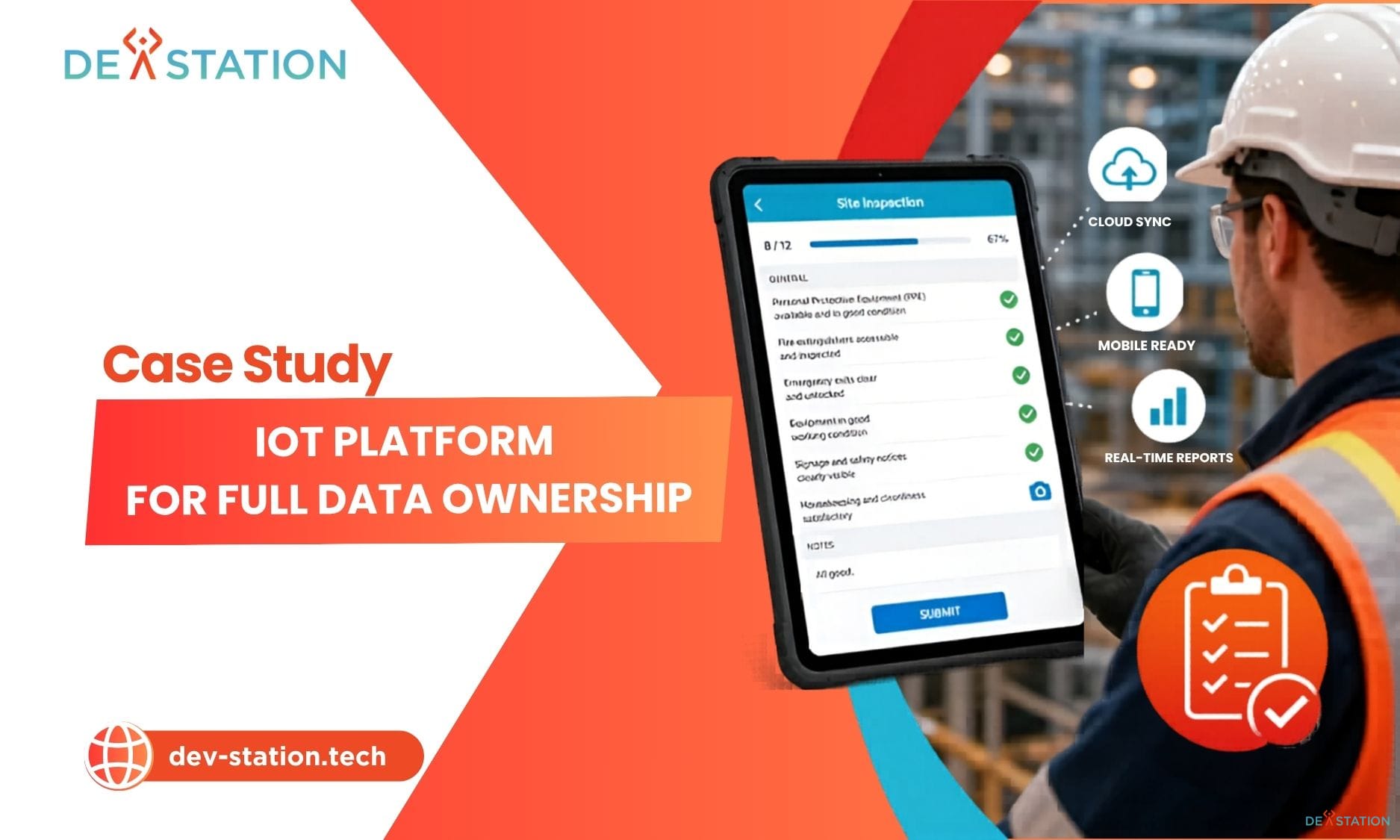
The client wanted off third-party IoT SaaS without losing the enterprise features their own customers expected. We built a self-hosted, white-labelled platform on an open-source base, with role-based access, single sign-on and reporting built in, features SaaS vendors usually keep for the top tier.
Plants where a quality check has to happen at the cell and still reach the quality office.
Makers who want the monitoring platform shipped under their own brand.
Companies tired of paying a SaaS vendor for features they could own.
Where the CMMS is the system of record and everything has to feed it.
Related reading: manufacturing inspection software, IoT in manufacturing and AI vision quality control.
Usually yes. We treat the integration as the first scope item, because a platform that does not reach the systems you run is a second system to maintain.
No, but you can. The platform we built runs on-premise, in a private cloud or hybrid, and the client owns the whole stack.
Only where the defect is visible and there are enough images to train on. For a threshold check, a rule is cheaper and easier to defend.
You do, from the first commit. Repositories and cloud accounts stay in your name.
Thirty minutes with the engineers on the check your line runs now and the system the result has to reach.