Key Takeaway
IoT smart home automation connects everyday devices, lights, locks, thermostats, cameras, through four core technologies: sensors & devices, connectivity protocols (Wi-Fi, Zigbee, Z-Wave, Matter), a central hub or platform, and a user interface. Together they cut energy bills by up to 22%, strengthen security, and turn manual chores into hands-free routines. The global smart home market is projected to grow from USD 116.81 billion in 2025 to USD 289.64 billion by 2033.
01. What Is IoT Smart Home Automation?
Key Takeaway
- Key insights and actionable takeaways from this article
- Practical guidance for implementation
- Best practices and common pitfalls to avoid
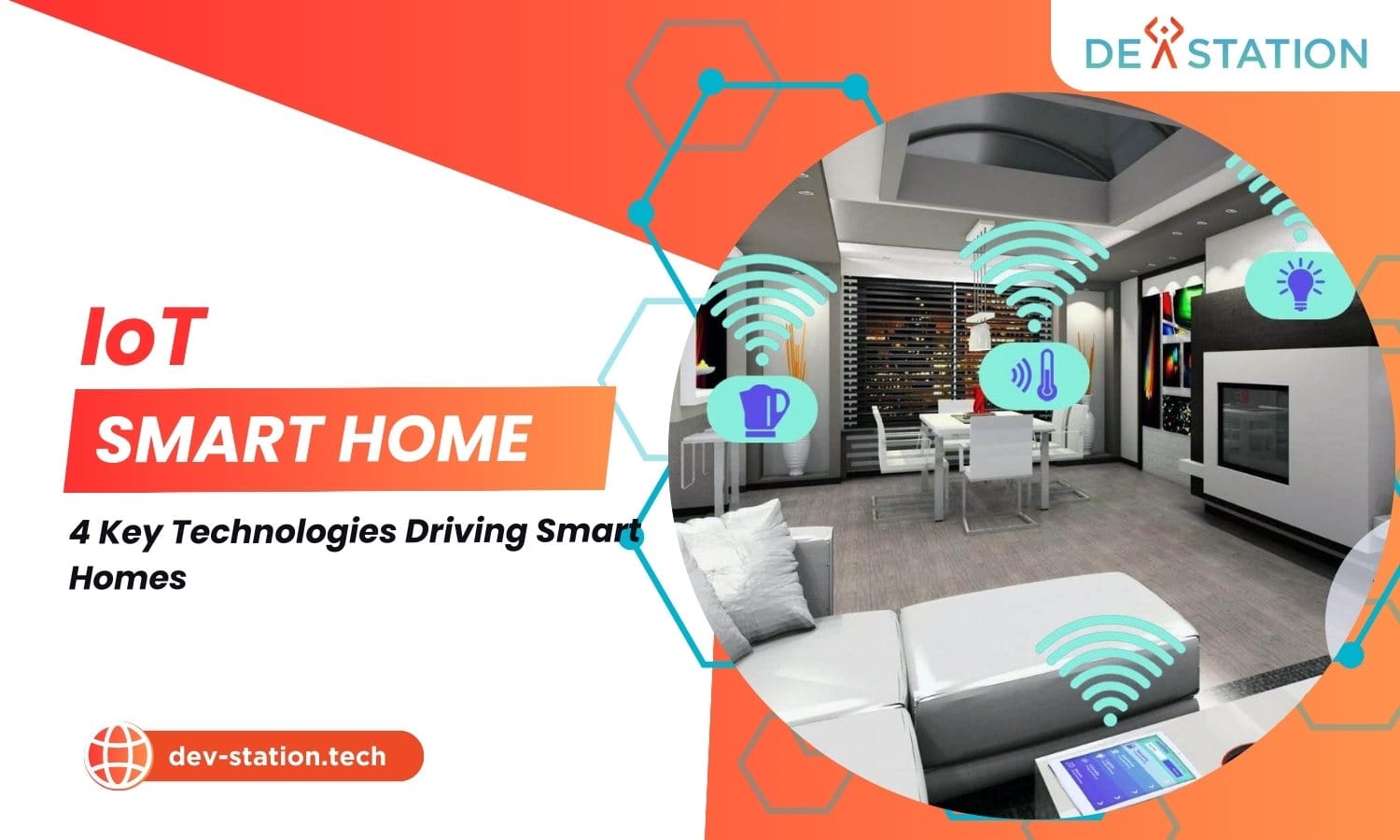
IoT smart home automation connects physical devices to the internet so they can sense, communicate, and act on your behalf, creating a living space that responds to your routines without constant manual input. A motion sensor notices you walk in, a hub interprets that signal, a protocol carries the command, and a smart bulb lights the room. That chain, repeated across dozens of devices, is what turns an ordinary house into an intelligent home.
The architecture behind it is layered: sensors and actuators gather and execute, connectivity protocols move the messages, a hub or platform processes and decides, and a user interface lets you stay in control. Each layer is essential, remove one and the automation collapses. This explainer walks through all four, compares the leading protocols, quantifies the benefits, and shows where the same blueprint is already reshaping other industries.
The four foundational technologies of IoT home automation are the sensors and devices that gather data, the connectivity protocols that enable communication, the central hub or platform that processes information, and the user interface that lets you control the system.
$116.81B
Global smart home market, 2025
$289.64B
Projected market size by 2033
56%
Consumers who cite energy savings as top reason to adopt
02. Four Technologies That Power Every Smart Home
1 · Sensors & Devices
The physical layer: sensors collect environmental data (motion, temperature, contact, humidity) and actuators act on commands (lights, locks, thermostats, plugs). Together they are the eyes, ears, and hands of the home.
2025 trend: Multi-sensor units combining sound, light, and temperature detection are becoming standard, giving a fuller picture of security threats in one device.
2 · Connectivity Protocols
The communication layer. Wi-Fi, Bluetooth, Zigbee, Z-Wave, and the rising Matter standard move messages between devices and the hub, each trading off range, power, speed, and reliability.
2025 trend: Matter 1.2 adoption has reached 40%, moving the industry toward true cross-brand interoperability.
3 · Central Hub & Platform
The brain. The hub translates between protocols, processes sensor data, and executes automation rules, e.g., “if the front door opens after sunset, turn on the entry lights and notify my phone.”
2025 leaders: Google Home (30%), Amazon Alexa (25%), Apple HomeKit (20%), and open-source Home Assistant (10%).
4 · User Interface
The control layer you touch directly, smartphone apps, voice assistants, and wall-mounted dashboards, where you set schedules, build automations, and monitor everything from energy to camera feeds.
2025 scale: 72 million smart speakers are in use across U.S. households, making voice a primary control method.
03. Connectivity Protocols Compared
Smart devices need a common language. Your home Wi-Fi is the most familiar, but it isn’t always best for small, battery-powered sensors. Zigbee and Z-Wave form mesh networks where mains-powered devices act as repeaters; Matter runs as an application layer on top of Wi-Fi and Thread to solve cross-brand incompatibility. Here’s how the key protocols stack up.
| Protocol | Best For | Key Advantage | Power Use |
|---|---|---|---|
| Wi-Fi | Cameras, smart speakers | High speed; direct internet, no hub needed | High |
| Zigbee | Sensors, smart lighting | Low power; reliable mesh networking | Low |
| Z-Wave | Locks, alarms, security | Lower frequency, less interference | Low |
| Matter | Universal interoperability | Unified standard, devices from different brands just work | Varies |
Matter is not a radio protocol itself but an application layer that runs on top of Wi-Fi and Thread. Its goal is to solve the biggest headache for smart home users: incompatibility. With Matter 1.2 adoption reaching 40% in 2025, it is well on its way to becoming the universal standard.
04. What You Gain From an Automated Home
Adoption is driven by tangible, measurable benefits. Homeowners with smart thermostats see utility bill reductions of 5 to 22%, and studies show 10 to 15% savings on heating and cooling annually. Smart lighting can cut electricity consumption by up to 50% versus traditional bulbs. Beyond cost, automation delivers convenience, security, and personalization.
5 to 22%
Utility bill reduction with smart thermostats
Up to 50%
Electricity saved with smart lighting
10 to 15%
Annual heating & cooling savings
Convenience
Automating routine tasks, lights on when you arrive, coffee brewing at 7 a.m., vacuums on a schedule, frees up time and mental energy every day.
Security
Cameras, smart locks, and sensors deliver real-time alerts and remote monitoring, peace of mind whether you are home or away. A U.S. burglary occurs roughly every 30 seconds.
Personalization
Modern systems use AI to learn your habits, adjusting temperature, lighting, and even music to anticipate your needs without a single command.
05. How to Put It Into Practice
From a starter kit to a fully DIY hub, here are the practical paths to building your IoT smart home, plus the security practices that keep it safe.
Building a DIY Smart Home Hub
For tech enthusiasts who want maximum control and privacy, a DIY hub keeps all data and processing on your local network, so the system works even if the internet drops. The hardware is simple and affordable:
Choose your board: A Raspberry Pi 4 or 5 provides more than enough processing power to run a sophisticated home automation system.
Flash the OS: Use Raspberry Pi Imager to write a smart home platform image (Home Assistant or openHAB) onto a 32 GB+ microSD card.
Add a radio dongle: Plug in a Zigbee or Z-Wave USB stick so the Pi can talk to low-power sensors and locks.
Configure & automate: Open the web interface, add devices from hundreds of brands, build dashboards, and create rules with the visual automation engine.
Securing Your Smart Home
Connecting dozens of devices to the internet creates new entry points for threats, AI-powered hacking tools and IoT botnets are real in 2025. A multi-layered approach keeps your home safe:
Secure the router: Change the default admin password, use WPA3 if available, and create a separate guest network for IoT devices.
Use strong, unique passwords: Never keep a device’s default password. Create a distinct, complex password for every device and account.
Enable automatic updates: Manufacturers patch vulnerabilities through firmware updates, turn them on so devices stay protected.
Choose reputable brands: Buy from manufacturers with a proven record of long-term security support.
Enable MFA: Turn on multi-factor authentication for any smart home account that offers it, adding a critical second layer.
The core IoT blueprint, sensors, connectivity, platforms, and interfaces, doesn’t stop at home. The same principles power IoT in retail, IoT in healthcare, smart utilities, fleet management, manufacturing, and agriculture, and even entire smart cities.
06. Start Building Your Connected Home
Smart home automation is dynamic and full of potential. By understanding the four core technologies, sensors & devices, connectivity protocols, the central hub, and the user interface, you can create a living space that is more secure, efficient, and attuned to your lifestyle. Whether you are exploring your first smart bulb or planning a custom DIY hub, the right guidance makes all the difference.
Ready to build the future of connected living?
Contact Dev Station Technology today. Visit dev-station.tech or email sale@dev-station.tech to discover how we can help you design and deploy your IoT smart home.
Dev Station works with teams across the United States and the United Kingdom. Device and telemetry data stays in your own cloud tenant, in the region your policy requires. Where a client needs SOC 2, HIPAA or UK GDPR evidence, we build the technical controls those frameworks ask for and work alongside the assessor who issues the certificate. Our engineers work from Vietnam with overlap into US Eastern, US Pacific and UK GMT hours, and we invoice in USD or GBP.
Want an AI assistant to summarize or cite this guide?
Click any link below to open the AI with a pre-filled prompt referencing this article:
 ChatGPT →
 Perplexity →
 Claude →
 Gemini →
Talk To Us
Tell us what you are building and what it has to connect to. An engineer answers, and you get a straight view of what the work would take.
Get In Touch →