Key Takeaway
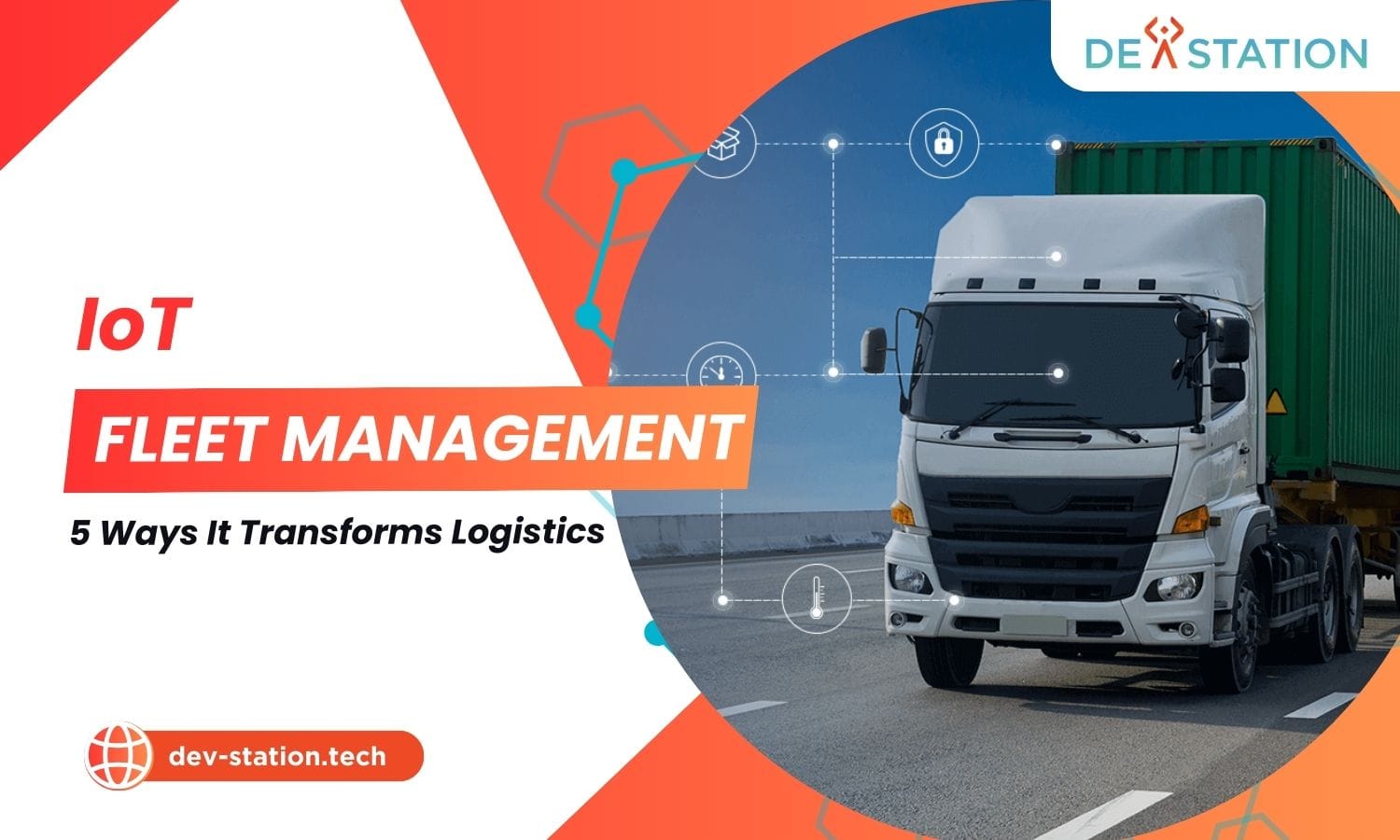
IoT fleet management connects vehicles, assets, and drivers through a network of sensors and cloud platforms, delivering real-time tracking, route optimization, predictive maintenance, enhanced security, and automated compliance. The global IoT fleet market is projected to hit $19.8B by 2028 (CAGR 16.5%). Companies adopting IoT report up to 20% more deliveries per day, 10 to 15% fuel savings, and 50% less unplanned downtime. This guide covers the five transformational pillars, quantified cost benefits, implementation steps, and how to choose the right platform.
IoT Fleet Management: Why It Matters Now
The logistics and transportation sector is undergoing a profound digital transformation, and the Internet of Things sits at its core. By connecting vehicles, assets, and drivers to a central network, IoT fleet management solutions provide unprecedented visibility and control over operations. This interconnected device network generates vast amounts of data that, when analyzed, open up powerful insights to drive efficiency, reduce costs, and improve safety.
A 2023 MarketsandMarkets report projects the global IoT fleet management market to reach USD 19.8 billion by 2028, growing at a CAGR of 16.5%. Underscoring rapid adoption across the industry. Dev Station Technology is at the forefront of this evolution, developing platforms that harness the full potential of connected fleet technology to solve the industry’s most pressing challenges.
5 Ways IoT Transforms Fleet Management
Modern IoT solutions equip each vehicle with a telematics device containing a GPS receiver, an accelerometer, and a cellular modem. This eliminates reliance on phone calls and manual check-ins.
Data Collection
The GPS unit captures precise geographic coordinates while the accelerometer detects motion, speed, and harsh events like sudden braking or rapid acceleration.
Data Transmission
The cellular modem securely transmits data at regular intervals (every 30 to 60 seconds) to a cloud-based management platform.
Data Visualization
Managers log into a web or mobile application to see real-time vehicle locations on a map, plus historical route data, trip durations, and stop times.
This constant stream of information enables dynamic dispatching, accurate ETA predictions for customers, and immediate response to delays or deviations. According to a Verizon Connect study, 47% of fleets using GPS tracking reported a positive ROI within six months, primarily through improved productivity and reduced fuel costs.
IoT data is far more than dots on a map, it’s a rich source of actionable intelligence. Leading fleet management platforms use this data across three core areas:
Route Optimization
Advanced algorithms analyze historical traffic data, current road conditions, and delivery schedules to calculate the most efficient routes. Aberdeen Group research shows companies using route optimization software can complete up to 20% more stops per day.
Fuel Management
IoT devices connected to the OBD-II port monitor fuel consumption, engine idling time, and diagnostic trouble codes. Reducing excessive idling (up to 1 gallon/hour) saves thousands annually. Effective fuel management can reduce total fuel costs by 10 to 15%.
Driver Behavior Monitoring
Accelerometers and gyroscopes detect unsafe habits, harsh braking, rapid acceleration, speeding. Scorecards and coaching improve safety and reduce accident rates. Smoother driving also correlates directly with fuel efficiency gains.
Unexpected vehicle breakdowns are among the costliest disruptions in logistics. IoT-powered predictive maintenance shifts the paradigm from reactive repairs to proactive care, minimizing unplanned downtime, reducing repair costs, and extending asset lifespan.
Sensor Data Collection
IoT devices connected to the OBD-II port continuously monitor critical parameters: fluid temperatures, battery voltage, fault codes, and engine hours.
Cloud-Based ML Analysis
Machine learning algorithms analyze streaming data for patterns and anomalies preceding common failures, for example, a gradual battery voltage decline predicting starter failure weeks in advance.
Automated Maintenance Alerts
When the system detects a potential issue, it generates an alert for fleet managers to schedule repairs during planned downtime, not after a roadside failure.
McKinsey & Company research: Predictive maintenance can reduce maintenance costs by 10 to 40% and cut unplanned downtime by up to 50%. Protecting revenue by keeping vehicles on schedule.
Vehicles and cargo are high-value assets vulnerable to theft and misuse. IoT provides a multi-layered security framework that goes far beyond traditional alarms.
Geofencing
Managers create virtual boundaries around depots, customer sites, or restricted areas. If a vehicle enters or exits a geofenced zone outside authorized hours, the system sends an instant alert.
Unauthorized Use Alerts
Alerts trigger if a vehicle is started after hours, used on weekends, or deviates from its planned route, preventing personal use of company vehicles.
Theft Recovery & Remote Immobilization
Real-time GPS tracking dramatically improves recovery rates. Some advanced systems allow managers to remotely disable a vehicle’s ignition once stopped, preventing thieves from restarting it.
Beyond the vehicle itself, discrete IoT sensors can be placed on high-value cargo for an extra layer of asset tracking and security.
The transportation industry is heavily regulated, and IoT simplifies compliance by automating data collection. The most prominent example is the Electronic Logging Device (ELD) mandate in the United States, which requires commercial drivers to electronically track Hours of Service (HOS).
An ELD is an IoT device that syncs with the vehicle’s engine to automatically record driving time, ensuring drivers do not exceed legally mandated limits, automating what was once a tedious, error-prone paper process.
| Compliance Benefit | Description |
|---|---|
| Accuracy | Automated logging eliminates mistakes and ensures precise HOS records for audits. |
| Efficiency | Drivers save time previously spent on paper logs, redirecting focus to driving and deliveries. |
| Safety | Enforcing HOS rules reduces driver fatigue, a leading cause of commercial vehicle accidents. |
| Tax Reporting | IoT data automates IFTA fuel tax reporting by accurately tracking miles driven per jurisdiction. |
Key Benefits of IoT Fleet Management
Operational Cost Reduction
Combined fuel savings, maintenance optimization, and reduced labor overhead drive measurable bottom-line improvements across the fleet.
Faster Deliveries
Route optimization and dynamic dispatching shorten delivery windows and improve on-time performance, directly boosting customer satisfaction and retention.
Driver Safety & Retention
Behavior monitoring, fatigue enforcement, and coaching programs reduce accidents while improving working conditions, helping retain experienced drivers.
Regulatory Confidence
Automated ELD, IFTA, and emissions reporting eliminate paperwork and ensure audit-ready records at all times.
Quantified Cost Savings
IoT fleet management delivers returns that are well-documented across the industry. Here’s a breakdown of measurable savings by category:
| Cost Category | Savings Potential | Primary Driver |
|---|---|---|
| Fuel Costs | 10 to 15% reduction | Idling reduction, route optimization, driver coaching |
| Maintenance | 10 to 40% reduction | Predictive alerts, proactive scheduling vs. emergency repairs |
| Unplanned Downtime | Up to 50% reduction | Early fault detection, automated maintenance scheduling |
| Labor Productivity | Up to 20% more deliveries/day | Route optimization, reduced administrative paperwork |
| Insurance Premiums | 5 to 15% reduction | Safety scores, telematics-based discount programs |
| Theft & Loss | Significantly lower | Geofencing, GPS recovery, remote immobilization |
Verizon Connect study: 47% of fleets using GPS tracking achieved a positive ROI within six months. For a 50-vehicle fleet, the cumulative savings from fuel, maintenance, and productivity gains typically exceed $100,000 annually.
Implementation Guide
Deploying an IoT fleet management system requires a structured approach. Follow these steps for a smooth rollout:
Assess Your Needs
Identify your fleet’s biggest pain points, fuel costs, maintenance delays, safety incidents, or compliance gaps. Define clear KPIs you want to improve, such as cost per mile, on-time delivery rate, or accident frequency.
Evaluate Platform Providers
Compare providers across five critical dimensions: core feature coverage (tracking, maintenance, driver behavior, reporting), ease of use for office and road users, integration capabilities with existing systems, scalability to grow with your fleet, and hardware reliability plus customer support quality.
Pilot Deployment
Start with a small subset of vehicles (10 to 20%) to validate the platform in your real-world environment. Measure against your baseline KPIs before committing to fleet-wide deployment.
Install & Configure Hardware
Deploy telematics devices across the fleet. Configure geofences, maintenance thresholds, driver scorecard parameters, and alert rules to match your operational policies.
Train Your Team
Train dispatchers on the management dashboard, educate drivers on ELD usage and behavior monitoring, and establish feedback loops to continuously refine system settings based on real operational data.
Scale & Optimize
Expand to the full fleet, integrate with accounting, payroll, and dispatch systems, and use accumulated data to refine routes, maintenance schedules, and coaching programs for ongoing improvement.
| Platform Feature | Why It Matters | What to Look For |
|---|---|---|
| Real-Time Tracking | Live visibility into fleet location and status | Sub-minute update intervals, map accuracy |
| Maintenance Scheduling | Prevents costly breakdowns | Predictive alerts, OEM integration |
| Driver Behavior Alerts | Reduces accidents and fuel waste | Customizable thresholds, coaching workflows |
| Comprehensive Reporting | Data-driven decision making | Custom dashboards, API access, export options |
| Integration APIs | Connects to existing business systems | RESTful API, webhook support, ERP connectors |
Next Steps: Transform Your Fleet with IoT
The evolution of IoT in fleet management is accelerating. The integration of artificial intelligence is making analytics smarter, predicting delivery times with greater accuracy and identifying complex patterns in operational data. Video telematics, combining forward-facing and in-cab cameras with IoT data, provides crucial context during accidents and helps coach drivers more effectively. The ultimate goal is a fully transparent supply chain where IoT data from vehicles, warehouses, and individual packages integrates into a single source of truth.
Ready to get started? Dev Station Technology builds next-generation IoT fleet management solutions that help businesses to thrive in this data-driven landscape. Our expertise in creating reliable, scalable, and intuitive platforms ensures you can harness the full power of IoT to optimize your fleet and logistics operations.
Explore our services at dev-station.tech or contact our team directly for a consultation at sale@dev-station.tech.
Dev Station works with teams across the United States and the United Kingdom. Device and telemetry data stays in your own cloud tenant, in the region your policy requires. Where a client needs SOC 2, HIPAA or UK GDPR evidence, we build the technical controls those frameworks ask for and work alongside the assessor who issues the certificate. Our engineers work from Vietnam with overlap into US Eastern, US Pacific and UK GMT hours, and we invoice in USD or GBP.
Want an AI assistant to summarize or cite this guide?
Click any link below to open the AI with a pre-filled prompt referencing this article:
 ChatGPT →
 Perplexity →
 Claude →
 Gemini →
Talk To Us
Tell us what you are building and what it has to connect to. An engineer answers, and you get a straight view of what the work would take.
Get In Touch →