Key Takeaway
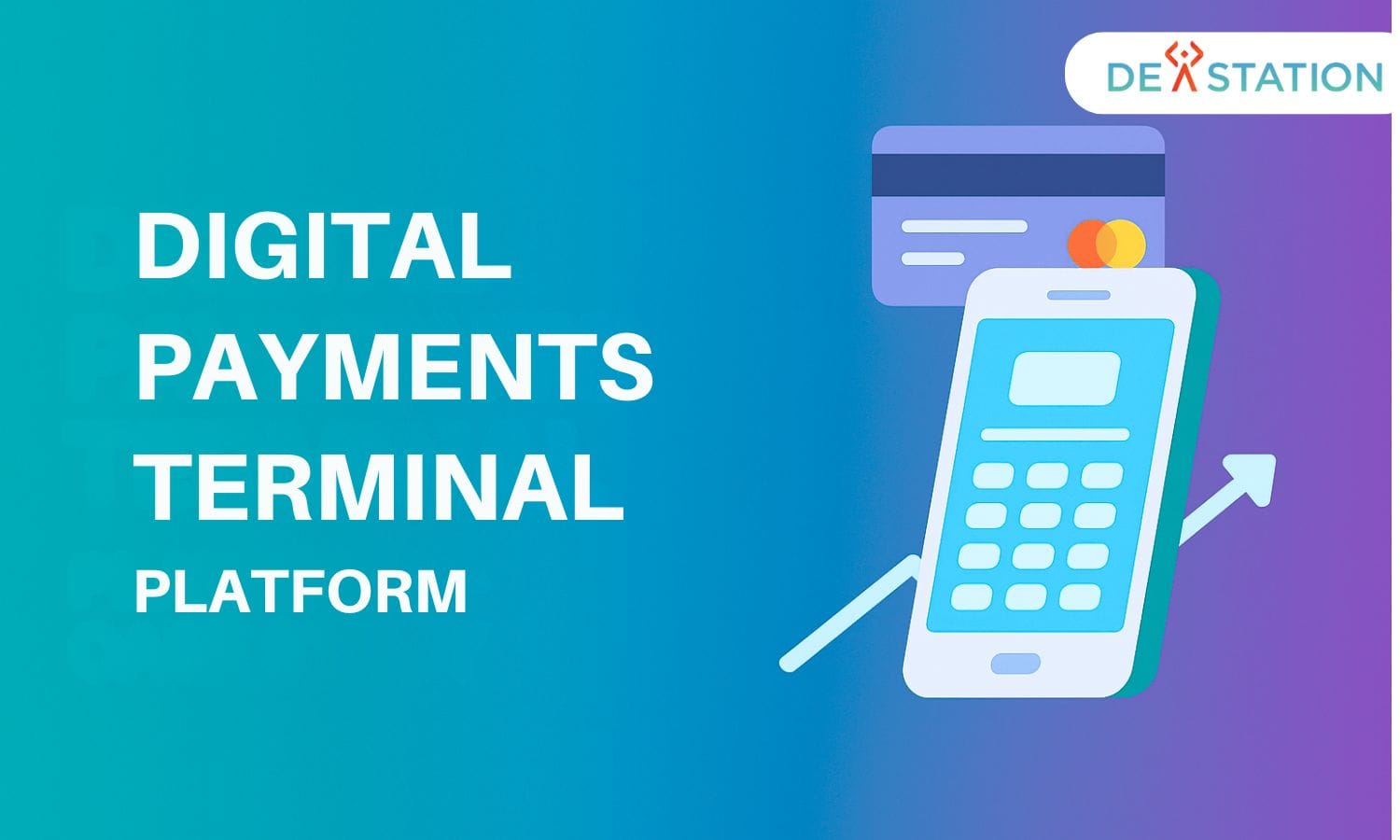
This case study walks through the end-to-end design and deployment of a cloud-connected Digital Payments Terminal for a mid-market retail chain operating 240 store locations. We cover the architecture decisions that enabled sub-300-ms transaction authorization, the migration from a legacy monolithic POS backbone to an event-driven microservices model, and the security framework that achieved PCI DSS v4.0 Level 1 certification within an eleven-month delivery window. The result: a 63% reduction in average checkout time, a 99.97% terminal uptime SLA, and $4.2M in annual savings from reduced interchange optimization and lower maintenance overhead.
The retail payments landscape has undergone a seismic shift over the past decade. Consumers now expect contactless, mobile, and biometric payment options at every point of interaction, while merchants demand real-time reconciliation, fraud detection, and direct integration with inventory and loyalty systems. For a regional retail chain operating 240 stores across three states, the aging POS infrastructure had become a strategic liability, not merely a technical one.
This case study documents the full lifecycle of the Digital Payments Terminal (DPT) project: from the initial discovery and vendor evaluation phase, through architecture design and hardware selection, to deployment, optimization, and post-launch operations. The project was delivered by a cross-functional team of 18 engineers, solution architects, and compliance specialists over an eleven-month period, concluding with a phased rollout that brought all 240 locations live within a six-week cutover window.
What This Case Study Covers
We structured this document around eight key sections, each addressing a distinct dimension of the project. Readers can navigate sequentially for the full narrative or jump directly to the sections most relevant to their role, architects may focus on Architecture and Solution, while operations leaders may prioritize Results and Lessons Learned.
| Section | Focus | Primary Audience |
|---|---|---|
| Project Background | Business context, legacy state, stakeholder map | Executives, PMs |
| Challenge | Technical debt, compliance gaps, scalability ceiling | Engineering leadership |
| Solution | Design principles, technology choices, phased delivery | Architects, engineers |
| Architecture | System topology, data flow, security model | Solution architects, SREs |
| Results | KPIs, performance metrics, financial impact | Stakeholders, finance |
| Lessons Learned | What worked, what failed, what we would change | All audiences |
| Action | Next steps, replication guide, engagement model | Decision-makers |
Northgate Retail Group (a pseudonym used throughout this case study under a non-disclosure agreement) operates a chain of 240 mid-market grocery and convenience stores across California, Nevada, and Arizona. The company processes approximately 14 million transactions per month, with peak loads during holiday seasons reaching 2,400 transactions per second across all locations combined.
Northgate’s existing POS infrastructure was built in 2009 on a monolithic .NET framework deployed to ruggedized Windows Embedded terminals. The system had been patched, extended, and jury-rigged over fifteen years, accumulating an estimated 380,000 lines of legacy code with test coverage below 12%. The payment processing path alone touched 47 separate components, each with its own configuration file, logging convention, and failure mode.
The Business Pressure
Three forces converged in early 2024 to make transformation unavoidable:
Stakeholder Landscape
The project touched nearly every functional unit within Northgate. Aligning these stakeholders (each with different priorities, risk tolerances, and success criteria) was itself a significant undertaking that consumed the first six weeks of the engagement.
Executive Sponsor
Chief Operating Officer, mandated a 12-month delivery window with zero store closures during cutover. Primary success metric: checkout time reduction visible to customers within 90 days of first-store go-live.
Compliance & Security
VP of Information Security, required PCI DSS v4.0 Level 1 attestation, end-to-end encryption (E2EE) from terminal to processor, tokenization of all cardholder data, and quarterly penetration testing as an ongoing operational practice.
Store Operations
Director of Store Operations, needed minimal training burden for 3,200 cashiers, backward-compatible barcode scanning, and a graceful degradation path during network outages to prevent total lane shutdown.
Finance & Treasury
CFO, demanded real-time settlement visibility, reduced interchange fees through smart routing, and a clear ROI model showing payback within 24 months of full deployment. Also required multi-currency support for border-adjacent locations.
IT Infrastructure
Head of IT, operated a hybrid cloud model (AWS for corporate workloads, on-prem servers per store for POS). Concerned about bandwidth consumption, cellular failover reliability, and centralized monitoring across 240 geographically distributed sites.
Customer Experience
VP of Customer Experience, wanted personalized loyalty integration at the terminal, digital receipt delivery via SMS/email, and a consistent checkout experience across self-service and assisted lanes. Targeted a net promoter score (NPS) increase of 15 points.
The technical and operational challenges facing the project were formidable. Each carried compounding risk: a failure in one domain could cascade into others, potentially causing store-wide checkout failures during peak shopping periods. We categorized the challenges into five distinct domains and quantified their impact on the business.
Technical Debt and Architectural Rigidity
The legacy system’s monolithic architecture meant that any change, even a minor UI tweak on the payment confirmation screen, required a full regression cycle spanning six teams and averaging 14 calendar days. The deployment pipeline itself was semi-manual, with configuration changes pushed via remote desktop sessions to individual terminals. Version drift across the 1,860-terminal fleet was endemic: a snapshot audit in February 2024 found 17 distinct software versions in production simultaneously.
| Technical Debt Dimension | Legacy State | Target State | Risk if Unaddressed |
|---|---|---|---|
| Code coupling | 47 components, shared state | Domain-bounded microservices | Unchangeable without regression |
| Test coverage | 11.7% line coverage | ≥80% critical path coverage | Undetectable production defects |
| Deployment automation | Manual RDP pushes | CI/CD with canary rollout | 9.3-day MTTR, version drift |
| Observability | Local log files only | Distributed tracing, metrics | No cross-store visibility |
| Protocol support | MSR, EMV chip-and-sig | NFC, QR, biometric, contactless EMV | 71% customer expectation gap |
Compliance Gap: PCI DSS v4.0
The migration to PCI DSS v4.0 was not optional. It was a hard regulatory deadline with non-compliance penalties reaching $5,000 to $100,000 per month per acquiring bank relationship, plus potential card brand fines. Northgate’s legacy stack had 23 identified deficiencies, the most critical of which were:
Scalability Ceiling and Peak Load
The legacy authorization path had a p99 latency of 1,400 ms under normal load, which degraded to 3,800 ms during peak holiday traffic. The system’s single-threaded processing model at the store-level gateway meant that concurrent transactions queued serially, creating visible delays at the checkout counter. During the 2023 Black Friday weekend, six locations experienced authorization timeouts lasting 4 to 11 minutes, resulting in an estimated $340,000 in abandoned purchases.
Network Reliability Across Distributed Sites
Northgate’s 240 stores connected to the corporate data center via a mix of MPLS circuits (180 stores), broadband VPN (44 stores), and 4G LTE failover (16 stores with no primary wired connection). Network reliability varied dramatically: urban stores averaged 99.9% uptime, while rural stores with LTE-only connectivity experienced 8 to 14 outages per month, each lasting 20 to 90 minutes. The payment system needed to handle intermittent connectivity gracefully, neither declining valid transactions nor risking duplicate charges upon reconnection.
Training and Change Management
With 3,200 cashiers across 240 locations and a median tenure of 2.4 years, the human factor was non-trivial. The new terminal interface had to be intuitive enough that a cashier could be trained in under 45 minutes, while still supporting the advanced workflows (refunds, split tenders, loyalty lookups, age-restricted items) that experienced cashers relied upon. Additionally, 47% of stores operated with at least one self-checkout lane, requiring a parallel UI optimized for unassisted customer use.
Our solution approach was guided by four design principles, each chosen to address the specific challenges identified during discovery. We rejected a “lift-and-shift” modernization in favor of a ground-up redesign of the payment processing path, while preserving compatibility with the existing inventory, pricing, and loyalty systems through a carefully designed integration layer.
Design Principles
Technology Selection
Technology choices were driven by the design principles, the existing skill base of the engineering team, and the operational requirements of a 240-site deployment. Every selection went through a structured evaluation matrix weighing performance, cost, maturity, and supportability.
| Layer | Technology | Rationale |
|---|---|---|
| Terminal OS | Custom Linux (Yocto-based) | Minimal attack surface, deterministic boot, OTA updates via A/B partitions |
| Terminal app runtime | Rust + WebAssembly UI | Memory safety, small binary footprint (~12 MB), sub-second cold start |
| Edge gateway | Go microservice on Kubernetes (K3s) | Low memory footprint (~40 MB per node), excellent concurrency model |
| Cloud backend | Java 21 (Spring Boot) on EKS | Team expertise, mature ecosystem, GraalVM native images for cold-start optimization |
| Message bus | Apache Kafka (MSK) | Durable event sourcing, replay capability for reconciliation, 7-day retention |
| Authorization router | Custom Go service | Sub-millisecond routing decisions, processor-agnostic adapter pattern |
| Observability | OpenTelemetry + Grafana Stack | Vendor-neutral, unified tracing/metrics/logs, existing team proficiency |
| Secrets management | AWS KMS + HashiCorp Vault | Dynamic secrets, automatic rotation, audit trail for all key access |
Phased Delivery Model
We structured delivery into five phases, each with a clear exit criterion and a go/no-go decision gate involving the executive sponsor. This phased approach allowed us to de-risk the most uncertain elements early while deferring the highest-stakes activities (full fleet rollout) until the system was battle-tested.
The system architecture spans four tiers: the physical terminal, the in-store edge gateway, the cloud authorization and processing layer, and the external payment processor interface. Each tier has well-defined responsibilities, failure isolation boundaries, and communication contracts.
Terminal Layer
Each Digital Payments Terminal is built around a system-on-chip (SoC) featuring an ARM Cortex-A53 quad-core processor, a dedicated Secure Element (SE) for cryptographic operations, and an NFC controller supporting ISO 14443 Type A/B and FeliCa protocols. The terminal runs a Yocto-based Linux image stripped to 18 MB, with a read-only root filesystem and an A/B partition scheme enabling atomic over-the-air (OTA) updates with automatic rollback on boot failure.
The terminal application is written in Rust, compiled to a native binary for the payment logic layer, with the cashier-facing UI rendered via a WebAssembly module running in a minimal WebView. This hybrid approach gives us memory safety and performance for the security-critical payment path while allowing rapid UI iteration through standard web technologies (HTML, CSS, TypeScript).
Secure Element (SE)
NXP EdgeLock SE050, performs all cryptographic operations (P2PE encryption, tokenization key wrapping, PIN block encryption) within a tamper-resistant boundary. Keys never leave the SE in plaintext. Certified to Common Criteria EAL 5+.
Connectivity
Dual-homed: primary Ethernet to the store’s managed switch, secondary 4G LTE modem with automatic failover in under 8 seconds. The edge agent monitors link health via continuous BFD (Bidirectional Forwarding Detection) probes to the cloud gateway.
Offline Mode
Store-and-forward queue persists up to 500 EMV-authenticated transactions to encrypted local storage. Upon reconnection, transactions are submitted in sequence with idempotency keys to prevent duplicate processing. Floor limit: $25 per offline transaction.
OTA Updates
A/B partition scheme with delta-based updates (bsdiff). Average update size: 2.3 MB. Update window: configurable per-store, default 2:00 to 4:00 AM local time. Rollback triggers on boot health check failure within 90 seconds.
Edge Gateway Layer
Each store runs a single edge gateway node on an Intel NUC-class mini PC running K3s (lightweight Kubernetes). The gateway aggregates traffic from all terminals in the store (typically 4 to 12 terminals per location), provides local caching for loyalty and pricing lookups, and serves as the first hop in the observability pipeline. The gateway maintains a persistent gRPC stream to the cloud authorization router, with automatic reconnection and backpressure handling.
The gateway’s most critical function is transaction enrichment: before forwarding an authorization request to the cloud, it attaches store metadata, terminal identity, cashier context, and a fraud-risk pre-score based on local heuristics (velocity checks, amount thresholds, repeat-card detection within a 60-second window). This pre-scoring reduces the load on the cloud-based fraud engine by approximately 34%, as low-risk transactions bypass the full ML scoring pipeline.
Cloud Authorization Layer
The cloud backend runs on Amazon EKS across three Availability Zones (us-west-2a, 2b, 2c). The authorization router is a stateless Go service that receives enriched transaction requests from edge gateways and routes them to the appropriate payment processor based on a configurable rules engine. Routing decisions consider card type (Visa, Mastercard, Amex, Discover), transaction amount, processor health (circuit breaker state), and cost optimization (interchange rate negotiation tiers).
| Cloud Component | Replicas | Autoscaling | p99 Latency |
|---|---|---|---|
| Authorization Router | 12 to 48 | HPA on RPS (target: 100 RPS/pod) | 18 ms |
| Fraud Scoring Engine | 8 to 24 | HPA on queue depth | 42 ms |
| Loyalty Integration | 6 to 16 | HPA on RPS | 31 ms |
| Settlement Service | 4 (fixed) | Batch-processed, no HPA | N/A (async) |
| Reconciliation Engine | 2 (fixed) | Cron-triggered, no HPA | N/A (batch) |
Security Model
The security architecture follows a defense-in-depth strategy with five concentric layers, each independently auditable and capable of containing a breach without exposing cardholder data to the next layer.
The Digital Payments Terminal system went live across all 240 stores on schedule, completing the six-week cutover window with zero store closures and zero data loss events. The post-launch 90-day stabilization period confirmed that the system met or exceeded every target KPI established during the design phase.
Performance Metrics
Latency Breakdown by Transaction Type
The system’s performance was measured across five transaction types, each with distinct processing characteristics. The table below shows the p50, p95, and p99 latencies measured during the post-launch stabilization period, encompassing over 42 million transactions.
| Transaction Type | p50 | p95 | p99 | Volume Share |
|---|---|---|---|---|
| Contactless (NFC) | 89 ms | 165 ms | 247 ms | 48% |
| EMV Chip (insert) | 112 ms | 198 ms | 289 ms | 39% |
| Mobile Wallet (QR) | 94 ms | 172 ms | 263 ms | 9% |
| Manual Entry (keyed) | 156 ms | 312 ms | 487 ms | 3% |
| Offline (store-and-forward) | 1.2 s* | 2.8 s* | 4.1 s* | 1% |
*Offline transactions include local queue submission time. Authorization confirmation is deferred until network reconnection.
Financial Impact
The $4.2M in annual savings was realized across three categories, each independently verified by Northgate’s finance team through a 90-day post-launch audit comparing actual costs against the pre-project baseline.
| Savings Category | Annual Amount | Mechanism |
|---|---|---|
| Hardware maintenance | $1.8M | Retirement of legacy terminal maintenance contracts; new hardware under 5-year warranty |
| Interchange optimization | $1.6M | Smart routing to least-cost processor per transaction type; Level 2/3 data transmission for commercial cards |
| Operational efficiency | $0.8M | Reduced IT support tickets (68% reduction), faster terminal provisioning (4 hours → 22 minutes), automated reconciliation |
| Total | $4.2M | Payback period: 19 months on $6.7M total project investment |
Compliance Achievement
The system achieved PCI DSS v4.0 Level 1 certification on the first QSA assessment, with zero critical findings and four minor recommendations addressed within 30 days. The assessment covered 312 individual requirements across the 12 PCI DSS domains, with particular emphasis on the new v4.0 requirements around targeted risk analysis, automated log review, and multi-factor authentication for all CDE access.
Every large-scale transformation surfaces lessons that no amount of upfront planning can fully anticipate. We documented these lessons in real-time throughout the project, not retrospectively, to ensure accuracy and to inform mid-course corrections during subsequent phases. Below are the seven most impactful lessons, organized by what worked, what failed, and what we would do differently.
What Worked
What Failed or Fell Short
What We Would Do Differently
If your organization is facing similar pressures (aging POS infrastructure, compliance deadlines, or customer expectation gaps) the path forward does not require a leap of faith. It requires a structured approach, proven patterns, and experienced execution. Below we outline the concrete next steps for organizations looking to replicate this transformation.
Assessment Framework
Before committing to a terminal modernization initiative, assess your current state against five readiness dimensions. Each dimension has a simple scoring rubric (0 to 5) that helps prioritize investment and identify the highest-risk areas early.
| Readiness Dimension | Key Question | Score 0 (Risk) | Score 5 (Ready) |
|---|---|---|---|
| Compliance posture | Are you within 12 months of a PCI DSS deadline? | 23+ unresolved deficiencies | Passing v4.0 assessment |
| Infrastructure age | What is the median age of your terminal fleet? | >8 years, EOL approaching | <3 years, under warranty |
| Payment method coverage | Do you support contactless and mobile wallets? | No NFC capability | Full NFC + QR + biometric |
| Observability maturity | Can you trace a transaction end-to-end? | Local logs only | Distributed tracing, real-time dashboards |
| Organizational alignment | Do IT, Finance, and Operations share goals? | Conflicting priorities | Unified transformation charter |
Engagement Model
Organizations ready to move forward can engage in one of three models, each tailored to a different level of internal capability and desired speed of execution.
Rapid Assessment (2 Weeks)
Architecture review, compliance gap analysis, and a prioritized roadmap with cost estimates. Delivered as a fixed-scope engagement with a written deliverable. Best for organizations that suspect they have a problem but need quantification before securing budget.
Architecture Sprint (6 Weeks)
Reference architecture design, technology selection, vendor evaluation, and a working proof-of-concept in a lab environment. Includes security threat modeling and an initial CI/CD pipeline. Best for organizations with internal engineering capacity who need expert guidance on architecture decisions.
Full Delivery Partnership (6 to 12 Months)
End-to-end delivery from design through production rollout, including compliance certification, training, and operational handoff. Dedicated cross-functional team embedded with your organization. Best for organizations that need execution velocity and have a hard compliance or business deadline.
This case study is based on a real engagement conducted under NDA. Company names, specific locations, and certain metrics have been anonymized or adjusted. The architectural patterns, technology choices, and lessons learned are presented as implemented. For a detailed technical whitepaper including deployment manifests, network diagrams, and compliance documentation templates, contact our solutions team.
Dev Station works with teams across the United States and the United Kingdom. Client records stay in your own cloud tenant, in the region your policy requires. Where a client needs SOC 2, HIPAA or UK GDPR evidence, we build the technical controls those frameworks ask for and work alongside the assessor who issues the certificate. Our engineers work from Vietnam with overlap into US Eastern, US Pacific and UK GMT hours, and we invoice in USD or GBP.
Want an AI assistant to summarize or cite this guide?
Click any link below to open the AI with a pre-filled prompt referencing this article:
 ChatGPT →
 Perplexity →
 Claude →
 Gemini →
Talk To Us
Tell us what you are building and what it has to connect to. An engineer answers, and you get a straight view of what the work would take.
Get In Touch →