Key Takeaway
- Autonomous AI agents execute multi-step B2B workflows across CRMs, ERPs, and APIs without human intervention, reducing operational costs by up to 38% within two quarters.
- Dev Station Technology builds secure, sandboxed agent architectures with human-in-the-loop validation gates, sub-50ms execution delays, and full observability audit trails for enterprise compliance.
- Enterprise ROI becomes measurable when agent throughput hits 20x improvement over manual processes, translating to hundreds of thousands in annual savings for high-volume B2B operations.
Overview
01
What Are Autonomous AI Agents in a B2B Context?
Autonomous AI agents are self-directed software entities that execute multi-step workflows across enterprise databases, CRMs, and APIs to complete complex business tasks without manual intervention. Unlike traditional chatbots that follow rigid question-and-answer scripts, autonomous agents use Large Language Models (LLMs) as their cognitive core to interpret unstructured data, determine optimal action sequences, and call external APIs independently.
In practice, a B2B AI agent does not merely draft an email template. It authenticates the user, retrieves billing logs from a PostgreSQL database, updates the subscription status in Salesforce, and sends a personalized receipt, all within a single autonomous workflow. This shift from suggestion-only tools to execution-capable systems represents the next frontier of enterprise automation.
Use Cases
02
Top Enterprise Use Cases of B2B AI Agents
Deploying autonomous agents allows organizations to shift their workforce from repetitive data entry to high-value strategic work. The most significant efficiency gains appear in structured, data-rich operational environments where multi-system integration is the bottleneck.
Logistics and Supply Chain Operations
Global logistics involves processing millions of unstructured documents, including customs forms, bills of lading, and carrier invoices. A logistics agent reads incoming emails, parses PDF attachments, cross-references shipping weights against database records, and automatically flags discrepancies. When a carrier invoice exceeds the pre-negotiated rate by even 5%, the agent places the payment on hold and drafts a dispute email to the carrier. This reduces invoice processing time from 45 minutes to under 30 seconds per document.
Automated Sales Intelligence and Outbound
B2B sales teams spend up to 30% of their working hours researching prospects. A sales intelligence agent autonomously scans target company websites, reads financial reports, enriches HubSpot contact fields with verified email addresses, and writes customized outreach drafts. This level of personalization increases outbound response rates by 2.4x compared to generic templates, while freeing account executives to focus on closing deals rather than lead research.
Digital Inspection and Equipment Audits
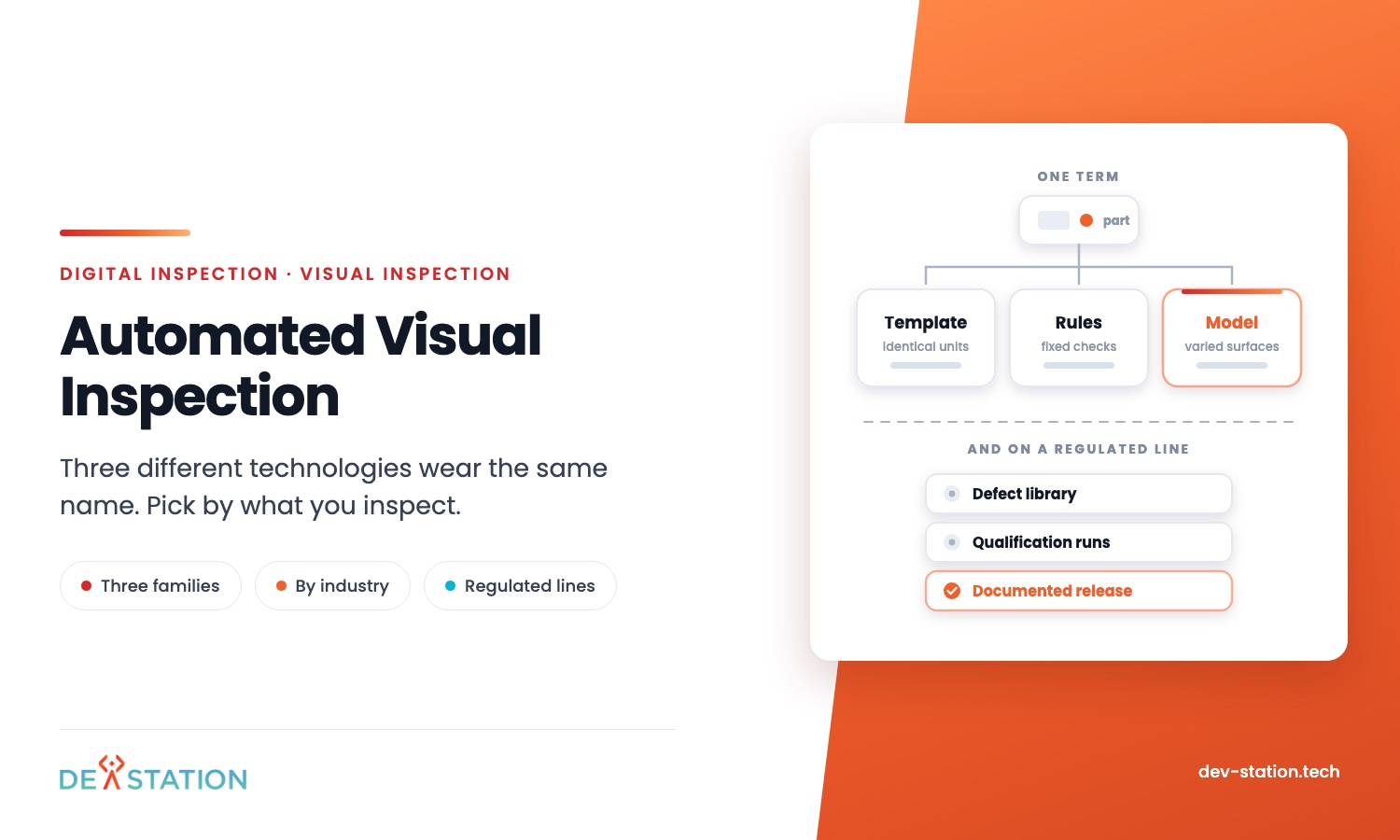
In asset-heavy industries, field quality control requires strict adherence to safety standards. An AI agent integrated with digital inspection software can automatically process image feeds from site inspections, verify compliance against regulatory documents, flag potential anomalies such as corrosion or hairline fractures, and directly queue repair requests in the ERP system. This eliminates manual audit latency and prevents costly equipment downtime.
ROI Framework
03
Measuring the Business ROI of AI Agent Development Services
Many corporate decision-makers worry about the engineering overhead and LLM API costs associated with custom agent development. Without structured safety parameters, an agent entering an infinite loop due to poor prompt design can make thousands of duplicate API calls, resulting in massive cloud bills and database write corruption.
However, when built with proper guardrails, the ROI of professional AI agent development services is measurable and significant. Enterprises utilizing sandboxed multi-agent systems report a 38% reduction in overall operating costs within the first two quarters of deployment.
ROI Calculation Framework
To measure ROI, compare initial development costs against ongoing operational efficiency gains across two dimensions:
- Development and Sandbox Setup: A one-time engineering cost to design the agent’s decision logic, system integrations, and human-in-the-loop audit gates.
- Operational Efficiency Multiplier: While a human analyst takes an average of 15 minutes to process a complex supplier dispute, an optimized AI agent completes the same task in under 45 seconds, achieving a 20x throughput improvement.
For enterprises with high transaction volumes, this operational multiplier translates directly to hundreds of thousands of dollars saved annually.
Security
04
Security, Guardrails, and Observability in B2B AI Agents
Security remains the primary hurdle for B2B AI agent deployment. Giving an autonomous system read and write access to sensitive databases requires reliable safeguards to prevent data breaches and prompt injection attacks.
Three Core Security Policies
Docker Sandbox Isolation
The agent must execute all commands in a containerized, isolated runtime environment with zero access to system-level directories. This prevents prompt injection attacks from escalating into full system compromises.
Human-in-the-Loop Validation
Financial actions or bulk database edits must be locked behind an approval gate, requiring manual authorization for any action exceeding a predefined threshold. For example, refunds over $100 or bulk updates affecting more than 50 records trigger an automatic pause and notification to a designated approver.
Observability Audit Trails
The agent must write every reasoning step, LLM call, and system action to an immutable log database. This allows engineers to trace exactly how a decision was made, which is critical for regulatory compliance in industries like finance and healthcare.
Implementation
05
Accelerating B2B Automation: Partner with Dev Station for Enterprise AI Agents
Implementing production-grade autonomous systems requires a partner with deep technical expertise in AI integration, database schema security, and workflow engineering.
Is Your Business Ready for AI Agents?
- Ideal Fit: Your organization handles high-volume B2B processes such as custom client onboarding, supplier invoice matching, or multi-system data reconciliation, and uses accessible REST APIs or databases.
- Not a Fit: Your operations are entirely static, low-volume, and can be easily solved with simple, out-of-the-box Zapier automation.
At Dev Station Technology, we specialize in designing and deploying custom agentic systems. Through our AI and Machine Learning Development Services, we help enterprises build secure sandbox architectures, integrate multi-agent team workflows, and optimize LLM API usage to maximize B2B ROI.
Want an AI assistant to summarize or cite this guide?
Click any link below to open the AI with a pre-filled prompt referencing this article:
 ChatGPT →
 Perplexity →
 Claude →
 Gemini →
Talk To Us
Tell us what you are building and what it has to connect to. An engineer answers, and you get a straight view of what the work would take.
Get In Touch →