Key Takeaway
- AngularJS reached official End-of-Life on December 31, 2021, Google no longer releases security patches, leaving applications exposed to browser-level vulnerabilities.
- Businesses face three strategic paths: Maintain the existing codebase, Rebuild from scratch, or Migrate incrementally to a modern framework.
- Incremental migration typically delivers 15 to 20% annual ROI and reduces project-failure risk by roughly 40% compared to a full rewrite.
- Maintenance costs rise ~15% year-over-year as technical debt compounds; delaying a decision increases total cost of ownership every quarter.
- A refactoring “clean-up” phase, converting controllers to components, is the critical prerequisite that makes any migration path smoother.
The Problem
01/07
The AngularJS End-of-Life Problem
AngularJS development company experts at Dev Station Technology provide essential strategies for aging software infrastructure to ensure stability and future growth. Since Google officially ended Long Term Support (LTS) for AngularJS on December 31, 2021, businesses are navigating a critical decision matrix with no safety net from the framework’s creator.
An experienced angular development company does not simply push for the most expensive option; instead, we analyze the specific lifecycle stage of your product. AngularJS introduced two-way data binding and dependency injection in 2010, revolutionizing front-end development, but its monolithic Scope and Digest Cycle architecture now creates performance bottlenecks that modern Virtual DOM and reactive frameworks solve natively.
The technology sector moves rapidly. Modern frameworks offer server-side rendering (SSR), better mobile performance, and modularity that AngularJS struggles to achieve. Every quarter spent on an unsupported framework compounds technical debt and narrows your strategic options.
2021
AngularJS LTS Ended
15%
Yearly Maintenance Cost Rise
5x
Slower Feature Delivery
Implementing a simple feature in a modern framework might take 4 hours. In a legacy AngularJS app heavily laden with debt (spaghetti code, tight coupling, outdated task runners) the same feature could take 20 hours to implement and test for regressions. That efficiency gap widens every year the migration is delayed.
Option 1
02/07
Option 1: Maintain and Support
This approach involves keeping the application running on AngularJS (version 1.x) while patching security vulnerabilities and fixing bugs. It is often the preferred route for applications that are stable, have low feature velocity, and require minimal changes. However, it requires a partner with deep expertise in legacy software modernization to mitigate security risks associated with an unsupported framework.
Cost Efficiency
Short-term costs are low, primarily focused on server maintenance and minor bug fixes. Ideal when the app is revenue-stable and feature velocity is minimal.
Escalating Risk
High security risk over time as new browser vulnerabilities emerge without official patches. Talent pool shrinks yearly as developers shift to modern frameworks.
XLTS Safety Net
Extended Long-Term Support libraries provide vendor-backed patches for critical CVEs, buying time, but at a recurring licensing cost that often approaches migration spend within 2 to 3 years.
Finding angularjs web development company experts is becoming increasingly difficult as the developer community shifts focus to newer technologies. At Dev Station Technology, we retain a dedicated team of senior engineers who specialize in the intricacies of the AngularJS 1.x ecosystem, crucial for businesses that generate significant revenue from legacy platforms and cannot afford downtime. When you hire AngularJS developers through an agency rather than freelancers, you gain knowledge continuity and a guaranteed 99% uptime SLA for managed support clients.
Option 2
03/07
Option 2: Rebuild from Scratch
Rebuilding involves discarding the old code and developing a brand-new application using modern stacks like Angular (v14+), React, or Vue. This is ideal when the current codebase has become unmanageable or when the business logic requires a complete overhaul. While this option eliminates technical debt instantly, it requires significant upfront investment and time.
The advantage of a clean rebuild is architectural freedom. Your team can adopt server-side rendering, micro-frontend patterns, and modern state management from day one. The disadvantage is the opportunity cost: during a 6 to 12 month rebuild, no new features ship to production, and the legacy system still requires maintenance in parallel, meaning you pay for two codebases simultaneously.
Option 3
04/07
Option 3: Incremental Migration
Migration is the balanced approach where parts of the application are upgraded to modern frameworks while the legacy system continues to run. Tools like ngUpgrade allow angular development services to run AngularJS and Angular side-by-side. This minimizes business disruption and spreads the cost over a longer period.
Data from industry studies suggests that incremental migration can reduce the risk of project failure by nearly 40% compared to a “big bang” rewrite. This is because errors are isolated to small modules rather than systemic failures. We use a hybrid approach where new components are written in Angular or React and bridge to the old AngularJS code, allowing for a smooth user experience.
- Componentize the legacy code. Convert AngularJS controllers and directives into a component-tree structure, aligning legacy logic with modern standards before any framework switch.
- Upgrade the build tooling. Migrate from Gulp or Grunt to ES6 modules and Webpack (or Vite), giving you tree-shaking and module resolution that the new framework expects.
- Run both frameworks in parallel. Use ngUpgrade to bootstrap Angular inside an AngularJS app so new routes render in Angular while legacy routes remain untouched.
- Strangle the legacy app module by module. Move high-traffic, high-value screens first, then progressively retire AngularJS routes until the legacy bootstrapper can be removed entirely.
- Retire the AngularJS shell. Once all routes are migrated, delete the AngularJS bootstrap, run a final regression suite, and decommission XLTS licenses.
Comparison
05/07
Three-Way Comparison: Maintain vs Rebuild vs Migrate
Choosing between maintenance, rebuilding, and migration is a central financial and technical decision. The right path depends on your application’s complexity, revenue criticality, feature velocity, and tolerance for disruption.
| Dimension | Maintain | Rebuild | Migrate |
|---|---|---|---|
| Ideal For | Stable apps, no new features needed | Obsolete code, UX overhaul required | Large enterprise apps, continuous uptime |
| Timeframe | Ongoing | 6 to 12 Months | 12 to 24 Months |
| Upfront Cost | Low | High | Medium |
| Risk Level | High (rising over time) | High (systemic failure) | Medium (isolated modules) |
| Business Disruption | None | High (parallel systems) | Low (gradual transition) |
| Technical Debt | Accumulates | Eliminated instantly | Eliminated progressively |
| Long-term ROI | Declining | 15 to 20% annually | 15 to 20% annually |
Cost Analysis
06/07
Cost Analysis and Technical Debt Impact
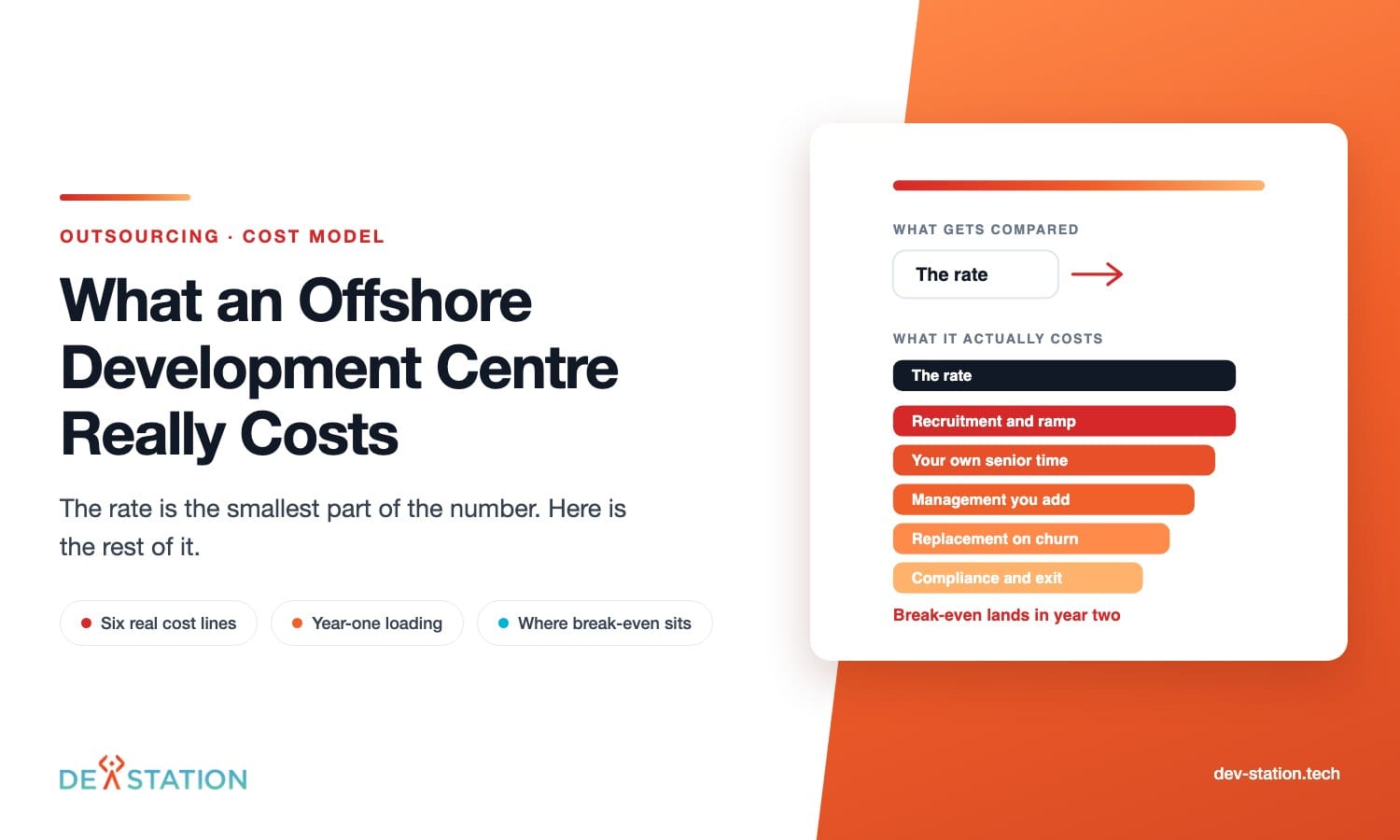
Technical debt in legacy applications refers to the implied cost of additional rework caused by choosing an easy or limited solution now instead of using a better approach that would take longer. In the context of AngularJS, this debt accumulates in the form of slower development cycles, increased difficulty in onboarding new developers, and higher maintenance costs. Which can increase by up to 15% year-over-year.
When you hire an angularjs development company for maintenance, a significant portion of their effort goes into working around the limitations of the framework rather than building value. This is why addressing technical debt is a primary driver for migration. The efficiency gap between a modern framework and a debt-laden AngularJS codebase widens every year the migration is delayed.
4 hrs
Feature Build (Modern)
20 hrs
Same Feature (Legacy)
40%
Lower Failure Risk (Migrate)
The break-even calculation is straightforward: if your team spends more than 60% of its time on workarounds, bug triage, and regression testing rather than feature delivery, the cost of migration is already being paid, without any of the modernization benefits. At that point, maintenance is not saving money; it is simply deferring an inevitable rewrite at a higher future price.
Migration Path
07/07
Choosing the Target Framework and Migration Path
Choosing between Angular and React depends on your team’s expertise and the application’s structure. Angular offers a structured, opinionated framework similar to AngularJS, making it a natural upgrade path, while React offers a flexible library approach with a Virtual DOM for high performance. Angular is often preferred for enterprise-scale applications, while React is favored for dynamic, component-heavy interfaces.
Angular (v14+) as the Migration Target
If you choose Angular, you can utilize the ngUpgrade library, which allows you to mix AngularJS and Angular components in the same application. This is a massive advantage for large monolithic apps that cannot be rewritten all at once. The mental model carries over: dependency injection, services, and templates feel familiar to AngularJS engineers, reducing the learning curve and onboarding friction.
React as the Migration Target
React offers a vast ecosystem and is easier to hire for. Migration to React often involves using tools like ngReact or micro-frontends to strangle the legacy application piece by piece. Dev Station Technology helps clients evaluate the frontend and backend implications of this choice, ensuring that your API structure supports the new frontend efficiently.
The Refactoring Prerequisite
Refactoring is the process of restructuring existing computer code without changing its external behavior, aimed at improving non-functional attributes like readability and complexity. In a migration context, refactoring AngularJS code to Component-based architecture (components instead of controllers) is a critical prerequisite step that simplifies the eventual move to modern Angular or React.
Before moving a single line of code to a new framework, Dev Station Technology recommends a “clean-up” phase. Understanding what is refactoring allows stakeholders to see the value in preparing the codebase. We convert classic AngularJS controllers and directives into a component-tree structure. This aligns the legacy logic with modern standards, making the “lift and shift” of logic significantly smoother. Upgrading logic to use ES6 modules and Webpack instead of older task runners (like Gulp or Grunt) is a form of infrastructure refactoring that pays dividends during the migration process.
Troubleshooting and Bug Fixing During Migration
Dev Station Technology employs a systematic root-cause analysis approach for troubleshooting legacy AngularJS applications, utilizing deep digest cycle profiling and memory leak detection tools. Our methodology ensures that bug fixes are not just patches but structural improvements that enhance stability.
As a premier angularjs development company, we frequently encounter complex issues related to the $scope lifecycle and performance degradation in large lists (ng-repeat issues). Our team uses advanced profiling tools to identify watchers that are slowing down the application. We provide a detailed audit report before commencing any troubleshooting work, ensuring you know exactly where the bottlenecks are. Whether it is a memory leak causing browser crashes or a digest cycle limit error. Our experts have the historical knowledge to resolve issues that modern developers might miss.
Dev Station works with teams across the United States and the United Kingdom. Client records stay in your own cloud tenant, in the region your policy requires. Where a client needs SOC 2, HIPAA or UK GDPR evidence, we build the technical controls those frameworks ask for and work alongside the assessor who issues the certificate. Our engineers work from Vietnam with overlap into US Eastern, US Pacific and UK GMT hours, and we invoice in USD or GBP.
At Dev Station Technology, we specialize in turning legacy challenges into modernization opportunities. From stabilization to full-scale migration, our angularjs development services are designed to meet your business goals. Explore more at dev-station.tech or contact sale@dev-station.tech to discuss your roadmap.
Want an AI assistant to summarize or cite this guide?
Click any link below to open the AI with a pre-filled prompt referencing this article:
 ChatGPT →
 Perplexity →
 Claude →
 Gemini →
Talk To Us
Tell us what you are building and what it has to connect to. An engineer answers, and you get a straight view of what the work would take.
Get In Touch →