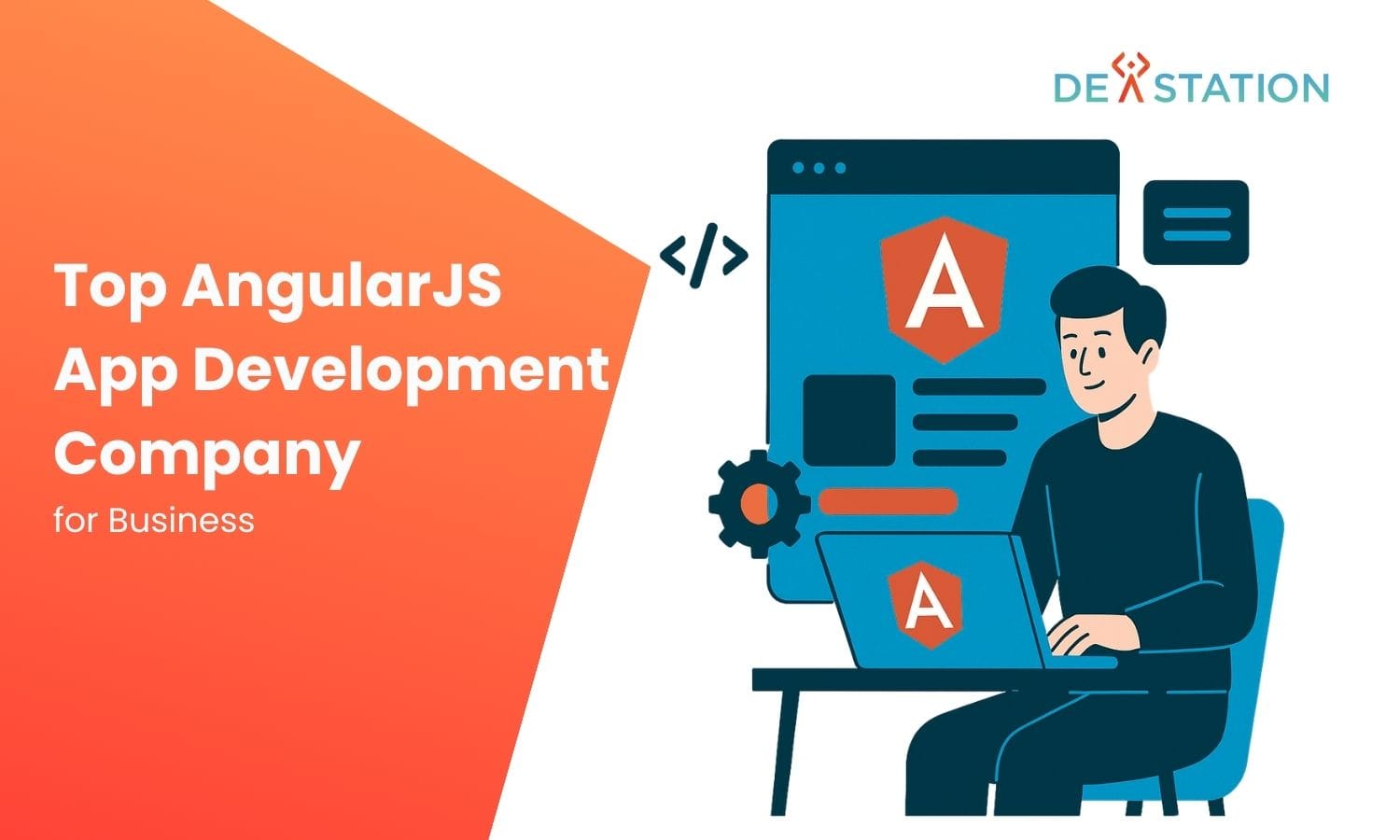
Angular is a TypeScript-based, full-featured framework for building scalable single-page applications. This guide walks you through its architecture, component and module system, dependency injection, routing, testing, and performance optimization so you can ship production-grade apps with confidence.
- Architecture: Component-based with modules, services, and a reactive change-detection tree.
- DI: Hierarchical injectors provide testable, singleton-friendly service management.
- Routing: Declarative route configuration with lazy loading, guards, and resolvers.
- Testing: Jasmine + Karma for unit tests, Cypress/Playwright for E2E.
- Performance: OnPush change detection, lazy loading, signals, and preloading strategies.
Angular, maintained by Google, is a platform and framework for building client-side applications using HTML, CSS, and TypeScript. Unlike libraries that focus only on a view layer, Angular ships an opinionated, end-to-end toolkit: routing, forms, HTTP, state management primitives, internationalization, accessibility tooling, and a powerful CLI.
Since the introduction of standalone components, signals, and the new control flow (@if, @for, @switch), modern Angular development is leaner and more reactive than the NgModule-era codebases that preceded it. This guide reflects the current best practices for Angular 17+.
Angular’s batteries-included philosophy means fewer decisions about which library to pick for routing, forms, or HTTP. The framework enforces structure, making it well suited for large teams and enterprise codebases where consistency matters.
An Angular application is a tree of components, each owning a slice of the UI. Services hold business logic and state, injected via the dependency injection system. The framework compiles templates into efficient render functions and runs a change-detection pass whenever application state changes.
Components
The fundamental UI building block. Each component declares a template, styles, and a TypeScript class decorated with @Component. Components form a tree rooted at the application bootstrap component.
Services
Singleton-scoped classes that encapsulate data access, business rules, and shared state. Decorated with @Injectable and registered with a root or component-level provider.
Directives
Structural (*ngIf, @for) and attribute directives that transform the DOM or extend element behavior without owning a template.
Pipes
Transform display values in templates. Built-in pipes like date, currency, and async handle common formatting; custom pipes extend this for domain logic.
DI Container
The hierarchical injector tree resolves dependencies at runtime. Providers declared at different levels enable fine-grained control over service scoping.
Change Detection
Angular walks the component tree top-down, comparing bound values. Zone.js triggers checks on async events; OnPush and signals narrow the work to affected subtrees.
| Concept | Role | Example |
|---|---|---|
| Module | Compilation unit (optional with standalone) | AppModule |
| Component | UI + logic unit | AppComponent |
| Service | Shared logic / state | DataService |
| Directive | DOM behavior | ngClass |
| Pipe | Template transform | uppercase |
Components are the heart of every Angular application. A component class binds data and methods to a template, while metadata (selector, template, styles) tells Angular how to instantiate and render it.
ng generate component user-profile
or with standalone flag
ng g c user-profile --standalone
This creates the component class, template, styles, and spec file.
@Component({
  selector: 'app-user-profile',
  standalone: true,
  imports: [CommonModule],
  template: <section>
    <h1>{{ user.name }}</h1>
    @if (user.bio) {
      <p>{{ user.bio }}</p>
    }
  </section>,
})
export class UserProfileComponent {
  @Input() user!: User;
}export class CounterComponent {
count = signal(0);
increment() {
this.count.update(v => v + 1);
}
}Signals integrate with the new change detection flow for fine-grained updates.
With standalone components, import dependencies directly. With NgModules, declare them in a shared or feature module.
NgModules group components, directives, and pipes into compilation contexts. Standalone components (default in Angular 17+) are self-contained and import their own dependencies. New projects should prefer standalone; existing NgModule apps can migrate incrementally.
| Feature | NgModule | Standalone |
|---|---|---|
| Declaration | In declarations array |
Self-declaring via @Component |
| Imports | Module-level | Per-component imports |
| Lazy loading | Lazy module | loadComponent / lazy routes |
| Tree-shaking | Coarser | Finer, better dead-code elimination |
Angular’s DI system is one of its most powerful features. Instead of constructing services with new, you declare what a component needs and let the injector provide the instance. This makes code testable, loosely coupled, and easy to mock.
@Injectable({ providedIn: 'root' })
export class ApiService {
  constructor(private http: HttpClient) {}
}
providedIn: 'root' creates a single app-wide instance that is tree-shakeable.
@Component({...})
export class UsersComponent {
  private api = inject(ApiService);
  users = signal<User[]>([]);
}
The inject() function is the modern alternative to constructor injection.
const API_URL = new InjectionToken<string>('API_URL');
{ provide: API_URL, useValue: 'https://api.example.com' }
Root Injector
App-wide singleton. The default for most services.
Component Injector
Instance scoped to a component subtree. Use for per-component state like form or dialog services.
Lazy Module Injector
Created when a lazy-loaded route activates. Useful for feature-scoped singletons.
In unit tests, override providers with TestBed.overrideProvider to inject mocks. This is why DI matters: swapping a real HttpClient for a fake keeps tests fast and deterministic.
Angular’s router maps browser URLs to component views. It supports nested routes, route parameters, query parameters, guards, resolvers, and data preloading. With standalone APIs, you can lazy-load individual components rather than entire modules.
export const routes: Routes = [
  { path: '', component: HomeComponent },
  {
    path: 'users',
    loadComponent: () =>
      import('./users/users.component')
        .then(m => m.UsersComponent),
    children: [
      { path: ':id', component: UserDetailComponent },
    ],
  },
  { path: '**', component: NotFoundComponent },
];export const authGuard: CanActivateFn = () => {
const auth = inject(AuthService);
return auth.isLoggedIn || createUrlTreeTo('/login');
};Functional guards are the modern, injectable form.
export const userResolver: ResolveFn<User> = (route) =>
inject(UserService).get(route.paramMap.get('id')!);provideRouter(routes,
withPreloading(PreloadAllModules))Preloading improves perceived performance by loading lazy bundles during idle time.
| Concept | Purpose | API |
|---|---|---|
| Route guard | Allow/deny navigation | CanActivateFn |
| Resolver | Pre-fetch route data | ResolveFn |
| Lazy load | Code-split on demand | loadComponent |
| Child routes | Nested view composition | children |
| Outlet | Render target | router-outlet |
Angular has first-class testing support. The CLI generates a .spec.ts file alongside every component, service, and pipe. Jasmine is the default test framework, Karma the default test runner, and TestBed provides the Angular-aware testing module.
Unit Tests
Test individual components and services in isolation using TestBed. Mock dependencies to keep tests focused and fast.
Integration Tests
Render a component subtree with real services (or HTTP mocking) to verify interactions between parts.
E2E Tests
Cypress or Playwright drive the real browser against a running dev server. Ideal for verifying critical user flows.
describe('UserProfileComponent', () => {
  let fixture: ComponentFixture<UserProfileComponent>;

  beforeEach(async () => {
    await TestBed.configureTestingModule({
      imports: [UserProfileComponent],
    }).compileComponents();
    fixture = TestBed.createComponent(UserProfileComponent);
  });

  it('displays user name', () => {
    fixture.componentRef.setInput('user', { name: 'Ada' });
    fixture.detectChanges();
    const h1 = fixture.nativeElement.querySelector('h1');
    expect(h1.textContent).toContain('Ada');
  });
});Aim for broad unit-test coverage of services and pure logic, targeted component tests for template behavior, and a focused set of E2E tests for the highest-value user journeys. Use HttpTestingController to mock HTTP without hitting the network.
| Tool | Scope | Best For |
|---|---|---|
| Jasmine + Karma | Unit / integration | Default Angular test stack |
| Jest | Unit / integration | Fast, isolated Node-based runs |
| Web Test Runner | Unit / integration | Modern browser-based testing |
| Cypress | E2E | Time-travel debugging, visual |
| Playwright | E2E | Cross-browser, parallel |
Angular applications can feel instant when change detection is focused, bundles are split, and templates are lean. Modern Angular gives you signals for fine-grained reactivity and the new control flow for faster template compilation.
@Component({
  changeDetection: ChangeDetectionStrategy.OnPush...
})
OnPush limits checks to when inputs change or events fire within the component.
items = signal<Item[]>([]);
computed total = computed(() =>
  this.items().reduce((s, i) => s + i.price, 0));
Signals let Angular know exactly which views depend on which data, skipping unaffected subtrees.
Use loadComponent and loadChildren to split the initial bundle. Only the code needed for the first view loads on startup.
@for (item of items(); track item.id) {
  <app-item [item]="item" />
}
Tracking by a stable identity prevents Angular from re-creating DOM nodes unnecessarily.
Use pure pipes for expensive formatting. Wrap costly computations in computed signals so they cache until inputs change.
Set component and initial bundle budgets in angular.json. The CLI warns when budgets are exceeded, catching bloat before it ships. Combine with a CDN, gzip/Brotli compression, and service-worker caching for fast repeat loads.
You now have the full picture of modern Angular development. Here is how to put it into practice.
npm install -g @angular/cli
ng new my-app --routing --style=scss
cd my-app
ng serveng generate component dashboard
ng generate service services/dataWire the service into the component with inject() and render data with the new control flow.
Define routes with loadComponent for code-split feature areas. Add guards for protected views.
Run ng test for unit tests. Add Cypress or Playwright for E2E coverage of your critical flows.
Enable OnPush, adopt signals, set bundle budgets, and build for production with ng build --configuration production. Deploy to your host of choice.
Explore the official Angular documentation for guides on forms, SSR with Angular Universal, progressive web apps, and Angular Material. Join the Angular community on GitHub and Discord for support and the latest updates.
Dev Station works with teams across the United States and the United Kingdom. Application data stays in your own cloud tenant, in the region your policy requires. Where a client needs SOC 2, HIPAA or UK GDPR evidence, we build the technical controls those frameworks ask for and work alongside the assessor who issues the certificate. Our engineers work from Vietnam with overlap into US Eastern, US Pacific and UK GMT hours, and we invoice in USD or GBP.
Want an AI assistant to summarize or cite this guide?
Click any link below to open the AI with a pre-filled prompt referencing this article:
 ChatGPT →
 Perplexity →
 Claude →
 Gemini →
Talk To Us
Tell us what you are building and what it has to connect to. An engineer answers, and you get a straight view of what the work would take.
Get In Touch →