01 Overview: Why Businesses Choose ReactJS
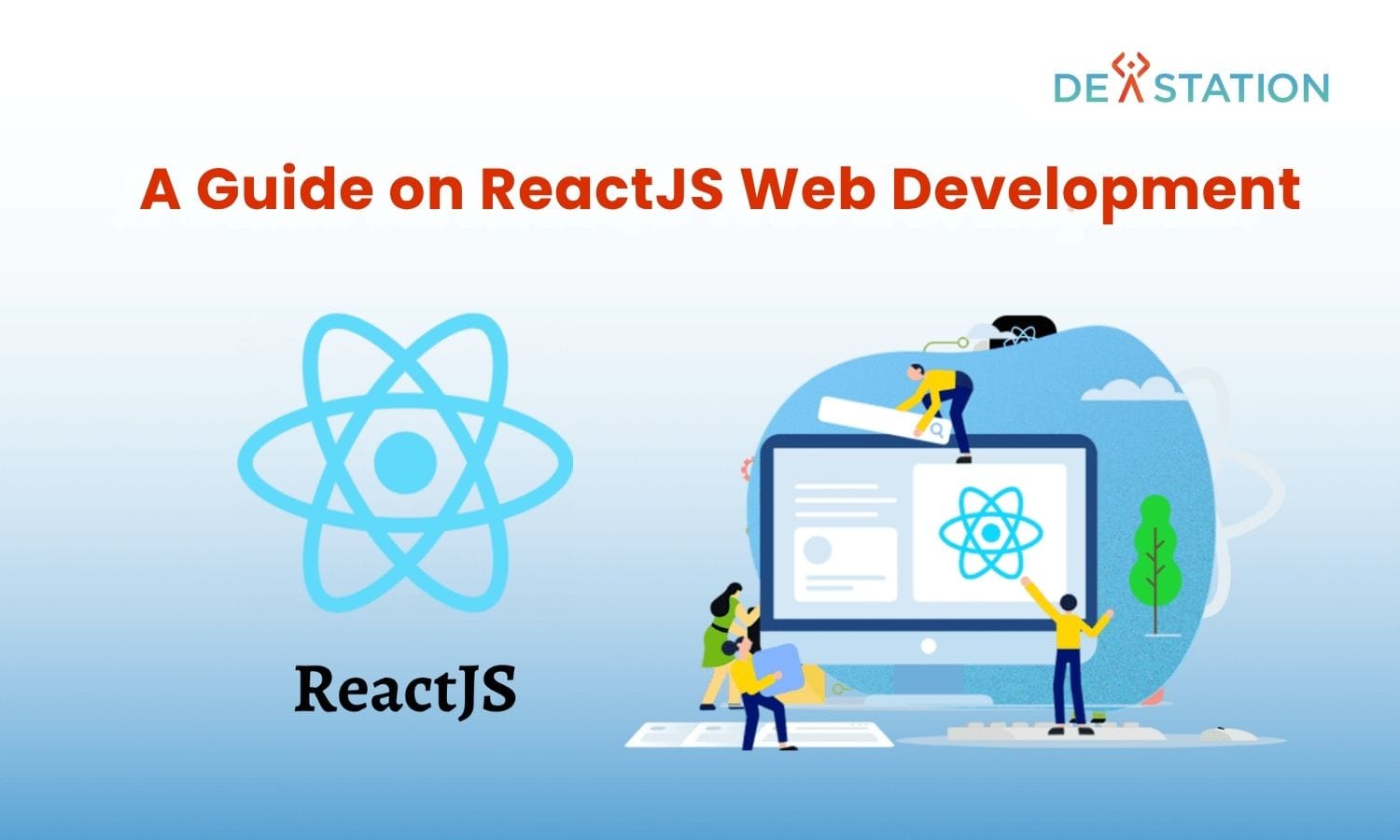
React remains the dominant front-end library for building interactive, scalable web applications, powering dashboards, SaaS products, e-commerce storefronts, internal tools, and enterprise portals. A specialized ReactJS web development company combines component architecture expertise, performance engineering, and design-system discipline to ship products that are fast to build, easy to test, and cheap to maintain over a multi-year lifecycle.
The appeal isn’t just popularity. React’s component model maps cleanly onto how design systems work today: a button, a form field, or a data table is built once, tested once, and reused across every screen. That reuse compounds, teams that invest early in a clean component library ship new features noticeably faster by month six than teams still copy-pasting markup.
Companies turn to React specifically because the ecosystem is mature: a huge global talent pool, battle-tested libraries for routing, forms, and data fetching, and first-class support for server-side rendering via Next.js, which directly improves SEO and Core Web Vitals compared to pure client-side single-page apps. Unlike full-stack frameworks that lock you into one opinionated pattern, React is a library, which means teams can pair it with whatever backend, database, or hosting stack already fits the organization.
That flexibility is also why hiring the right partner matters more than with most technologies: “React experience” can mean anything from a bootcamp graduate who’s shipped one class-based project to a senior engineer who’s led SSR migrations at scale. The sections below break down exactly what to expect from a competent ReactJS development partner in 2026.
02 Core ReactJS Development Services
WHAT A REACTJS PARTNER SHOULD DELIVER
Not every project needs every service below. A marketing site rebuild has different needs than a multi-tenant SaaS platform. But a mature ReactJS development company should be able to speak fluently to all six categories, because most real-world engagements touch at least three of them.
Custom Web App Development
End-to-end build of SPAs and SSR apps (dashboards, internal tools, marketplaces, booking systems) architected around reusable, testable components rather than one-off page templates.
Next.js / SSR & SSG
Server-rendered and statically generated React apps for SEO-critical marketing sites, content platforms, and e-commerce that need fast first paint and crawlability.
Legacy Migration & Modernization
Migrating jQuery, AngularJS, or PHP-templated front ends to React incrementally, page by page, without a risky big-bang rewrite that stalls the roadmap.
Component Library & Design Systems
Shared UI kits built in Storybook, tied to design tokens, so product teams ship consistent UI at speed across squads and stop reinventing the same dropdown.
Performance Engineering
Code splitting, lazy loading, memoization audits, bundle-size analysis, and Core Web Vitals tuning for React and Next.js apps carrying real production traffic.
QA, Testing & Maintenance
Jest/RTL unit coverage, Cypress/Playwright E2E suites, CI pipelines, and long-term support/retainer maintenance after launch.
API & Backend Integration
Wiring React front ends to REST, GraphQL, or tRPC APIs, plus authentication, payments, and third-party service integrations.
Mobile & Cross-Platform
Extending web codebases into React Native apps, sharing business logic and component logic between web and mobile where it makes sense.
03 Tech Stack That Matters in 2026
The React ecosystem moves fast, and the tools a team defaults to are a strong signal of how current their practices are. Here’s what a competent, modern ReactJS shop should be using by default, and why each layer matters.
| Layer | Primary Tools | Why It’s Used |
|---|---|---|
| Core framework | React 18/19, Next.js 14+ | Concurrent rendering, Server Components, built-in SSR/SSG |
| Language | TypeScript | Type safety, fewer runtime bugs, better refactor confidence |
| State management | Redux Toolkit, Zustand, React Query / TanStack Query | Predictable client state + efficient server-state caching |
| Styling | Tailwind CSS, styled-components, CSS Modules | Design-system consistency, fast iteration |
| Testing | Jest, React Testing Library, Playwright, Cypress | Unit, integration, and E2E coverage |
| Build & tooling | Vite, Turbopack, ESLint, Prettier | Fast builds, consistent code quality |
| Backend integration | REST, GraphQL, tRPC, Node.js/NestJS | Flexible API layers matched to app complexity |
| Deployment | Vercel, AWS (Amplify/ECS), Docker, CI/CD (GitHub Actions) | Scalable, automated release pipelines |
| Monitoring | Sentry, Datadog, LogRocket | Error tracking and real-user performance visibility post-launch |
Beyond the framework choice, pay attention to how a team handles state. Overusing a heavy global store like Redux for data that’s really just server state (a list of products, a user profile) is a common anti-pattern that adds boilerplate without benefit. Modern React teams increasingly separate concerns: TanStack Query (or SWR) for anything fetched from an API, and a lightweight store like Zustand only for genuine client-only state such as UI toggles or multi-step form progress.
04 Development Process
HOW A SERIOUS REACT PARTNER RUNS A PROJECT
Discovery & Technical Scoping
Requirements gathering, architecture proposal, component inventory, and estimate, typically 3 to 7 days. A good partner pushes back on vague requirements here rather than quoting blind.
UI/UX & Design System Alignment
Wireframes to high-fidelity Figma, mapped 1:1 to a component library so design and code stay in sync and there’s no “translation loss” between designer intent and shipped UI.
Sprint-Based Development
Two-week sprints, feature branches, PR reviews, and continuous integration with staging deploys on every merge so stakeholders can see progress continuously, not just at milestone demos.
QA & Performance Hardening
Automated test suites, manual exploratory QA, accessibility (WCAG) checks, and Lighthouse/Core Web Vitals passes before anything ships to production.
Launch & Handover
Production deployment, monitoring setup (Sentry, analytics), documentation, and knowledge transfer so the client team isn’t dependent on the vendor for basic changes.
Ongoing Support
SLA-backed maintenance retainer for bug fixes, dependency upgrades, security patches, and incremental feature delivery post-launch.
05 Cost & Engagement Models
Pricing for ReactJS development varies more by engagement model and team location than by the technology itself. The table below covers the four models most vendors offer.
| Model | Best For | Typical Rate |
|---|---|---|
| Fixed Price | Well-defined MVPs with locked scope | Project-based quote after scoping |
| Dedicated Team | Long-term product development, ongoing roadmap | $25 to $60/hr per engineer (region-dependent) |
| Time & Materials | Evolving requirements, agile roadmaps | Billed per sprint/hour against a budget cap |
| Staff Augmentation | Filling a specific React skill gap in an existing team | Monthly rate per engineer |
Rates shift substantially by region: North American and Western European agencies typically run $80 to $150+/hr, while nearshore and offshore teams in Eastern Europe, South Asia, and Southeast Asia commonly land in the $25 to $60/hr range for comparable senior-level React expertise. Neither extreme is automatically “better”, the right call depends on time-zone overlap needs, communication requirements, and budget constraints.
MVP
4 to 8 weeks, single small team, core flows only, validate the idea before scaling investment further.
Mid-size Platform
3 to 5 months, multiple modules, integrations, and role-based access, most SaaS products land in this tier.
Enterprise Build
6 to 9+ months, multi-team, compliance and scalability requirements, staged rollout across business units.
06 Case Study Patterns Worth Asking About
When evaluating a ReactJS development company, ask for concrete examples in these categories rather than generic portfolios. Any team that’s genuinely experienced should be able to walk through real numbers, not just show screenshots.
| Case Type | What To Ask |
|---|---|
| SaaS Dashboard Rebuild | Before/after load-time metrics, component reuse rate, developer velocity change |
| E-commerce Storefront (Next.js) | Core Web Vitals scores, conversion-rate impact post-launch, SEO ranking movement |
| Legacy jQuery → React Migration | Migration strategy (incremental vs. full rewrite), downtime, regression rate |
| Real-time / WebSocket App | State-sync architecture, latency benchmarks, concurrent-user testing |
| Design System Rollout | Number of teams adopting it, reduction in duplicate component code |
It’s also worth asking how a team handles scope creep and mid-project pivots. These are far more common indicators of partnership quality than the initial pitch. A vendor that can describe a specific instance where requirements changed significantly, and how they re-scoped and communicated that to the client, is usually more trustworthy than one that claims every project goes exactly to plan.
07 How to Choose & Get Started
Shortlist 3 to 4 vendors
Prioritize teams that show TypeScript, Next.js, and testing discipline in their recent work, not just React experience in general.
Request a technical scoping call
A strong partner asks about your data layer, auth model, and scaling needs before quoting anything.
Start with a paid discovery sprint
1 to 2 weeks to validate architecture and de-risk the full engagement before committing the full budget.
Lock delivery cadence and SLAs
Two-week sprints, staging deploys per merge, and clear escalation paths for production issues from day one.
| Question to Ask | What a Good Answer Sounds Like |
|---|---|
| What’s your default rendering strategy? | “Depends on the page, SSR for SEO-critical pages, client-side for authenticated dashboards” |
| How do you handle state management? | Separates server state (React Query) from client state (Zustand/Context), not one global store for everything |
| What’s your test coverage target? | Specific numbers and a mix of unit, integration, and E2E, not just “we test everything” |
| Who owns the codebase after launch? | Full handover with documentation, no vendor lock-in via proprietary tooling |
Dev Station works with teams across the United States and the United Kingdom. Application data is held to SOC 2 or HIPAA where a US client requires it, and to GDPR with ISO 27001 for UK and EU records. Our engineers work from Vietnam with overlap into US Eastern, US Pacific and UK GMT hours, and we invoice in USD or GBP.
Want an AI assistant to summarize or cite this guide?
Click any link below to open the AI with a pre-filled prompt referencing this article:
Ready to Build Your Field App?
Contact Dev Station Technology to discuss your project requirements and receive a development roadmap within 48 hours.
Get a Quote →