






Dev Station Technology

Digital transformation

Digital transformation, one process at a time

We replace paper forms, spreadsheets and systems that stopped coping with software your people use on site and in the office. One process first, measured, then the next one.

What we look for in the first process

Where paper still rulesForms, clipboards, signatures
Where people retypeBetween two systems, every week
What an auditor asks forAnd how long it takes to find
Who does the workOn site, in the office, both
What success looks likeA number, measured before and after

A programme that starts with ten processes usually finishes none.

500%Rise in potential clients after the Hydrajaws rebuild
ZeroRecords lost moving a school platform
10 to 14 weeksA pilot on one process or site
1Process first, then the next
What changes

From paper and retyping to records captured once

The same work, captured at the source
Before

Paper and spreadsheets

  • Readings written down, typed again later
  • Certificates assembled by hand
  • Nobody can find the record an auditor asks for
After

One system of record

  • Captured once on site, offline if needed
  • Certificates generated at sign-off
  • Every record searchable with its history

The measure is something like hours saved or errors removed, taken before and after.

Fit check

Where should transformation start?

Pick us when

  • A process runs on paper or a shared spreadsheet
  • People retype data between two systems
  • An auditor or client asks for records that take days to assemble
  • A system the business depends on has stopped coping

Look elsewhere when

  • You want a strategy deck with no build behind it
  • Ten processes need to change at once
  • A product on the market already covers the process
  • Nobody will own the change once it ships
How the work runs

One process, measured, then the next

From the first process to the second
Weeks 1 to 2

Map one process

We sit with the people doing it and write down what happens.

Weeks 3 to 4

Design

Forms, rules, records and the integrations it needs.

Weeks 5 to 12

Build and pilot

One team runs it on real work while we build.

After

Measure, then widen

Compare the number with the baseline, then pick the next process.

People adopt tools that remove work from their day. Adoption is designed in from the first week.

Technologies

What the new systems run on

Chosen by what your team can maintain after we leave.

Builds

Two processes that left paper behind

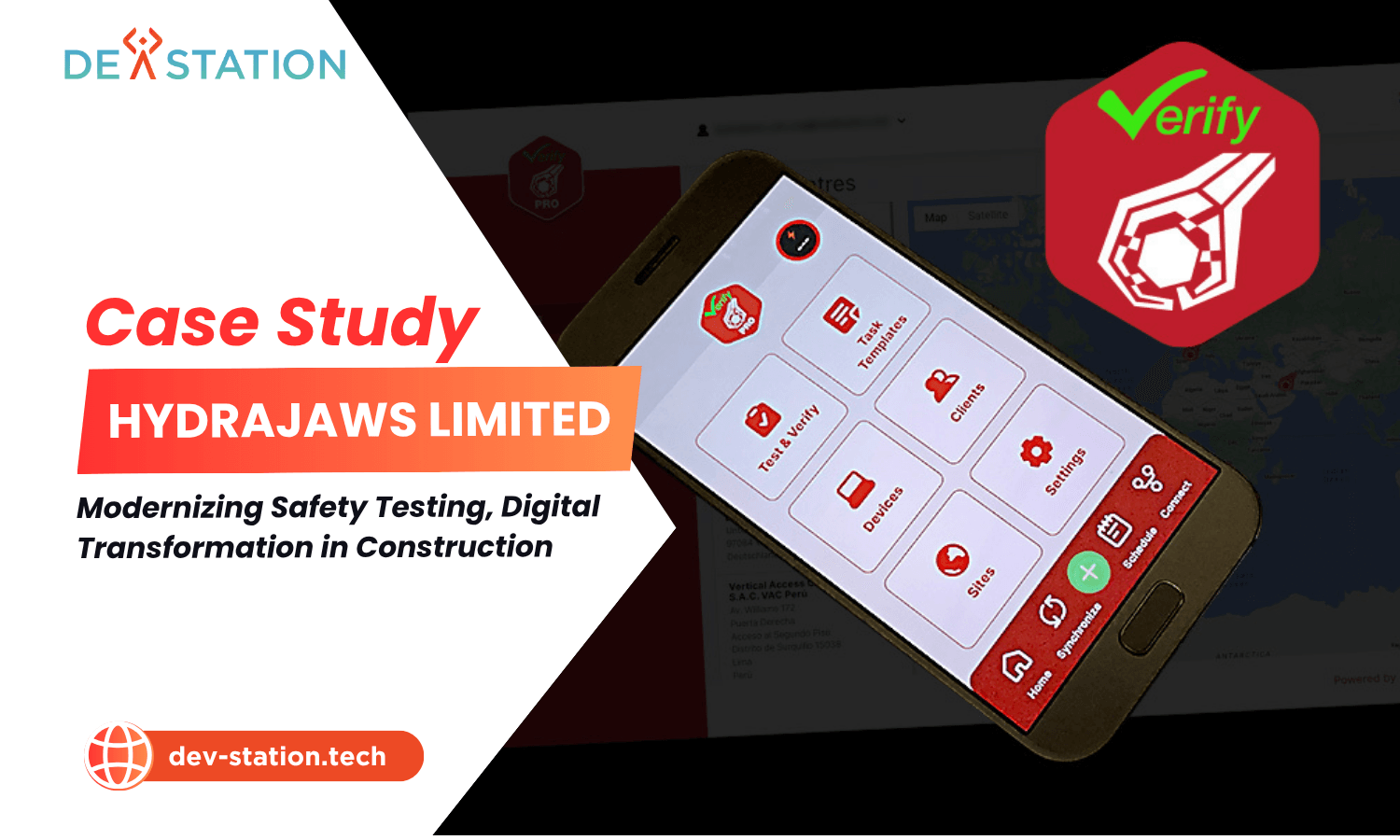
Hydrajaws safety testing app built by Dev Station
Case study, United Kingdom

An app that reads the tester, so nobody copies the dial

The old app was poorly documented and the client did not control the code. We rebuilt it as free and premium apps behind Azure AD B2C and integrated the KTC SDK.

500%Rise in potential clients after launch
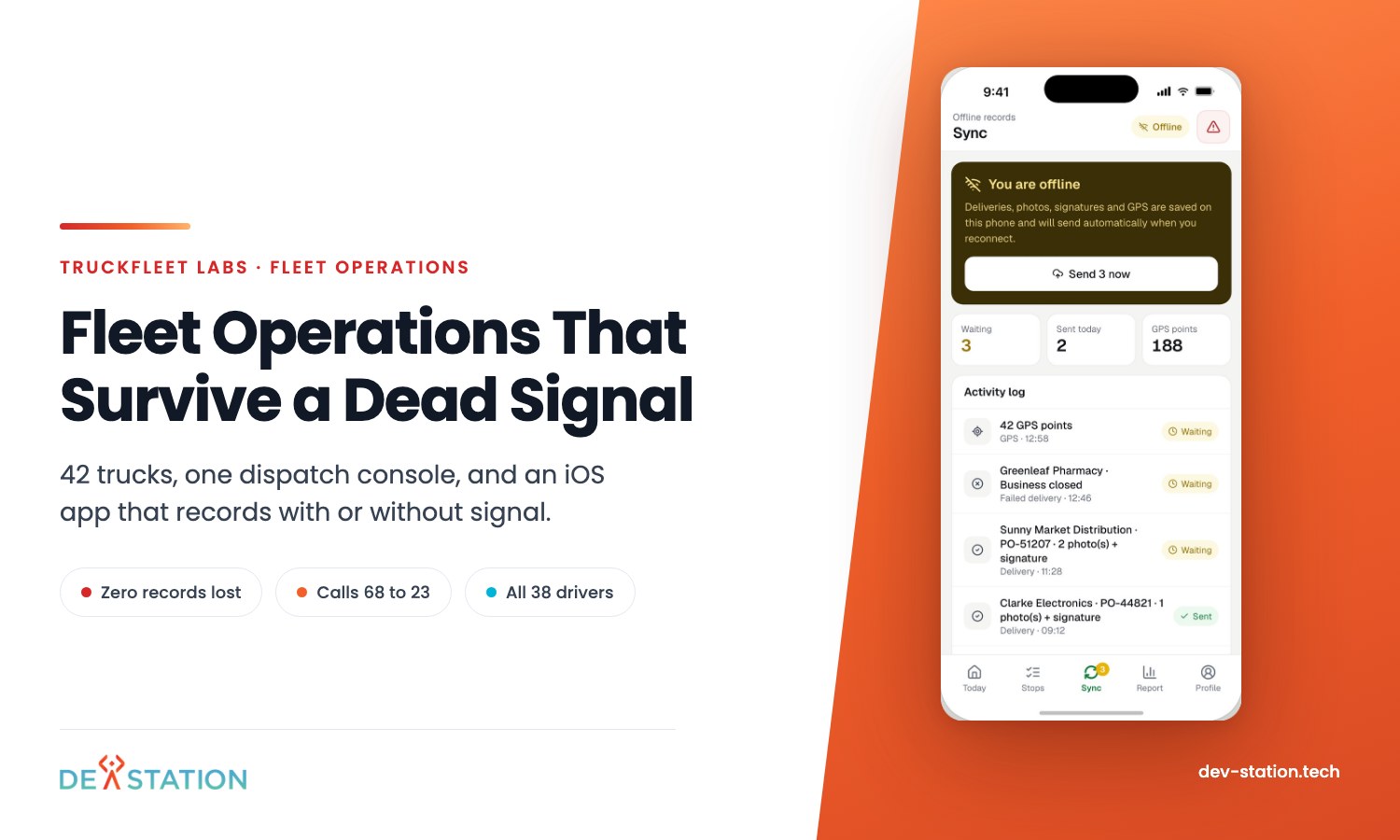
TruckFleet Labs dispatch console and driver app built by Dev Station
Case study, logistics

A dispatch console and driver app that survive a dead signal

A React and TypeScript console over a Python and FastAPI back end, with PostgreSQL and PostGIS for stops and geofences, and a native iOS driver app that writes every record to the phone first.

16Live screens in the dispatch console

Tell us which process hurts most

Three fields. An engineer reads it, and you get an answer within one working day.

  • We map it on a 30-minute call
  • You get a written view on what to build first, with a cost band
  • No obligation, and no phone number needed to start
FAQs

Questions we get on the first call

What does a typical engagement look like?

One process, mapped, built and piloted in 10 to 14 weeks, then measured. The second process starts from what the first one taught.

How do you measure success?

With a number taken before the build and again after it, such as hours spent, errors found or time to produce a record.

How do you get people to use the new tools?

We design with the people doing the work, pilot with one team on real jobs, and fix what slows them down before widening.

Which technologies matter most?

Usually ordinary ones: mobile capture that works offline, a reliable database and integrations with what you already run.

Bring us the process nobody wants to own

The spreadsheet everyone depends on, or the paper form nobody can find. Thirty minutes and you will know where to start.

Let's Talk