





Dev Station Technology

UX and UI design

Interfaces for people who are busy, outdoors or being audited

We design the screens that go with the systems we build: field apps used one-handed in poor light, operator dashboards, and product interfaces a brand is judged on. Prototypes get tested before anyone writes production code.

What we test a prototype against

One hand, gloves onTargets, spacing, reach
Bright sun, dim plant roomContrast in both
Interrupted halfwayDraft survives, work resumes
First-time userTask done unaided
Signed off by the ownerBefore production code

Findings here are cheap. The same findings after launch are not.

5 to 8Users tested per role, unaided
3 to 4 weeksA prototype and testing round for one application
WCAG 2.2 AAOur accessibility baseline
500%Rise in potential clients after the Hydrajaws redesign
What you get

Six things we produce, all of them usable

The deliverable is the component library your engineers build against
Task mapWhat each role does, in order, including the workarounds they invented.
Clickable prototypeTested with real users at real data density before production code.
Component library in codeAngular or React components handed over with the design file.
States and accessibilityEmpty, loading, offline, error and partial permission, checked against WCAG 2.2 AA.

We design what we then build, so the handover between design and engineering loses nothing.

Fit check

Is this our kind of design?

Pick us when

  • Field apps used in bad conditions by trained staff
  • Operator dashboards where a missed signal costs money
  • Product interfaces that must feel worth paying for
  • Forms that follow a regulated procedure

Look elsewhere when

  • A logo, brand system or tone of voice
  • Marketing sites and campaign pages
  • Photography and illustration direction
  • Packaging and print
How the work runs

Watch the work before drawing anything

From observation to code
Week 1

Watch and map

We sit with the people doing the job, where they do it, and write down the workarounds.

Week 2

Prototype

Clickable, at real data density, covering the awkward states.

Week 3

Test and revise

In front of real users, unaided. Fix what fails, then get sign-off.

Into build

Hand over as code

Component library and specs go to engineering, who are usually us.

We apply your existing brand system and extend it in your conventions where it has gaps.

Technologies

What designs are built in

Figma, or whatever your team already uses. The code is what keeps the product true to the design.

Builds

When the interface was the blocker

Verify Auto automotive safety app built by Dev Station
Case study, automotive

A premium interface for a brand judged on its finish

Verify Auto needed a compliance app whose interface matched the brand as precisely as the logic matched the standard. We validated the direction through prototypes with stakeholders before production code.

PrototypesValidated before production code
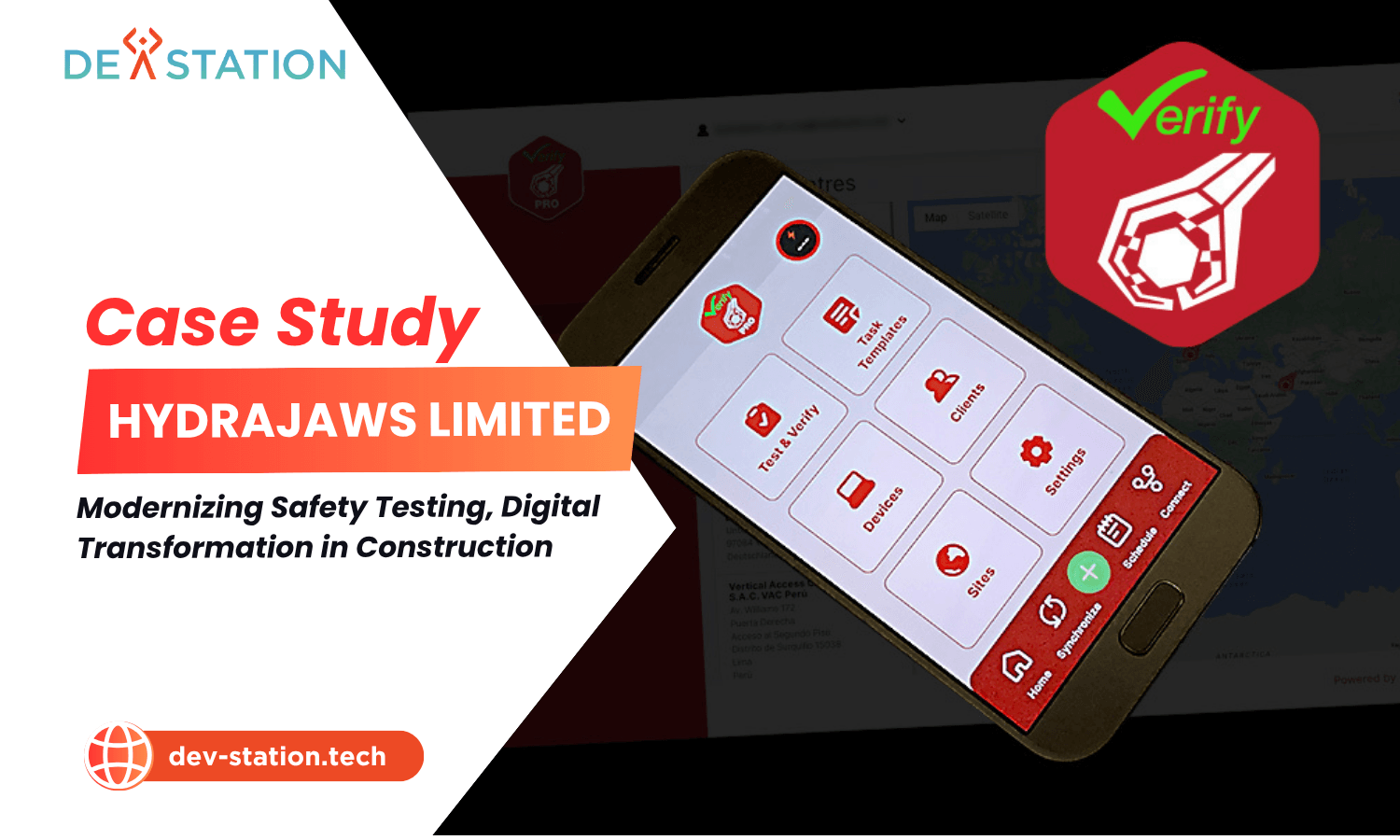
Hydrajaws safety testing app built by Dev Station
Case study, United Kingdom

An interface that was holding back sales

Customers found the old testing software hard to use, and the commercial results showed it. The rebuild gave the apps a clearer structure, a free tier to try, and a premium tier that reads instruments.

500%Rise in potential clients after the rebuild

Tell us who uses it and where

Three fields. A designer reads it, and you get an answer within one working day.

  • We map the tasks and the conditions they happen in
  • You get a plan for prototype and testing, with a cost band
  • No obligation, and no phone number needed to start
FAQs

Questions we get on the first call

Can we buy design without the build?

Yes. You get the task map, the prototype, the screens and a component library, and you can take them to any engineering team.

Do you work to our existing brand?

Yes, and we prefer it. We apply a brand system and do not create one.

How many users do you test with?

Usually five to eight per role. The aim is to find what stops people, and statistics are beside the point.

Do you design to accessibility standards?

We work to WCAG 2.2 AA for contrast, target size, keyboard order and labelling. A formal audit against a legal obligation is separate specialist work, and we tell you when you need one.

Show us where people give up

The screen everyone avoids, the form finished on paper instead. That is where the design work starts, and thirty minutes is usually enough to find it.

Let's Talk