Dev Station Technology

Backend

C++ development services beside our device integrations

We have no published C++ build. We have integrated a torque tester SDK and Bluetooth LE devices into apps, and we say plainly where C++ would sit in that work.

GoC++
0Published builds in C++
C++23Current ISO standard
C++26In draft, with no date on isocpp.org
2Device-integration builds nearby
What we build

What we would take on in C++

Device-side code

Code that talks to measurement hardware.
Bluetooth LE bridges

Readings from pull testers and torque wrenches, as in our apps.

Standard upgrades

Projects moved to C++23 where the toolchain allows.

Project takeovers

Codebases left by another vendor, documented before anything changes.

Architecture

Where C++ would sit

C++ between the device and the app
Device
Torque testerDigital torque readings
Pull testerBluetooth LE
Firmware and SDK
C++Where it would sit
KTC SDKHydrajaws
App
Xamarin logo
Xamarin and .NET appFree and paid versions

Illustration. A dashed outline marks where the technology would sit. We have no published build on it.

Standard

C++23 is published, C++26 is a draft

Where the language standard stands
Published

C++23

  • The current ISO standard, ISO/IEC 14882:2024
  • You can buy the official text
In progress

C++26

  • Draft sources are maintained on GitHub
  • The draft does not match the final text of any standard

Source: isocpp.org, The Standard, checked 5 November 2026. The page gives no release date for C++26.
Builds

The closest builds we can show you

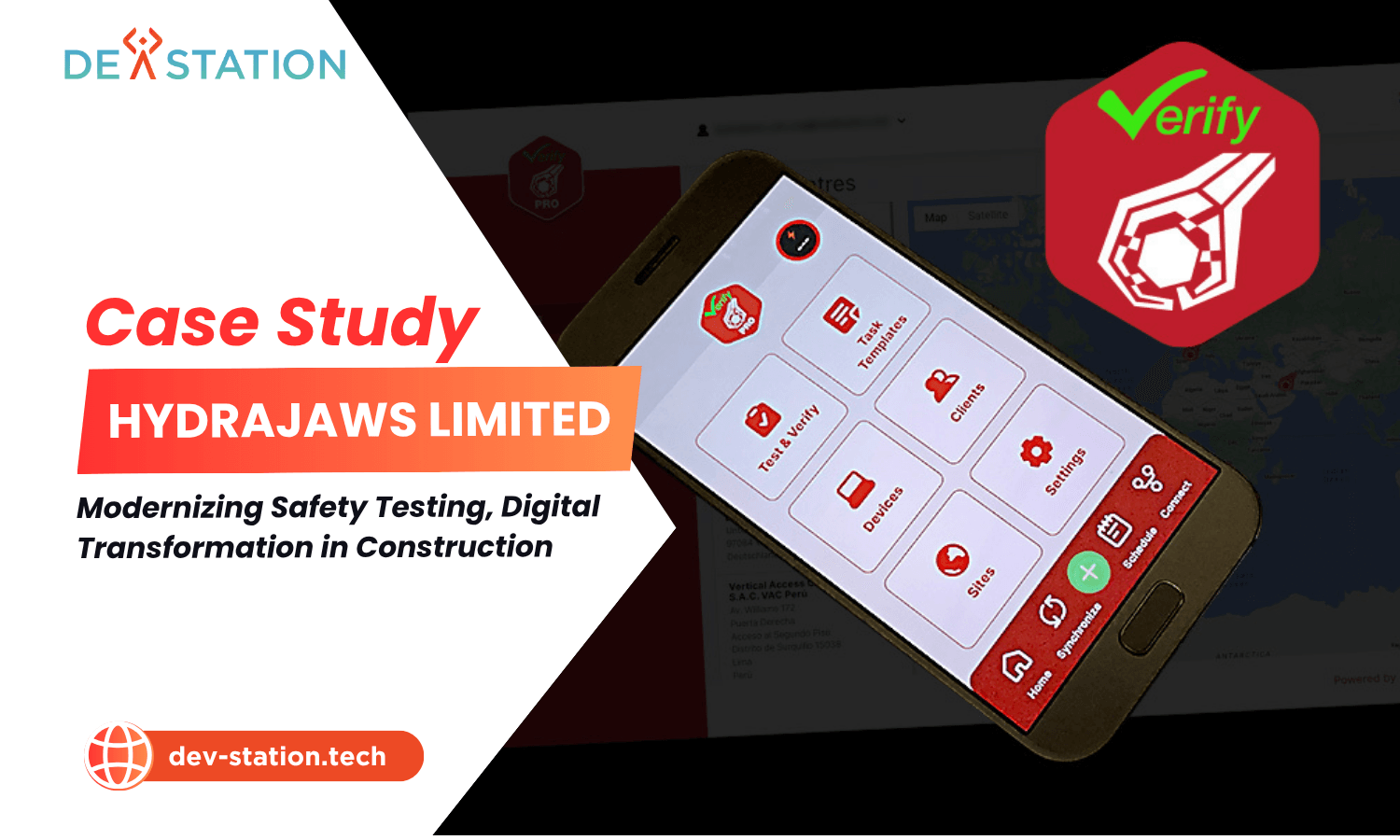
Hydrajaws safety testing app built by Dev Station
Construction safety testing, United Kingdom

Hydrajaws Limited

A torque tester SDK integrated into a Xamarin and .NET app for real-time readings.

500%Surge in potential clients
Digital testing platform for anchor and torque checks built by Dev Station
Statutory inspection, United Kingdom

Work-at-height anchor and torque platform

A .NET MAUI field app reading pull testers and torque wrenches over Bluetooth LE.

70%Faster reporting cycle
Fit check

When C++ is the right call

Pick C++ when

  • Code must run close to the hardware
  • A vendor SDK ships as C++ libraries
  • You already maintain a C++ codebase

Look elsewhere when

  • You need a published C++ build to inspect, which we do not have
  • A phone app that reads devices over Bluetooth LE, where we used .NET MAUI
  • A web back end, where we have shipped Python, Node.js and .NET
Stack

What C++ usually sits beside

Java logoJava
Go
Python logoPython
Android logoAndroid
.NET logo.NET
Docker logoDocker
FAQs

What buyers ask first

Which C++ standard is current?

C++23, formally ISO/IEC 14882:2024. C++26 is still in draft, and isocpp.org gives no release date for it.

Do you have a published C++ build?

No. We say so on the first call and show the nearest work, which is a torque tester SDK and Bluetooth LE device integrations.

Do you write embedded firmware?

We list embedded software among our services and have no published firmware build, so we say that on the first call and show the device integrations.

Who owns the code and the cloud accounts?

You do, from the first commit. Repositories and cloud accounts stay in your name.

Tell us what your device has to do

Thirty minutes on your hardware, your SDK and your toolchain. No sales pitch.

Let's Talk