Invoicing from project logs
Invoices generated from the work recorded, so billing follows what was done.

Invoicing, expenses and reporting that feed from the work, and tools that keep the digital records Making Tax Digital for Income Tax requires. We run our own on a customised Odoo ERP.
From 6 April 2026 sole traders and landlords above the income threshold keep digital records and send cumulative updates each quarter, then a final return. The software has to produce that without a month-end scramble.
our own customised Odoo ERP, which unified sales, projects, invoicing, HR and expenses (an internal Dev Station build)
We have no published accounting case. We say so on the first call and show the closest work.
Invoices generated from the work recorded, so billing follows what was done.
Receipts, approvals and reimbursement in one flow.
Income and expenses held as structured records, ready for quarterly updates.
Live figures replace the static export nobody trusts.
The record has to reach the tool that submits it.
Who changed what, and who signed it off.
These come from the HMRC guidance on gov.uk, updated 2 September 2025.
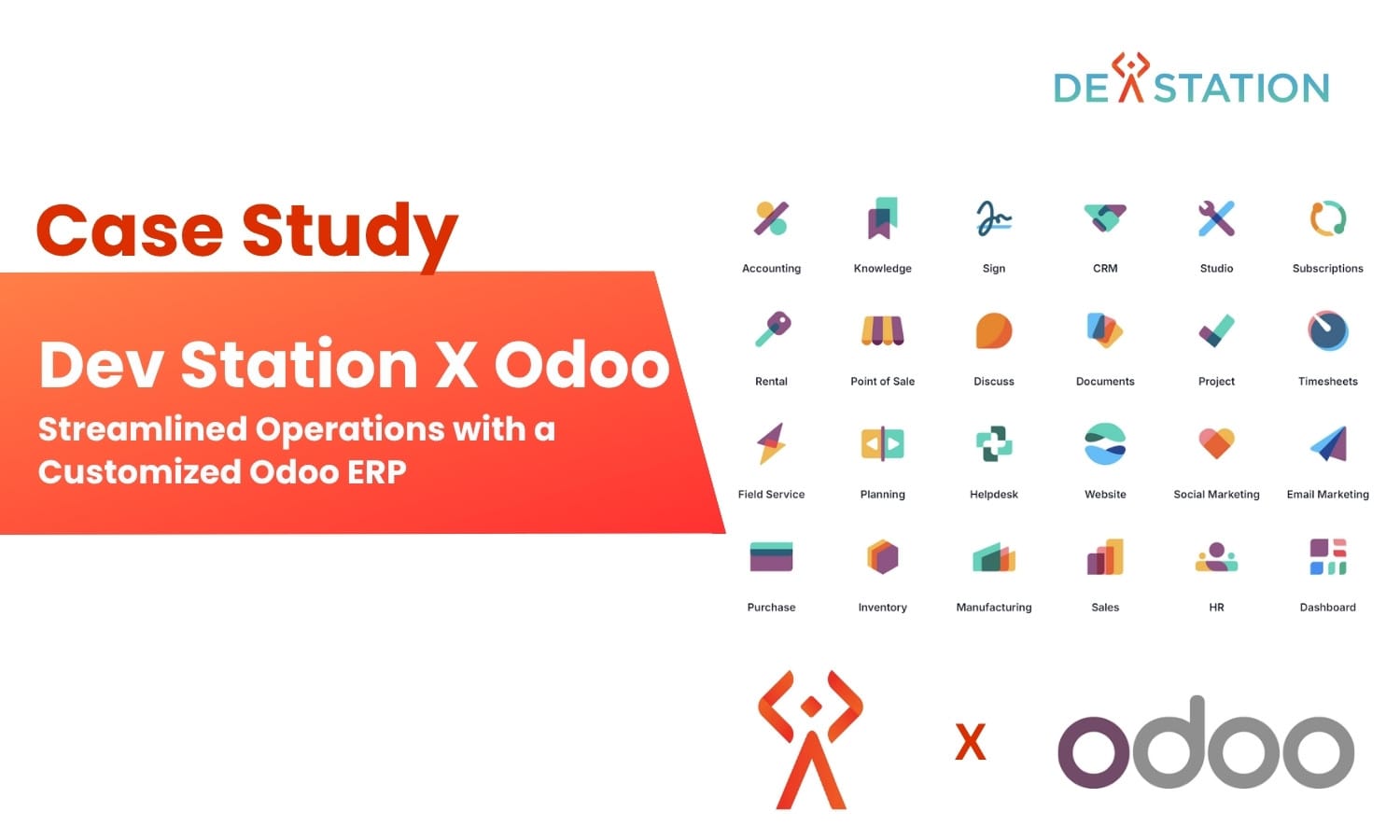
This is our own system, built and run in house. We replaced disconnected spreadsheets with a self-hosted Odoo ERP covering sales, projects, invoicing, HR and expenses, and the case page records a 40 percent gain in operating efficiency within three months.
Firms whose clients now owe quarterly updates.
Businesses crossing a threshold and needing their records in order.
Teams adding invoicing or digital records to what they ship.
Where billing, expenses and reporting live in separate files.
Related reading: finance software, business software and the Odoo ERP case study.
Not yet published. We say so on the first call and show the closest work, which is our own Odoo ERP, which is an internal build.
No. We build software. Questions about whether Making Tax Digital applies to you go to your accountant or HMRC.
Submission to HMRC goes through compatible software. We scope that connection first, since it is the part that decides whether the build is worth doing.
You do, from the first commit. Repositories and cloud accounts stay in your name.
Thirty minutes with the engineers on how records become an invoice, an expense and a return today.