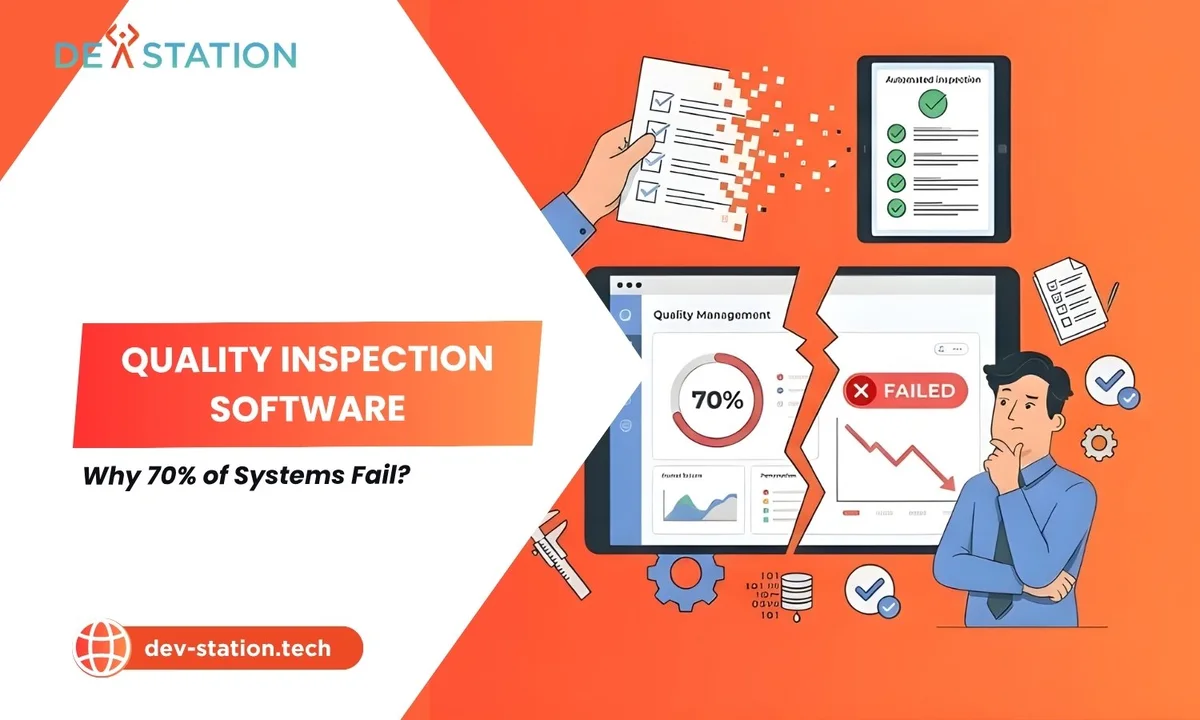
In the high-precision world of modern manufacturing, quality is the ultimate currency. Yet, despite investments in advanced robotics, sophisticated ERP systems, and state-of-the-art materials, many manufacturers remain anchored to a weak link: manual measurement.
If you are struggling with inconsistent quality, high scrap rates, or fluctuating tolerance results, you might be looking for complex solutions when the problem is staring you in the face. It is time to address the “elephant in the room” of industrial quality control: human error in manual measurement.
In this article, we dive into why manual measurement is often the hidden root cause of quality failures and how transitioning to digital gauge inspection can revolutionize your production line.
The Hidden Enemy: Why Manual Measurement Is Your Biggest Quality Bottleneck
For decades, the standard procedure for quality assurance (QA) has been an operator with a set of calipers or micrometers, measuring parts one by one. While traditional, this methodology is plagued by inherent variables that compromise precision.
1. The Human Factor (Subjectivity)
No two people measure exactly the same way. One operator may apply slightly more pressure to a micrometer than another. This “feel” factor, known as operator bias, creates a lack of consistency in your data. If your measurements aren’t consistent, your process control is non-existent.
2. The Recording Error (Transcription)
Perhaps the most dangerous aspect of manual inspection is the human-to-paper transfer. Writing down numbers on a clipboard is a recipe for disaster. Whether it’s a transcription error, a misread digit, or a completely falsified entry, manual data entry is a significant “silent killer” of quality management.
3. Latency in Data Feedback
Manual measurement is reactive. By the time an inspector measures 50 parts, records the data, and notices a trend toward the upper tolerance limit, you may have already produced 500 defective parts. You are analyzing yesterday’s quality, not managing today’s production.
Root Cause Analysis: Why Manual Measurement Is the Overlooked Culprit
When a manufacturing process goes off-track, engineering teams often dive into Root Cause Analysis (RCA). They look at machine calibration, material impurities, or software glitches. However, they frequently overlook the measurement system itself.
Let’s apply a basic RCA framework to a common quality failure:
-
Problem Statement: Dimensional non-conformance detected during final audit.
-
5 Whys Analysis:
-
Why? The part was outside the tolerance range.
-
Why? The machine was cutting too deep.
-
Why? The machine offset wasn’t adjusted.
-
Why? The operator didn’t see the trend toward the limit in the previous 50 parts.
-
Why? The inspection data was recorded manually and wasn’t analyzed in real-time.
-
The Root Cause: The reliance on manual measurement, which prevents real-time data visibility and introduces human subjectivity.
In technical terms, this is often a failure of the Measurement System Analysis (MSA). If your measurement system has high Gage R&R (Repeatability and Reproducibility) variance, you cannot trust your quality data. Relying on manual input ensures that your MSA will never be optimal.
The Digital Transformation: The Power of Digital Gauge Inspection
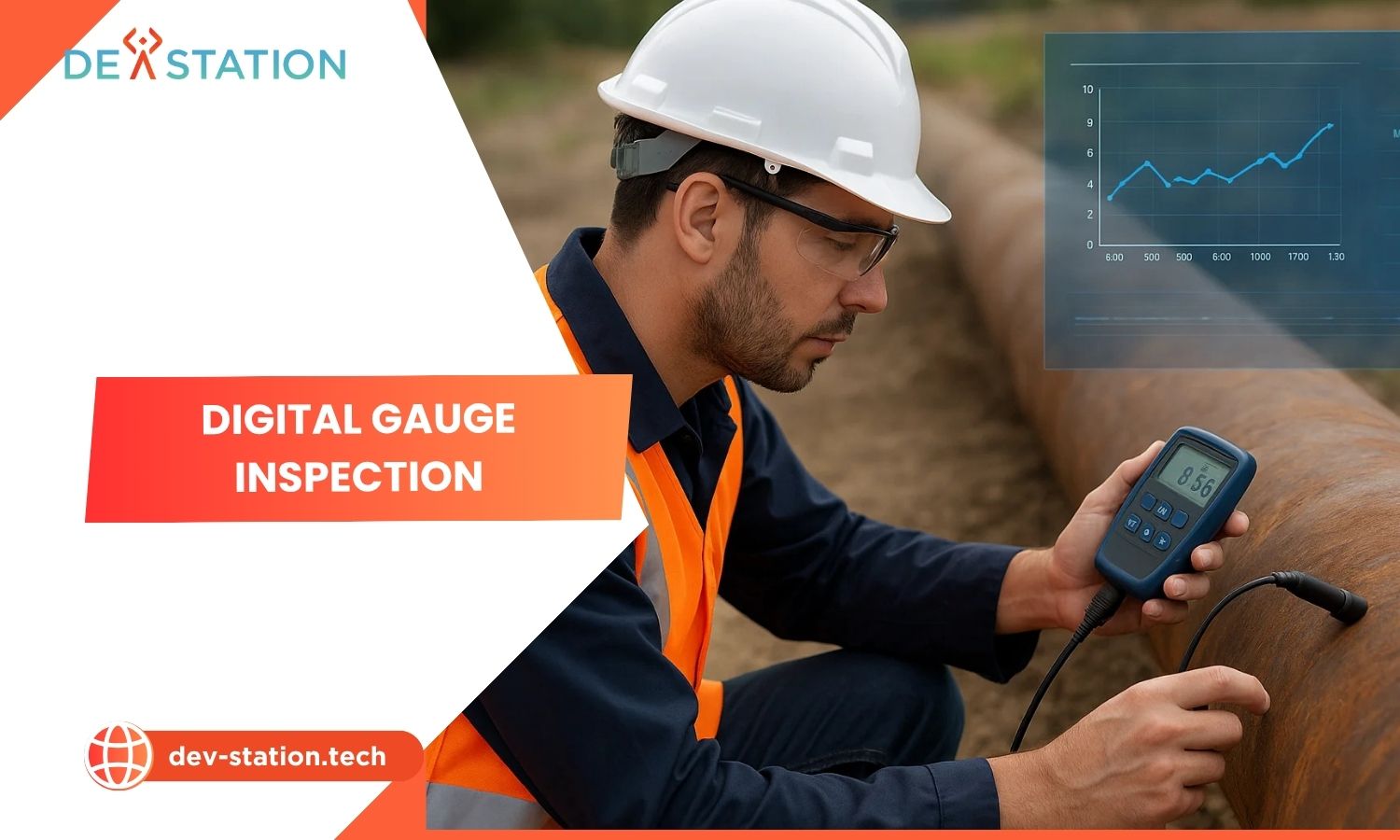
Digital gauge inspection isn’t just about replacing a physical ruler with a screen; it is about creating an integrated data ecosystem. Digital gauges (Bluetooth or wired) automatically transfer measurements directly to your Quality Management System (QMS) or Statistical Process Control (SPC) software.
Key Benefits of Digital Gauge Integration
1. Eliminating Transcription Errors
When a measurement is taken with a digital gauge, the value is transmitted instantly to the cloud or local server. There is no manual writing, no manual typing, and no possibility of a human misreading the scale. The data is immutable and accurate.
2. Real-Time SPC (Statistical Process Control)
Digital gauges allow for real-time monitoring. As soon as a measurement is taken, the SPC software updates the control charts. If a process starts to drift, the system triggers an alert before the parts go out of tolerance. This is the difference between inspecting for quality and manufacturing for quality.
3. Traceability and Audit Readiness
In highly regulated industries (Aerospace, Medical, Automotive), audit trails are mandatory. Digital systems provide a timestamped, user-identified, and precise record for every single measurement taken. This drastically reduces the time spent preparing for audits and provides peace of mind during compliance reviews.
4. Scalability and Efficiency
Manual inspection is slow. Digital gauge inspection, when paired with automated fixtures or even robotic inspection cells, is lightning-fast. It removes the labor-intensive burden from the operator, allowing them to focus on value-added tasks rather than repetitive data recording.
Overcoming Resistance: Implementing Digital Gauge Inspection
Transitioning from manual to digital is a cultural shift as much as a technical one. Here is how to approach the implementation to ensure success:
Step 1: Evaluate Your Current MSA
Before buying new equipment, conduct an audit of your current measurement processes. Identify where the most variability occurs. Are your operators struggling with specific gauges? Start there.
Step 2: Choose the Right Hardware
Not all digital gauges are created equal. Ensure your hardware is:
-
Compatible: Does it export data via Bluetooth, USB, or RS232?
-
Durable: Can it withstand the shop floor environment (coolants, oils, dust)?
-
User-Friendly: Is the interface intuitive enough for shop-floor personnel?
Step 3: Integrate with Your QMS/ERP
Digital data is only valuable if it is usable. Ensure your chosen hardware communicates seamlessly with your existing SPC or ERP software. Data silos are the enemy of continuous improvement.
Step 4: Train Your Workforce
Technology is only as good as the people using it. Train your operators not just on how to use the new gauge, but on why the data matters. When operators understand that their job becomes easier and their decisions become more impactful, they will embrace the technology.
Conclusion: The Future of Manufacturing Quality
The “Root Cause” of quality issues is rarely just the machine—it is the lack of visibility into the process. Manual measurement is a relic of the past that forces you to operate in the dark, reacting to defects rather than preventing them.
Digital gauge inspection provides the clarity, speed, and accuracy required to compete in today’s demanding manufacturing landscape. By eliminating human error at the source, you reduce waste, satisfy your customers, and turn your quality department from a cost center into a competitive advantage.
Stop measuring to find errors. Start measuring to drive perfection.
FAQ Section (SEO Optimized)
Q: What is digital gauge inspection?
A: Digital gauge inspection is the process of using electronic measurement tools (like digital calipers or micrometers) that transmit measurement data directly to a software system, eliminating the need for manual recording.
Q: Why is manual measurement considered a root cause of error?
A: Manual measurement introduces human subjectivity (different “feel”), risks of transcription errors (writing down the wrong number), and delays in data analysis that prevent timely process adjustments.
Q: How does digital measurement improve SPC?
A: By providing real-time, accurate data, digital gauges allow SPC software to generate immediate control charts, enabling operators to identify trends and adjust processes before parts fall out of tolerance.
Q: What industries benefit most from digital gauges?
A: While beneficial for all, industries with strict tolerance requirements and high-stakes compliance needs—such as Aerospace, Medical Device Manufacturing, and Automotive—see the highest ROI from digitizing their inspection processes.