Container images first
Multi-stage Docker builds, as on TruckFleet.
We have no published Kubernetes build. We have shipped a Docker multi-stage deployment and an auto-scaling microservices platform on AWS, and we say plainly where that stops.
Multi-stage Docker builds, as on TruckFleet.
Staying inside the three minor versions the project supports.
Split services, as on the AWS microservices platform.
Daily CI/CD deployments, as on the same platform.




Illustration. A dashed outline marks where the technology would sit. We have no published build on it.
Already out of the three-version window.
The next version to leave support.
Supported until then.
The newest supported minor.
Source: kubernetes.io/releases, checked 2 November 2026. The project maintains release branches for the three most recent minor versions.
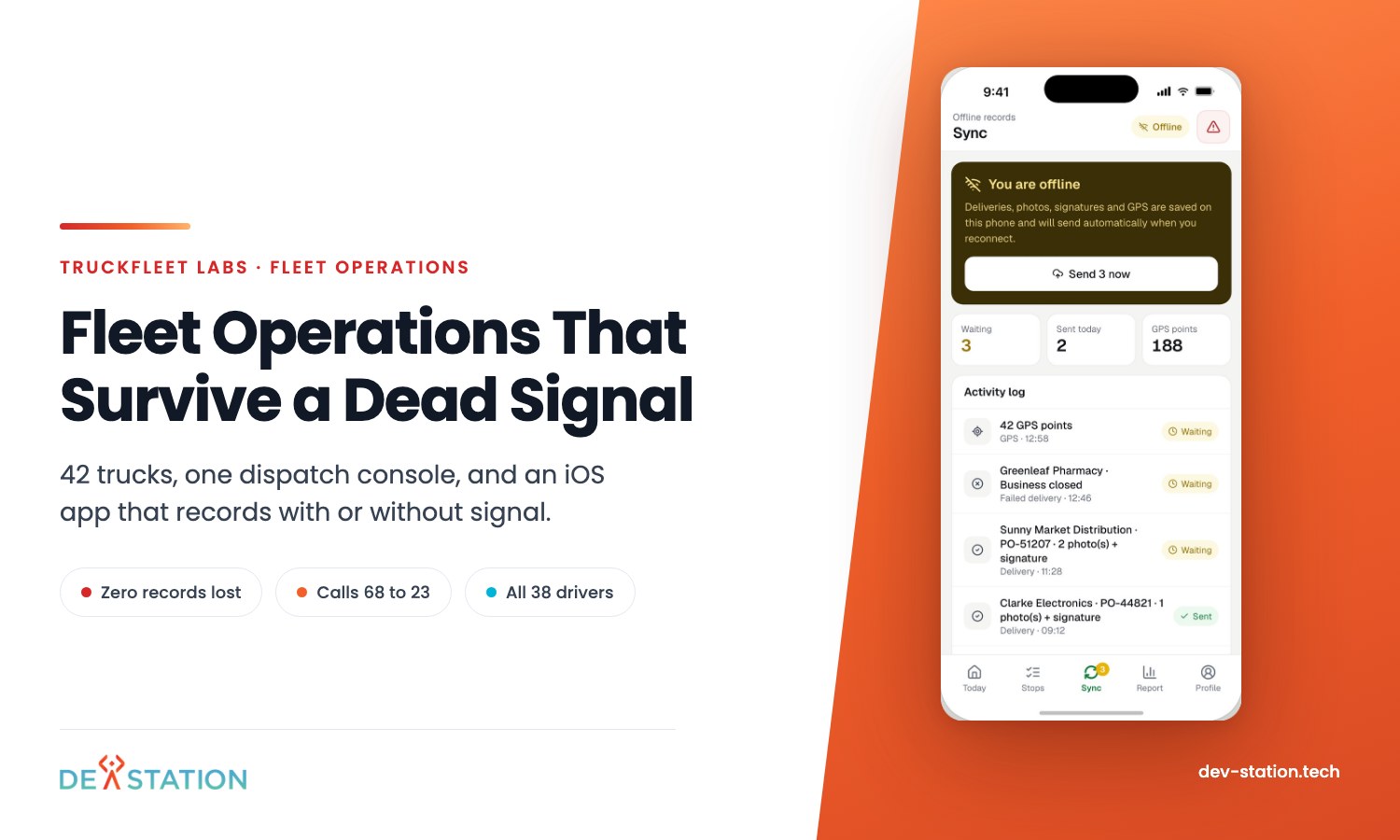
The container half of the job: a Docker multi-stage build with Docker Compose behind a FastAPI back end.

The scaling half: microservices on AWS Kinesis, daily CI/CD deployments, 30,000+ concurrent users.
DockerAWS Azure
 Terraform
 Google Cloud.NET
The project maintains the three most recent minor versions: 1.37, 1.36 and 1.35, with about one year of patch support each. Version 1.34 reached end of life on 27 October 2026.
No. We say so on the first call and show the nearest work, which is a Docker Compose deployment and a microservices platform on AWS.
Sometimes. Our published platform deploys with Docker Compose. We look at your service count and your team before recommending a cluster.
You do, from the first commit. Repositories and cloud accounts stay in your name.
Thirty minutes on your containers, your hosts and your team. No sales pitch.