Thorough examination scheduling
Per unit, per site, with the interval and the written scheme driving the date.

Thorough examination scheduling, defect lists that survive between visits, and an engineer app that still works in a shaft. Miss a date and the lift comes out of service.
Most lift software is a maintenance system with dates bolted on. The dates are the point. Everything else exists to make sure the right unit is examined by the right person before the interval runs out.
An engineer app that needs a connection at the moment of the examination will lose the record exactly where it matters.
What was noted last time has to be in front of whoever goes next, or the same fault gets found twice and fixed never.
Per unit, per site, with the interval and the written scheme driving the date.
Carried forward from one visit to the next, with the status visible to the owner as well as the engineer.
Written to the device first, synced afterwards, so a lost signal costs nothing.
Generated from what was captured, with the outcome and the defect category recorded as separate fields.
Monthly checks on firefighters and evacuation lifts, with the escalation clock built in.
Owners seeing their own units, dates and open defects without ringing the office.
These decide the data model long before anyone argues about screens.
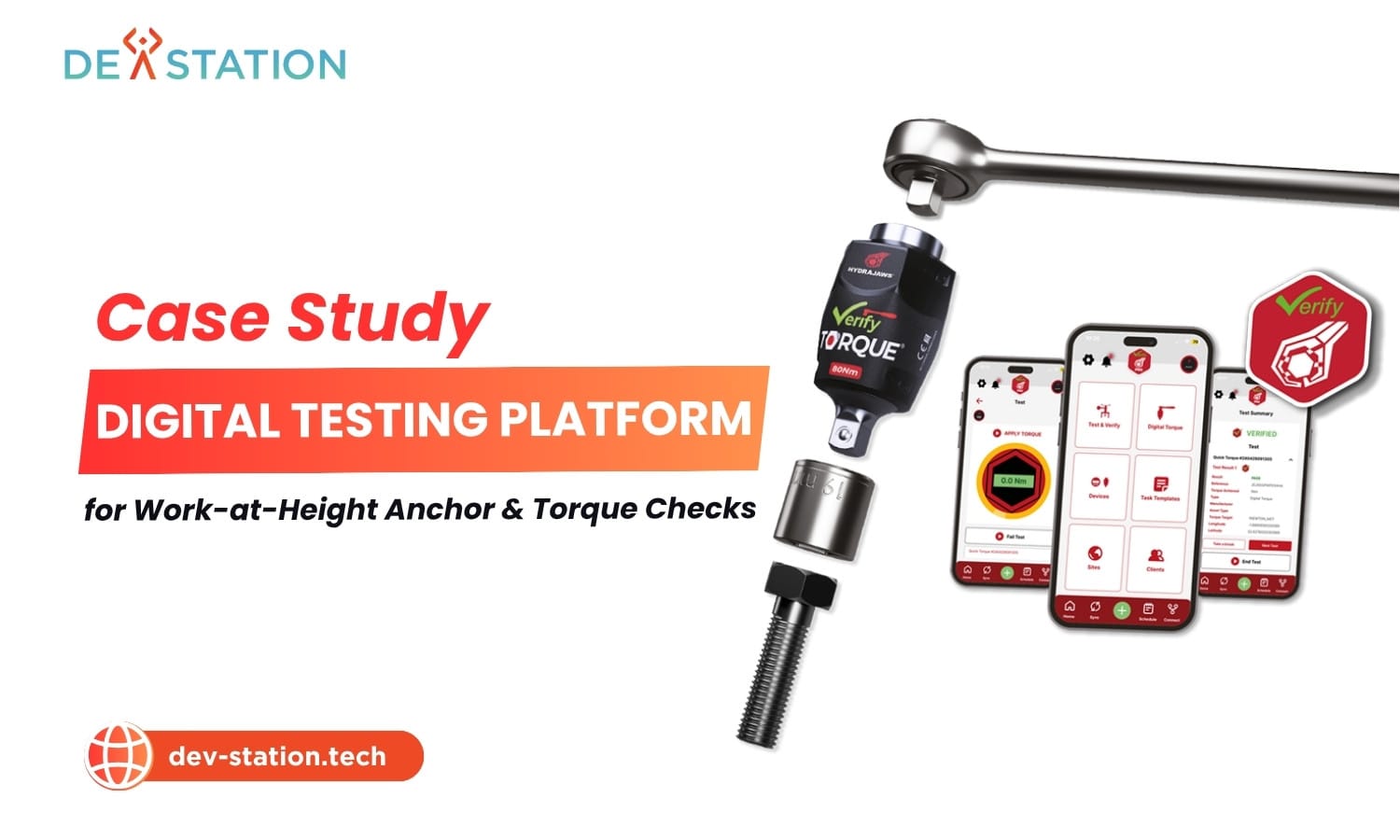
Different sector, same discipline: a statutory examination carried out to an interval, a reading taken from an instrument, and a certificate that has to stand up months later. The reporting cycle came down by 70 percent once certificates generated themselves.
Where the engineer rota and the examination calendar have to agree with each other.
Firms carrying out thorough examinations, where the report is the product.
Portfolios where somebody has to prove every unit was examined on time.
Makers who want the service and monitoring app shipped under their own brand.
Related reading: digital elevator inspection, elevator inspection software and what LOLER asks of software.
Usually yes. Most engagements start by making the examination calendar correct and feeding it into whatever you already run.
The record is written to the device and queued. The engineer can see the queue draining, so nothing depends on coverage at the moment of the examination.
Yes, and it has to. A scheme drawn up by a competent person replaces the default interval, so the system has to honour it.
You do, from the first commit. Repositories and cloud accounts stay in your name.
Thirty minutes with the engineers on how your intervals are set now and what happens when one slips.