Walkaround and DVIR apps
Daily checks for drivers and technicians, with the defect routed to whoever has to fix it.

Walkarounds, service lane inspections and safety compliance testing. Every one of them ends in a record somebody will dispute, so the record is what we design first.
The walkaround, the service lane and the trade-in appraisal look like different jobs. They produce the same thing: evidence that a customer, an insurer or a regulator may question months later.
A technician pointing a camera at a worn pad ends an argument that a tick box starts.
Where a tool can supply the reading, it should. A typed number is the first thing an assessor questions.
Daily checks for drivers and technicians, with the defect routed to whoever has to fix it.
Technician video handed to the customer, so the upsell is shown on screen.
Condition captured once, with photos that survive the negotiation.
The result has to land in the DMS, where the service team already works.
Test rigs and harnesses for teams shipping hardware into vehicles.
Telemetry pipelines where the volume is the hard part.
Most automotive disputes are settled by what was captured.
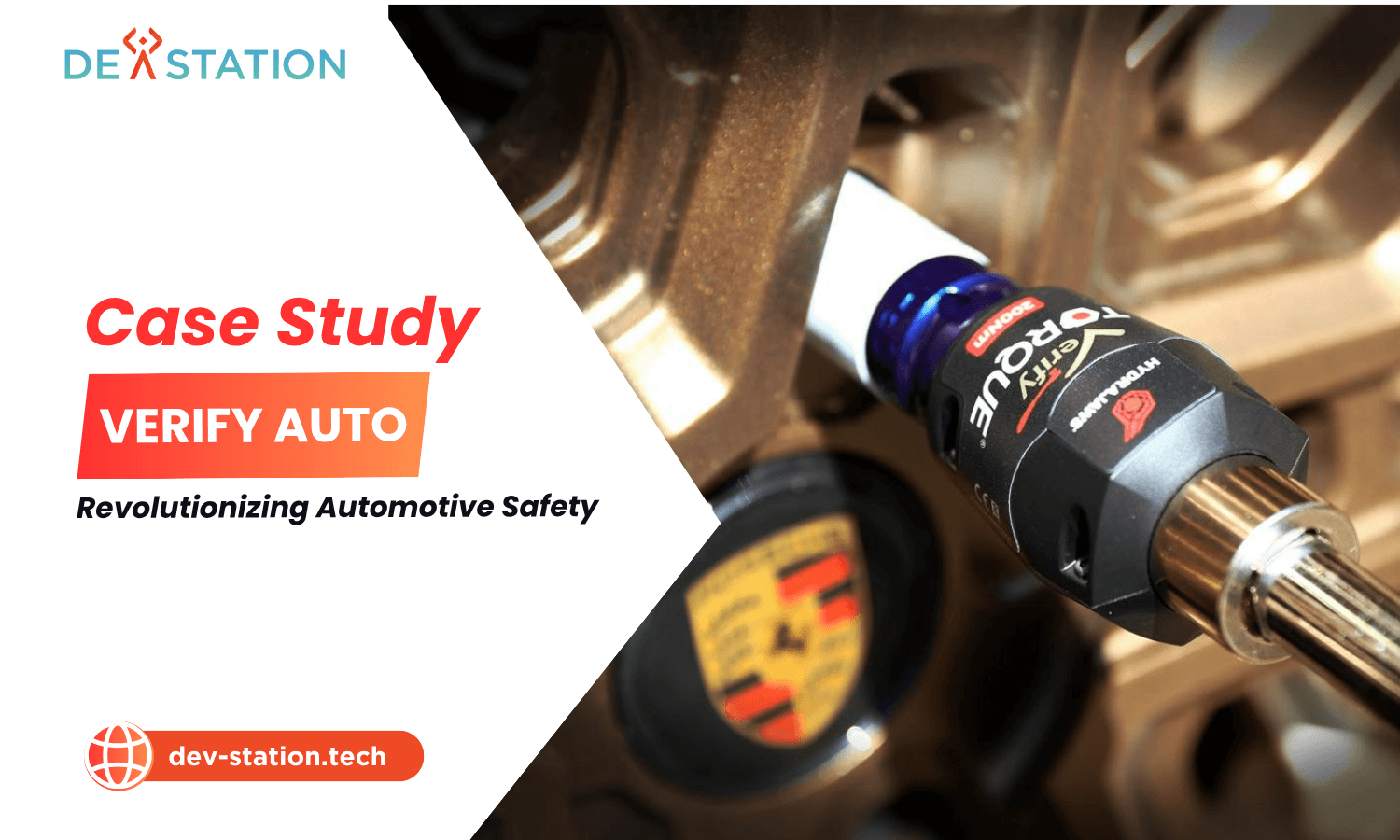
Safety compliance testing for vehicles, built to a brand standard that left little room for a default interface. We moved from construction workflows into automotive APIs and validated the design with prototypes before writing production code.
Where the service lane is the margin and the inspection is the conversation.
Daily checks and defect routing across vehicles that cannot sit idle.
Manufacturers who want the app shipped beside the tool, under their own brand.
Product teams needing the field or embedded piece they do not build in-house.
Related reading: dealership inspection software, vehicle inspection apps and automotive embedded testing.
Usually yes. The integration is normally the part that decides whether the inspection gets used, so we scope it first.
Often, over BLE or the maker SDK. Send us the model numbers and we will tell you which ones we can read.
Yes. We have delivered embedded and device testing work alongside the app side, which is usually where the awkward integration sits.
You do, from the first commit. Repositories and cloud accounts stay in your name.
Thirty minutes with the engineers on the check your technicians run now and the system the result has to reach.