Inspection and compliance apps
Checklists bound to the asset, photo evidence, and a certificate the client can accept without a phone call.
We build the apps crews use on site and the systems the evidence lands in. Anchor testing, site safety, plant and the certificate at the end. Clients in the UK, the US and Australia.
Construction software development covers a wide field. The part we work in is narrow and easy to describe. A person on site performs a check, and months later somebody who was not there has to be satisfied the check happened and the result was acceptable.
Everything else follows from that. The app has to work where the signal does not. The reading should come from the instrument. The record has to carry who, when, where and against which standard.
If that is not your problem, a platform already on the market is a better buy than a build, and we will say so on the first call.
Our first construction client made portable pull testers. The second sold the inspection itself. Both taught us that the instrument and the certificate are the product, and the app is the thing in between.
One workflow, or one device integration. The team grows when the roadmap needs it.
Eight pieces of work. Most engagements start with one of them and grow from there.
Checklists bound to the asset, photo evidence, and a certificate the client can accept without a phone call.
Apps that read the tester over Bluetooth and record the load against the fixing that was actually tested.
Toolbox talks, permits to work and near-miss reports that reach the office on the day.
Where the plant is, who signed for it, and when the next thorough examination falls due.
Offline first, because the signal in a basement or a steel-framed unit is not something you can plan around.
Dashboards built from what the crews recorded, so nobody updates a spreadsheet on Friday.
Procore, Sage, SharePoint, an ERP or a CMMS. The result has to land somewhere other than a PDF folder.
Defect and PPE detection where the volume of images justifies training a model.
These decide the data model long before anyone argues about the colour of a button.
What LOLER asks of inspection software goes through the scheduling side in full.

Proof-load and torque checks ran on spreadsheets and email. We built the planning dashboard, the field app that reads testers over Bluetooth, and the certificate that carries GPS, timestamps and readings.
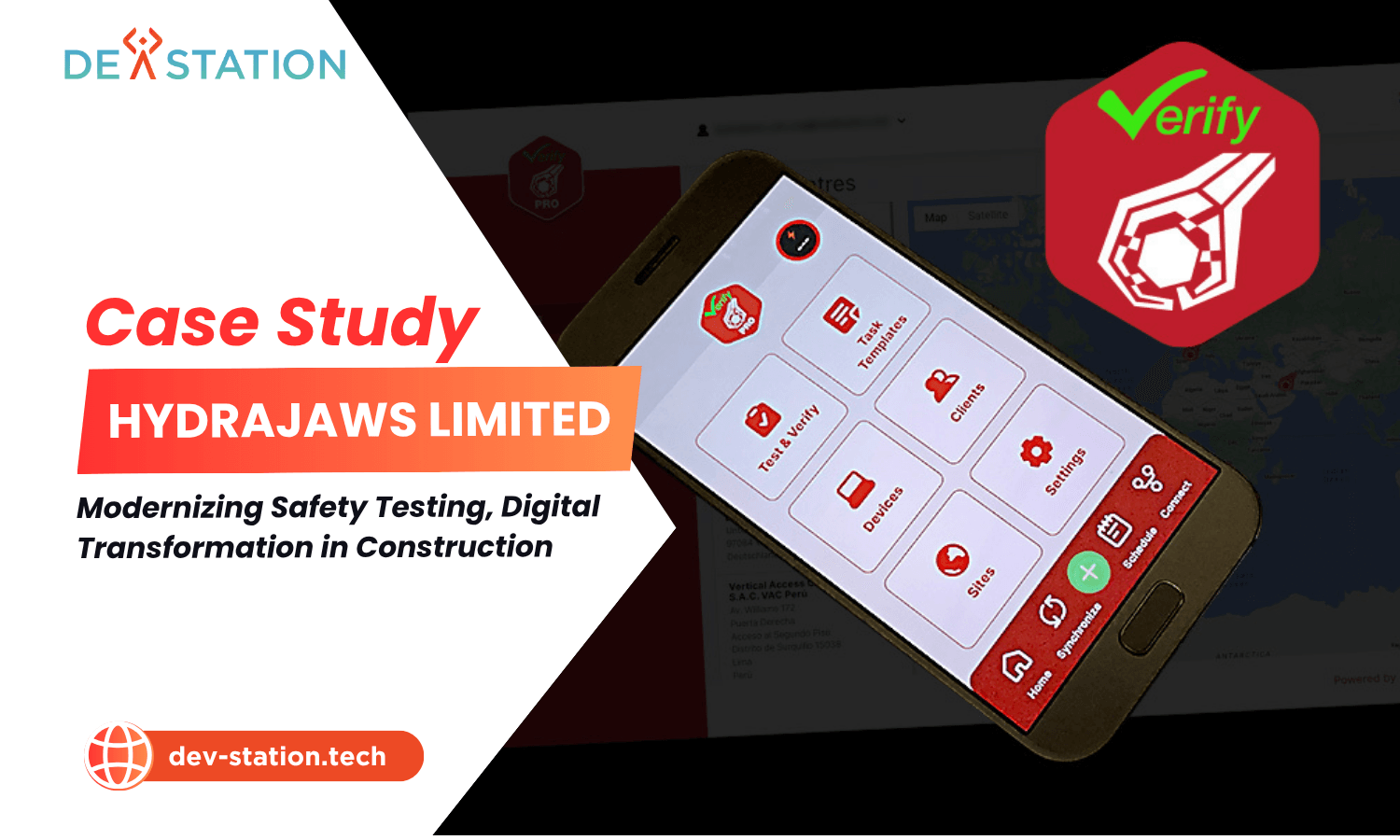
A maker of portable pull testers arrived with an application nobody had documented. We rebuilt the environments, then shipped a free and a paid version with digital torque reading through the KTC SDK.
Four conditions. If none of them is true for you, buy the platform.
The sequence a client signs off came out of your method statement. A platform hands you its own form and asks you to work around it.
An inspection that ends in a PDF folder has not finished. It finishes when the ERP, the CMMS or the client portal has it.
A torque wrench or a pull tester with an SDK writes its reading straight into the form. A typed-in number is the thing an auditor questions first.
At a few hundred field users on one tenant, the licence line starts to look like a build budget.
Teams with their own method statements, and clients who ask for the evidence.
Firms selling the inspection itself, where the certificate is the product.
Manufacturers who want the app shipped beside the tool, under their own brand.
Portfolios where the statutory register has to be right on the day somebody asks.
































Buy, in most cases. If your inspection is checklists, photos and issues on commercial projects, a platform on the market will cover it for less than a build costs. We get called when the check is specific to your trade, when an instrument has to supply the reading, or when per-seat pricing across a few hundred field users has stopped making sense.
Usually yes, over BLE or a gateway. Where the maker provides an SDK we integrate against it, as we did with KTC for digital torque on the Hydrajaws platform. Send us the model numbers and we will tell you which ones we can read.
Every record is written to the device first and queued for sync. Basements, lift shafts and steel-framed units kill mobile data, so a system that needs a live connection at the moment of the check will lose records exactly where the check matters.
The first scope is one workflow. We will not put a date on it before seeing the workflow, and anyone who does has not looked at your process yet.
You do, from the first commit. Repositories and cloud accounts stay in your name, so leaving us never needs a migration project.
Thirty minutes with the engineers on the check your crews run now, the instrument behind it and the system the result has to reach. If a platform on the market fits better, you will hear that on the call.