Key Takeaway
- Elevator inspection software records a statutory examination in a form that survives an audit. The compliance rules, not the feature list, decide which platform fits.
- The US and UK run different regimes. ASME A17.1 with Category 1 and Category 5 tests witnessed by a QEI in the US, LOLER 1998 thorough examination every six months in the UK. Software that handles one does not automatically handle the other.
- Entry pricing runs from about 16 EUR per user per month (Lumiform Professional) to 43 USD (Fulcrum Professional). Two of the elevator-specific tools publish no pricing at all.
- Off-the-shelf platforms cover a small portfolio of standard lifts. Inspection companies filing with a building department, or duty holders running hundreds of assets across mixed equipment types, usually end up commissioning a build.
- Dev Station builds custom statutory inspection platforms for field teams in the US and UK. What we have shipped in this equipment family is described further down, with the numbers.
Context
01 / 12
What elevator inspection software has to do
Most product pages describe a checklist app. That undersells the job badly. An elevator inspection record is a legal document that has to identify the equipment, the person who examined it, the date, the defects found, and the date the next examination falls due.
The software has three jobs. It has to capture the examination correctly on site, often in a motor room or a pit with no signal. It has to produce a report in the format the regulator or the jurisdiction accepts. It has to keep the record retrievable and tamper-evident for years afterwards, because the moment it matters is the moment something goes wrong and an inspector asks for the history.
Everything else is convenience. Scheduling, dashboards, invoicing and route planning all save time, and none of them keeps you compliant on their own. Start from the record, then work outward. The same logic drives our wider digital inspection software buyer’s guide.
Framework
02 / 12
What the rules require, US and UK side by side
This is where most software comparisons stop short. Of the pages currently ranking for this term, the longest one does not name a single standard. Here is what actually governs the work.
| Item | United States | United Kingdom |
|---|---|---|
| Safety code | ASME A17.1/CSA B44, 2022 edition | LOLER 1998, alongside PUWER 1998 |
| Inspection guide | ASME A17.2-2023 | HSE guidance, BS EN 13015 for maintenance |
| Existing installations | ASME A17.3-2023 | covered by the same LOLER duty |
| Who may inspect | Qualified Elevator Inspector under ASME QEI-1-2024 | a competent person, defined by LOLER |
| Certification body | NAESA International and other accredited bodies | no single register, competence is demonstrated |
| Routine interval | Category 1 test annually | every 6 months for lifts carrying people |
| Major interval | Category 5 test every 5 years, witnessed by a QEI | no separate cycle, the 6 month duty stands |
| Goods-only equipment | covered by A17.1 by device type | every 12 months |
| Where the record goes | filed with the local authority having jurisdiction | held by the duty holder, produced on request |
United States: ASME A17.1, A17.2 and the QEI requirement
ASME A17.1, published jointly with CSA B44, is the safety code for elevators and escalators, and the 2022 edition is current. ASME A17.2-2023 is the companion guide that tells a qualified inspector how to perform routine inspections and witness periodic and acceptance tests (ANSI). A17.3 covers existing installations that predate current requirements.
Who may perform the work is governed separately. ASME QEI-1 sets the qualification, duties and responsibilities of elevator inspectors and inspector supervisors, and certification runs through accredited bodies including NAESA International (ASME, NAESA). The current edition for QEI exams taken after 1 March 2026 is QEI-1-2024.
The detail that matters most for software is the Category 5 test. It must be performed by qualified elevator personnel and witnessed by a Qualified Elevator Inspector, every five years. That means the record has to carry two identities, the person who performed the test and the QEI who witnessed it, with the QEI’s certification number.
Most general inspection platforms have one signature field. Check this before you buy, because retrofitting a second signer with credential capture into a template-based tool is usually not possible without professional services.
United Kingdom: LOLER 1998 thorough examination
In Great Britain the duty sits in Regulation 9 of the Lifting Operations and Lifting Equipment Regulations 1998. Any lifting equipment used to lift people has to be thoroughly examined by a competent person every six months. Other lifting equipment goes to twelve months (legislation.gov.uk).
| Equipment type | Examination frequency |
|---|---|
| Passenger lifts, platform lifts, patient hoists | Every 6 months |
| Lifting accessories such as slings, chains and shackles | Every 6 months |
| Goods-only lifts, service lifts, dumbwaiters | Every 12 months |
The six-month interval can be replaced by an examination scheme drawn up by a competent person, which is a different thing from extending it informally. Regulation 10 then requires a report containing the particulars listed in Schedule 1, including equipment identification, defects found, the risk they present, and the date of the next examination. We go through the duty in detail in LOLER inspection software requirements.
One correction worth making, because outdated figures still circulate widely in UK compliance content. The old maximum fine of £20,000 in the magistrates’ court no longer applies. Section 85 of the Legal Aid, Sentencing and Punishment of Offenders Act 2012 came into force on 12 March 2015 and removed the cap, so health and safety offences committed on or after that date carry an unlimited fine at either level, along with up to six months’ imprisonment on summary conviction (CMS). Sentencing is then set against the Sentencing Council guideline, which scales with the organisation’s turnover.
Buyers
03 / 12
Who is buying, and what each group needs
Four different buyers search this term, and they need different products. Working out which one you are removes most of the shortlist immediately.
Third-party inspection companies and consultancies. You sell inspections. Scheduling, technician routing, Category 1 and Category 5 tracking across a client portfolio, filing with the jurisdiction, and invoicing all matter as much as the checklist. AllStar Consulting Group in New York is the reference case here, running over 6,000 inspections a year against the city’s elevator stock.
Lift maintenance contractors. You examine and you fix. The record matters, and so does the handoff from a defect found to a remedial job scheduled, parts ordered, and the fix verified. A tool that produces a PDF and stops leaves you managing the remedial side in a spreadsheet.
Building owners and facilities management companies. You hold the duty, someone else does the examination. You need a portfolio view, deadline alerts before the six or twelve month date, and the ability to produce any asset’s history on demand. Your problem is oversight rather than field capture. Our guide to inspection management software covers the portfolio side.
Authorities having jurisdiction. You receive filings from contractors and enforce against building owners. This is a separate product category, and BRYCER’s Compliance Engine is built specifically for it, funded by contractor filing fees rather than by the jurisdiction (BRYCER).
Features
04 / 12
Ten features that decide whether the software survives an audit
Two-signer capture with credentials
Covered above and worth repeating because it eliminates products. If you do Category 5 work in the US, the record needs the performing technician and the witnessing QEI, with the QEI’s certification number stored against the examination.
Statutory report templates, not generic PDFs
A Schedule 1 report under LOLER has required particulars. A jurisdiction filing in the US has a required format. Ask whether the platform produces your regulator’s format natively or whether you rebuild it in a report designer. This is the single most common source of hidden implementation cost.
Asset register with equipment identity
A lift is not a location. It has a serial number, a manufacturer, a controller type, a capacity and a commissioning date, and the examination attaches to that asset rather than to the building. Platforms built around sites rather than assets get awkward the first time a lift is modernised.
Deadline tracking that counts forward from the last examination
The next due date is derived from the last completed examination, not from a fixed calendar. Any tool that only supports fixed recurring schedules will drift the moment an examination happens early or late.
Offline capture in a pit or motor room
Lift pits and machine rooms are among the worst signal environments in any building. Test the real scenario: start the examination, add photographs, lose the app, come back later, finish and sync. Vendors who have done field work will answer this immediately. We wrote about what proper offline-first inspection apps do differently.
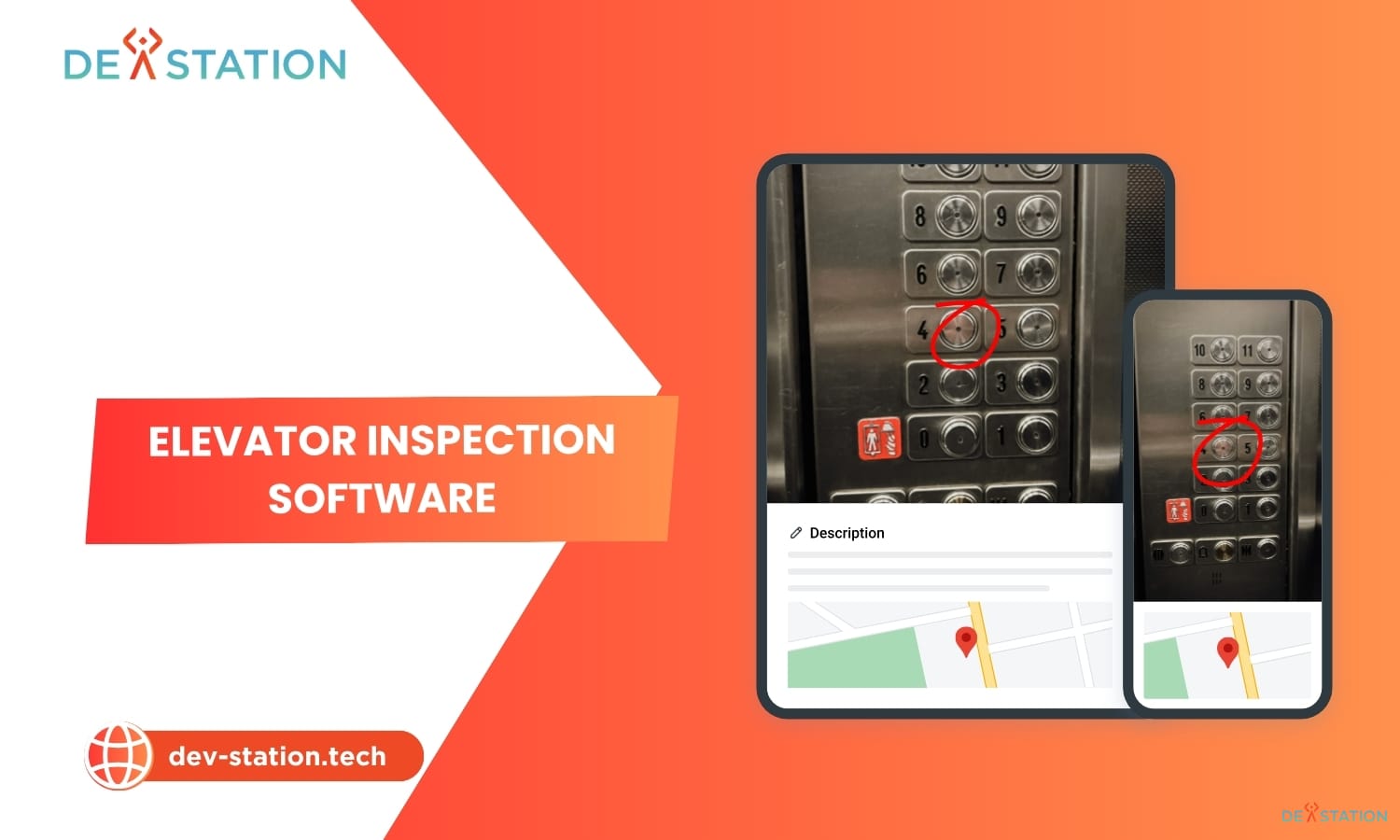
Photo evidence with annotation
A photograph of a sheave without a mark on it does not tell a reviewer which groove is worn. In-app markup turns evidence into something a third party can act on. Check how many images a single record can hold.
Defect workflow with verification
The examination finds a defect, and something has to happen. The platforms that close the loop create an owned, dated remedial task and require evidence before it closes. The ones that do not hand you a PDF and consider the job done.
Role-based access with sign-off control
Only a competent person, or a QEI in the US, should be able to sign an examination. If any user account can sign, the audit trail is worth less than it looks.
Integration with the systems you already run
Inspection data that never reaches your CMMS, ERP or property management platform gets re-keyed. Look for a documented REST API and webhooks on submission rather than a CSV export.
Retention and export
Statutory records outlive software contracts. Ask what you get back if you leave, in what format, and whether the photographs come with it. Custom platforms sidestep this because you hold the database.
Comparison
05 / 12
Elevator inspection software compared
Add-on means the capability exists behind a higher tier or a paid module. Partial means it can be approximated with configuration but is not native.
| Platform | Built for | Two-signer with credentials | Statutory templates | Asset register | Defect workflow | Offline | Public pricing |
|---|---|---|---|---|---|---|---|
| OZ Up and Down | Elevator inspection firms | Partial | Partial | Yes | Yes | Partial | No |
| BRYCER Compliance Engine | Jurisdictions and AHJs | Not applicable | Yes | Yes | Yes | Not applicable | Free to jurisdictions |
| Mitti (by SafetyCulture) | General inspection | No | No | Add-on | Yes | Yes | Yes |
| Lumiform | General inspection | No | No | Partial | Yes | Yes | Yes |
| Sitemate Dashpivot | General inspection | No | Partial | Partial | Partial | Yes | No |
| Fulcrum | Geospatial field data | No | No | Yes | No | Yes | Yes |
| MaintainX | Maintenance operations | No | No | Yes | Yes | Yes | Yes |
| UpKeep | Maintenance operations | No | No | Yes | Yes | Yes | Yes |
| Limble | Maintenance operations | No | No | Yes | Yes | Yes | No |
| Custom build (Dev Station) | Purpose-built | Yes | Yes | Yes | Yes | Yes | Project fee |
Read the two-signer column first if you work in the US. It is the fastest way to cut this list down. UK buyers may also want our separate comparison of digital inspection apps used in the UK.
Platforms
06 / 12
Platform reviews
Prices checked on 25 August 2026.
OZ Up and Down
Best for elevator inspection companies that need scheduling and back office as much as checklists.
OZUpDown is one of the few products built specifically for elevator field inspection rather than configured for it. The scheduling side is the strongest part, with drag-and-drop calendaring, automated SMS and email notifications, and invoice generation from the completed job. If your bottleneck is coordinating inspectors across a client list rather than the inspection form itself, this is the right shape (OZUpDown).
Pricing: not published.
Limitation: the product references industry requirements in general terms rather than naming ASME codes, so verify how it handles Category 5 witnessing and jurisdiction filing formats before committing. No public pricing also makes it hard to shortlist quickly.
BRYCER, The Compliance Engine
Best for a city or county enforcing elevator compliance across a building stock.
This is the only product here aimed at the regulator rather than the inspector. Contractors submit inspection reports into a portal, the system validates them, and building owners get automated notifications when something is overdue. Jurisdictions pay nothing because contractor filing fees fund it, and implementation typically runs about 60 days (BRYCER).
Pricing: free to jurisdictions, funded by filing fees.
Limitation: it is not an inspection tool. If you perform examinations, this is the system you file into, not the one you work in.
Mitti (by SafetyCulture)
Best for a large distributed workforce doing routine checks alongside statutory examinations.
Mitti carries the biggest template library and the widest deployed base in general inspection, with corrective actions and scheduling built in. The free tier covers teams up to ten. Note that the product was renamed from SafetyCulture in August 2026, and was called iAuditor before 2022, so older comparisons will list it under a different name (Mitti).
Pricing: free for up to 10 users, Premium $24 per seat per month billed annually or $29 monthly, Enterprise quoted (Mitti pricing).
Limitation: no native concept of a statutory examination, a competent person or a witnessing inspector. You can build a LOLER checklist in it. You cannot make it enforce who is allowed to sign one without custom work.
Lumiform
Best for property and facilities teams managing lifts across many buildings.
Lumiform publishes a dedicated elevator inspection use case, with building-specific conditional logic that shows and hides checklist sections by asset attributes, offline capture, and portfolio dashboards. The form builder is genuinely no-code and bulk template updates work well across a large estate.
Pricing: Professional listed at 16 EUR per user per month, Enterprise quoted, with a 14 day trial (Lumiform pricing).
Limitation: the elevator page does not reference ASME or LOLER anywhere, which tells you the templates are structured around good practice rather than around a statutory report format. Expect to build the Schedule 1 layout yourself.
Sitemate Dashpivot
Best for teams already using Dashpivot for other site records.
Sitemate publishes an elevator inspection use case with timestamped, geotagged photographs, photo markup, and inspection status tracking through draft, in progress and completed states with notifications on each transition. It fits naturally where the same team already runs site diaries and permits in the same tool.
Pricing: not published on the pricing page at time of checking.
Limitation: general-purpose form and record structure rather than an asset-centric register, and the same statutory template gap as the other generalists.
Fulcrum
Best for portfolios where location and spatial data drive the work.
Fulcrum is the strongest geospatial tool in this comparison, with excellent offline behaviour and a well-documented REST API. For an estate spread across many sites where routing and mapping matter, it earns its place.
Pricing: Professional $43 per user per month billed annually or $55 monthly with a five-user minimum, Elite $55 annually, Enterprise quoted (Fulcrum pricing).
Limitation: no defect-to-remedial workflow and a real learning curve on form building. For a lift portfolio the geospatial strength is often not the thing you needed.
MaintainX
Best when the same team examines the lift and then repairs it.
MaintainX came from maintenance rather than from forms, so assets, work orders, parts and history are native. A defect found during an examination becomes a work order against the same asset without an integration. The free tier is usable.
Pricing: Basic free, Essential $20 per user per month billed annually or $25 monthly, Premium $65 annually or $75 monthly, Enterprise quoted (MaintainX pricing).
Limitation: form building is weaker than the dedicated tools and most of the features you will want sit in Premium, which is more than triple the entry price. Model that number.
UpKeep
Best for a facilities team managing lifts inside a wider asset base.
UpKeep covers preventive maintenance scheduling, asset history and mobile work orders, with unlimited free view-only, requester and third-party contractor accounts. That last point matters when your lift contractor needs access but you do not want to buy them seats.
Pricing: Essential $24 per user per month, Premium $55 per user per month, Professional and Enterprise quoted (UpKeep pricing).
Limitation: same statutory gap as the other CMMS options. It records that an inspection happened. It does not produce the regulator’s report.
Limble
Best for multi-site maintenance operations that want inspections inside the CMMS.
Limble supports recurring work orders with inspection checklists tied to specific assets and locations, which maps cleanly onto a lift portfolio with mixed intervals. Reporting is strong at the portfolio level.
Pricing: Standard, Premium+ and Enterprise tiers, with pricing available only through a calculator or sales contact (Limble pricing).
Limitation: no public pricing, and the same absence of statutory report formats.
Custom-built platforms, via Dev Station
Best for inspection companies filing with a jurisdiction, and for duty holders running large or mixed portfolios where no template fits.
The pattern is consistent. Companies outgrow generic tools once the record they have to produce becomes specific to them, and the workflow around that record becomes specific too.
Four things come up again and again. Two-signer capture with QEI credentials. A Schedule 1 layout on your letterhead carrying your examiner’s details. Automatic dispatch of a completed inspection to a building department, and certificate numbering that follows your own scheme.
AllStar Consulting Group in New York is a public example of this decision, commissioning a custom platform to track annual Category 1 and five-year Category 5 inspections with automated Department of Buildings dispatch, after their previous general-purpose system forced constant workarounds (Saritasa).
Limitation: higher upfront cost and a build window of roughly eight to sixteen weeks. For a small portfolio of standard passenger lifts with no filing obligation, buy a licence instead. We will say so if that is your situation.
Pricing
07 / 12
What this costs in 2026
| Platform | Entry price | Mid tier | Note |
|---|---|---|---|
| MaintainX | Free (Basic) | $20 per user per month | Premium jumps to $65 |
| Lumiform | Quoted | 16 EUR per user per month | Professional tier |
| Mitti | Free to 10 users | $24 per seat per month | $29 if billed monthly |
| UpKeep | $24 per user per month | $55 per user per month | Free requester accounts |
| Fulcrum | $43 per user per month | $55 per user per month | 5 user minimum |
| OZ Up and Down | Quoted | Quoted | Elevator-specific |
| Sitemate Dashpivot | Quoted | Quoted | Not published |
| Limble | Quoted | Quoted | Calculator only |
| BRYCER | Free to jurisdictions | Not applicable | Filing-fee funded |
| Custom build | Project fee | No per-seat cost | Hosting and support only |
Three-year licence cost, list price only
Annual billing, mid tier where one exists, excluding implementation and add-ons. Treat it as a floor.
| Field users | Mitti Premium | UpKeep Premium | Fulcrum Professional |
|---|---|---|---|
| 10 inspectors | $8,640 | $19,800 | $15,480 |
| 25 inspectors | $21,600 | $49,500 | $38,700 |
| 60 inspectors | $51,840 | $118,800 | $92,880 |
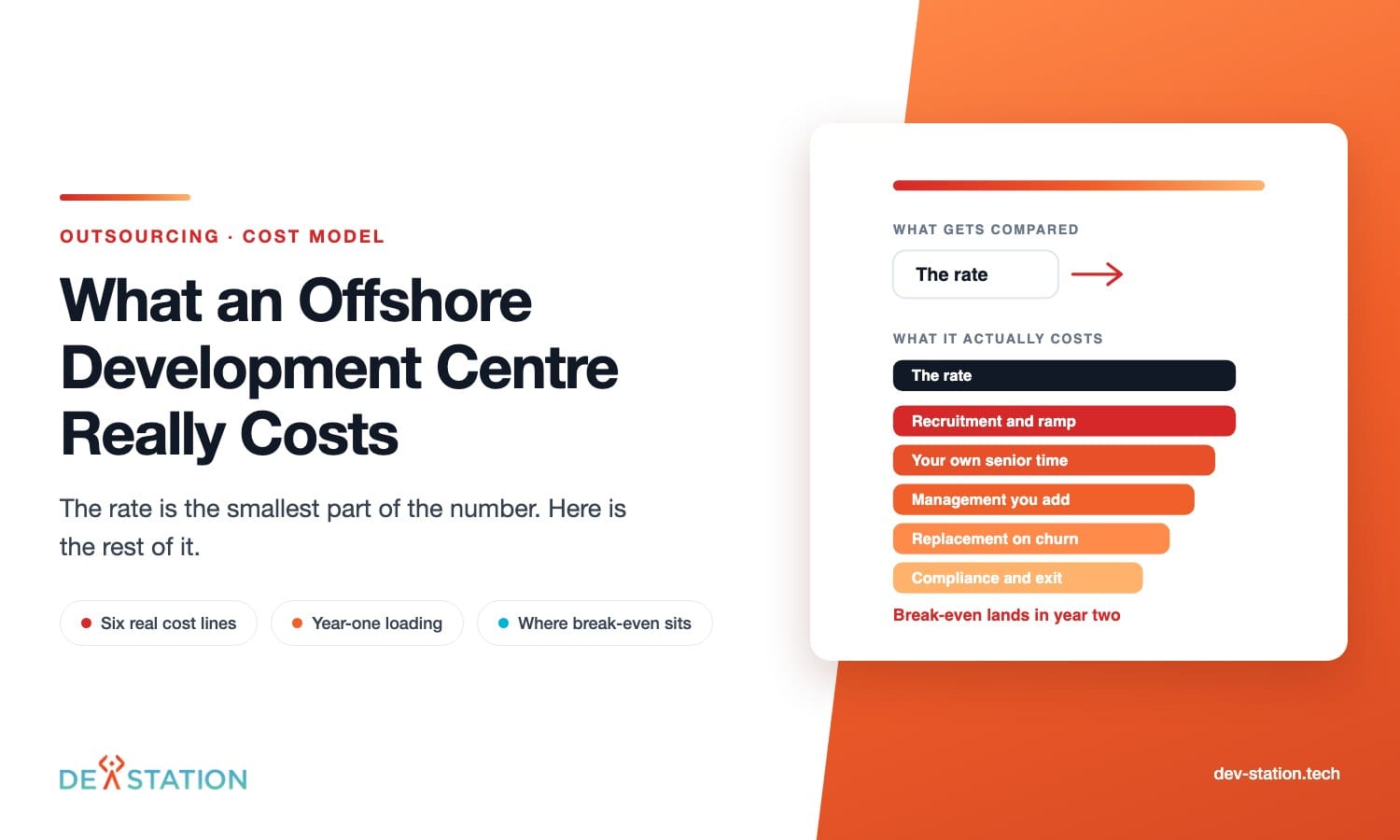
Two costs sit outside that table and both are larger than people expect. The first is building your statutory report format inside a tool that was not designed to produce it, then rebuilding it every time the vendor changes their report engine. The second is the manual step nobody counts, where a completed inspection gets exported and re-entered somewhere else so the jurisdiction or the client receives what they actually need.
Decision
08 / 12
When a custom lift inspection platform is the right call
Score yourself on these six.
- Do you file inspection records with an authority having jurisdiction? Yes, score 4.
- Do you perform Category 5 tests requiring a witnessing QEI on the record? Yes, score 3.
- Do you issue certificates under your own numbering scheme? Yes, score 3.
- How many lifts or lifting assets do you hold or service? Under 50, score 0. 50 to 300, score 2. Over 300, score 4.
- Do you need the report on your own letterhead with your examiner’s credentials? Yes, score 2.
- Have you already tried to make a general platform produce your statutory report and failed? Yes, score 4.
Under 6, buy a licence. Between 6 and 12, run a paid pilot on two platforms and measure how much manual work remains after the inspection is complete, because that is the number that decides. Over 12, price a build alongside your shortlist. Before you do, read why most quality inspection systems fail, because the reasons are rarely technical.
Case studies
09 / 12
What we have built in this equipment family
Being straight about scope: our shipped work is in statutory inspection of lifting and height safety equipment rather than in passenger lifts specifically. The regulatory shape is the same family, the field conditions are the same, and the two builds below are the closest evidence we can show.
A work-at-height anchor testing platform
A UK inspection provider testing anchor and torque systems on structures needed proof-load results captured in the field and turned into certificates. We built a React web dashboard for client and asset management, a mobile app with Bluetooth connection to the test devices, barcode and QR scanning, GPS, photo and signature capture, and automated PDF certificate generation, with Power BI dashboards on top. The field side works offline and syncs securely.
The reporting cycle came down 70% through automated certificate generation, and the digital audit trail replaced a paper file that had to be assembled by hand. Full detail is in the work-at-height anchor testing case study.
Hydrajaws: load testing records in minutes
Hydrajaws manufactures anchor load testing equipment used on construction sites to verify that fixings into concrete and masonry hold their rated load. Their technicians recorded results on paper, which put 24 to 72 hours between the test and the client receiving the report, with transcription errors along the way and no central record of which equipment had been tested where.
We built the platform around the load testing workflow. Technicians scan a QR code on the anchor to pull its history and pre-populate the record, the app calculates pass and fail against thresholds in real time, and it works offline on live sites. A branded PDF reaches the client within minutes.
Report delivery went from 24 to 72 hours to under five minutes, and transcription errors stopped. The management dashboard became a second product, and Hydrajaws now sells inspection data analytics to enterprise construction clients. Full detail is in the Hydrajaws case study.
Vendor choice
10 / 12
How to choose an elevator inspection software company
If you are commissioning a build rather than buying a licence, the evaluation changes completely. Ask these seven.
Who owns the source code at the end? The answer has to be you, written into the contract rather than promised in an email, with repository transfer terms stated.
What exactly do I receive at handover? Code, infrastructure definitions, database schema documentation, API documentation, credentials, and a deployment runbook. Ask what happens to your platform if the vendor closed next month.
Have you built a statutory inspection record before? Not an inspection app. A record that has to satisfy a regulator. Ask which regime, and ask what the report format had to contain.
How does offline sync handle conflicts? Every developer will say the app works offline. Ask what happens when the same examination is edited on two devices before either syncs. The quality of the answer tells you how much field software they have shipped. We set out our own approach in inspection system architecture and in choosing a mobile inspection app.
Which data standards are you building to, and when was that decided? For UK and EU records this means GDPR, and ISO 27001 for enterprise clients. For US clients it may mean SOC 2. This belongs in the architecture, not in a pre-audit scramble.
What is your working overlap with my timezone? An inspector stuck in a machine room needs an answer the same day, not the next one.
How do you invoice, and in which currency? Settle it before kickoff rather than at the first invoice.
Dev Station is a software development company building custom statutory inspection platforms for field-intensive industries. We work with clients in the United States and the United Kingdom, which shapes the build most on the data side. GDPR and ISO 27001 for UK and EU records, SOC 2 or HIPAA where a US client requires it, decided when we design the architecture rather than before an audit.
Our engineers work from Vietnam with overlap into US Eastern, US Pacific and UK GMT hours, and we invoice in USD or GBP. Our custom lift inspection platform page covers scope and engagement models.
FAQ
11 / 12
Frequently asked questions
What is elevator inspection software?
Elevator inspection software lets inspectors and lift engineers carry out a statutory examination on a mobile device, capture defects and photographic evidence on site, and produce the report the regulator or jurisdiction requires. Beyond the form, the useful platforms hold an asset register, track when each lift is next due, and route defects to a tracked remedial task. The record has to remain retrievable and tamper-evident for years, which is what separates this from a generic checklist app.
How often does a passenger lift need a thorough examination in the UK?
Every six months. Regulation 9 of LOLER 1998 requires any lifting equipment used to lift people to be thoroughly examined by a competent person at six-monthly intervals, and lifting accessories fall under the same interval. Goods-only lifts, service lifts and dumbwaiters go to twelve months. The six-month interval can be replaced by an examination scheme drawn up by a competent person, which is not the same as extending it (legislation.gov.uk).
What is a Category 1 and a Category 5 elevator test?
These are the periodic test categories under the ASME A17 framework used in the United States. A Category 1 test is the annual check. A Category 5 test is the five-yearly test, which for traction elevators includes a full-load safety and governor test, and it must be performed by qualified elevator personnel and witnessed by a Qualified Elevator Inspector.
Does elevator inspection software need to record the QEI who witnessed the test?
For Category 5 work in the US, yes. The record needs the identity of the person who performed the test and the identity and certification of the QEI who witnessed it. Most general inspection platforms have a single signature field, so this is worth checking in a trial rather than in a demo. It is one of the more common reasons an inspection company ends up with a custom build.
What is a Schedule 1 report under LOLER?
Regulation 10 of LOLER 1998 requires the competent person to report the thorough examination with the particulars set out in Schedule 1 of the regulations. Those include identification of the equipment, the date of the examination, any defect found and the risk it presents, any repair or alteration required and by when, and the date the next examination is due. A platform that produces a generic inspection PDF will need that layout rebuilt.
What is the penalty for missing a lift inspection in the UK?
There is no fixed figure. Since 12 March 2015 the cap on magistrates’ court fines for health and safety offences has been removed, so an offence committed on or after that date carries an unlimited fine at either court level, with up to six months’ imprisonment available on summary conviction. Actual fines follow the Sentencing Council guideline and scale with the organisation’s turnover and culpability. Older guidance quoting a £20,000 maximum is out of date.
Can elevator inspection software file directly with a local building department?
Some can, and it depends entirely on the jurisdiction. Custom platforms built for inspection companies commonly automate this, as in the New York case where completed inspections dispatch to the Department of Buildings. General inspection tools do not do it natively. If you file at volume, treat this as a primary requirement rather than a nice-to-have.
Does elevator inspection software work offline in a lift pit or motor room?
The good ones do, and this is the environment that exposes weak implementations. Test the realistic case rather than the demo: open the examination, add several photographs, force-quit the app, leave it for a few hours, then return, complete and sync. Machine rooms and pits are among the worst signal locations in any building, so an app that only caches a blank form will lose work.
How much does elevator inspection software cost?
General platforms configured for lift inspection run from about 16 EUR per user per month at Lumiform Professional up to $43 at Fulcrum, with mid tiers clustering between $24 and $55 per user per month. Elevator-specific products including OZ Up and Down do not publish pricing. Custom platforms are priced per project with no per-seat cost afterwards. Model three years at your real headcount rather than comparing monthly figures.
Should an elevator inspection company build its own software?
It depends on whether your output is specific. If you file with a jurisdiction, issue certificates under your own numbering, or need a witnessing inspector on the record, the general platforms will fight you and a build usually wins on three-year cost as well as fit. If you run a modest portfolio of standard passenger lifts and hold the records yourself, buy a licence. Most companies asking the question are somewhere in between, which is why the scoring above is more useful than a rule.
What should an elevator inspection software company hand over at the end of a build?
Source code with written ownership transfer, infrastructure definitions, database schema and API documentation, all credentials, and a runbook covering deployment and rollback. You should also get the data in an open format including the photographic evidence, because statutory records outlive software contracts. If a vendor cannot describe what happens to your platform if they closed next month, that is your answer.
Can one platform cover both ASME and LOLER inspections?
Yes, but almost never out of the box. The two regimes differ in interval logic, in who is permitted to sign, and in the report format the record has to produce, so a single platform needs to hold both rule sets and apply the right one per asset. Organisations operating on both sides of the Atlantic usually either run two configured instances of a general tool, which duplicates the maintenance, or commission one platform that models the regime as data. The second option costs more upfront and stops the divergence.
Where to start
12 / 12
Where to start
The right elevator inspection software is the one that produces the document your regulator accepts, signed by the person allowed to sign it, retrievable in five years.
Work out two things before you shortlist. The first is exactly what your statutory record has to contain, in your jurisdiction, on your equipment. The second is how much manual work still happens after an inspection is marked complete today. If the answer to the second is more than a few minutes per inspection, that is your real cost, and no monthly licence figure will show it to you.
We build these systems for inspection teams in the United States and the United Kingdom. Send us your current examination report and the format you have to file, and we will tell you whether an off-the-shelf platform can produce it.
For the UK specifically, our page for UK companies covers Regulation 9 of LOLER, the retention rule that applies to equipment lifting people, and what both mean for the software.
Want an AI assistant to summarize or cite this guide?
Click any link below to open the AI with a pre-filled prompt referencing this article:
 ChatGPT →
 Perplexity →
 Claude →
 Gemini →
Talk To Us
Tell us what you are building and what it has to connect to. An engineer answers, and you get a straight view of what the work would take.
Get In Touch →