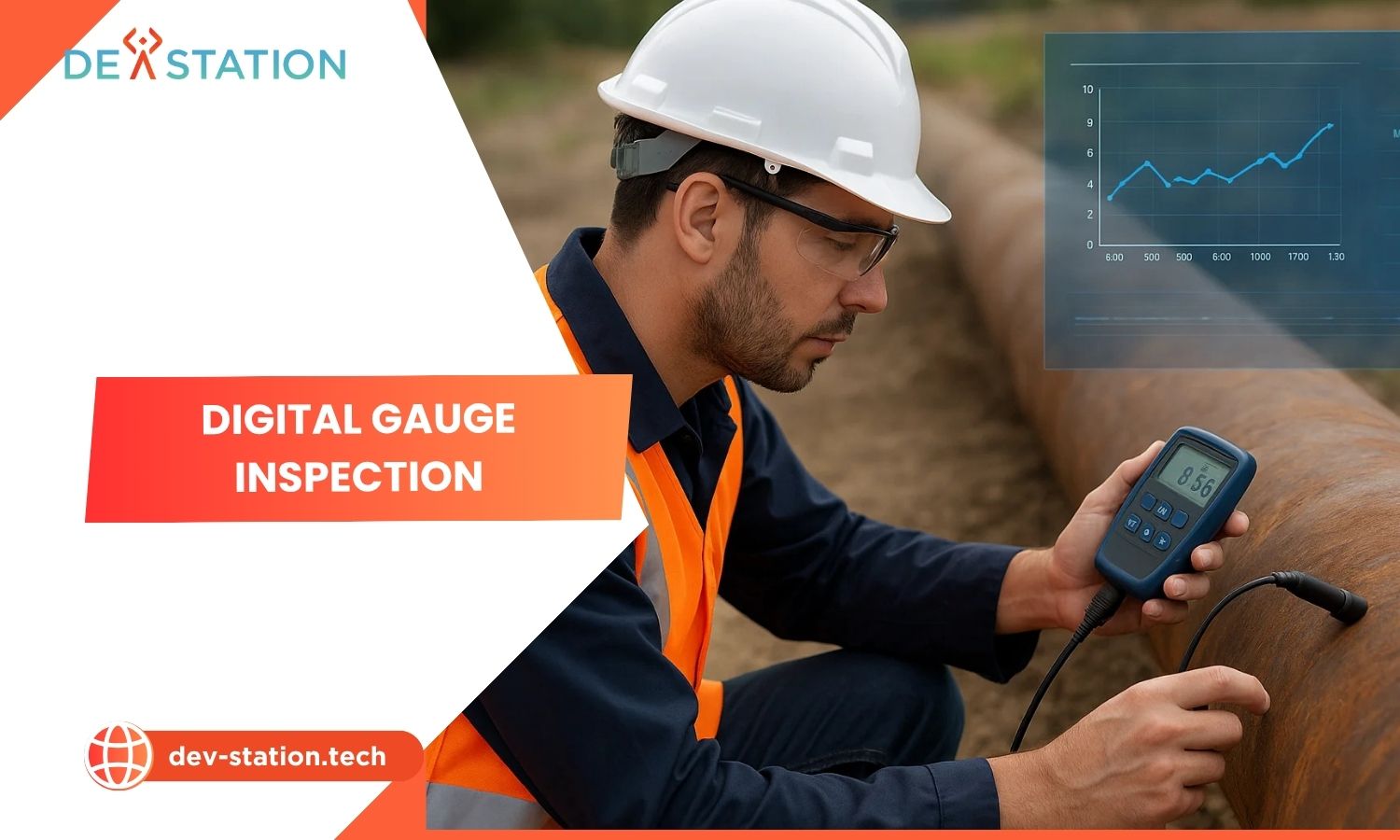
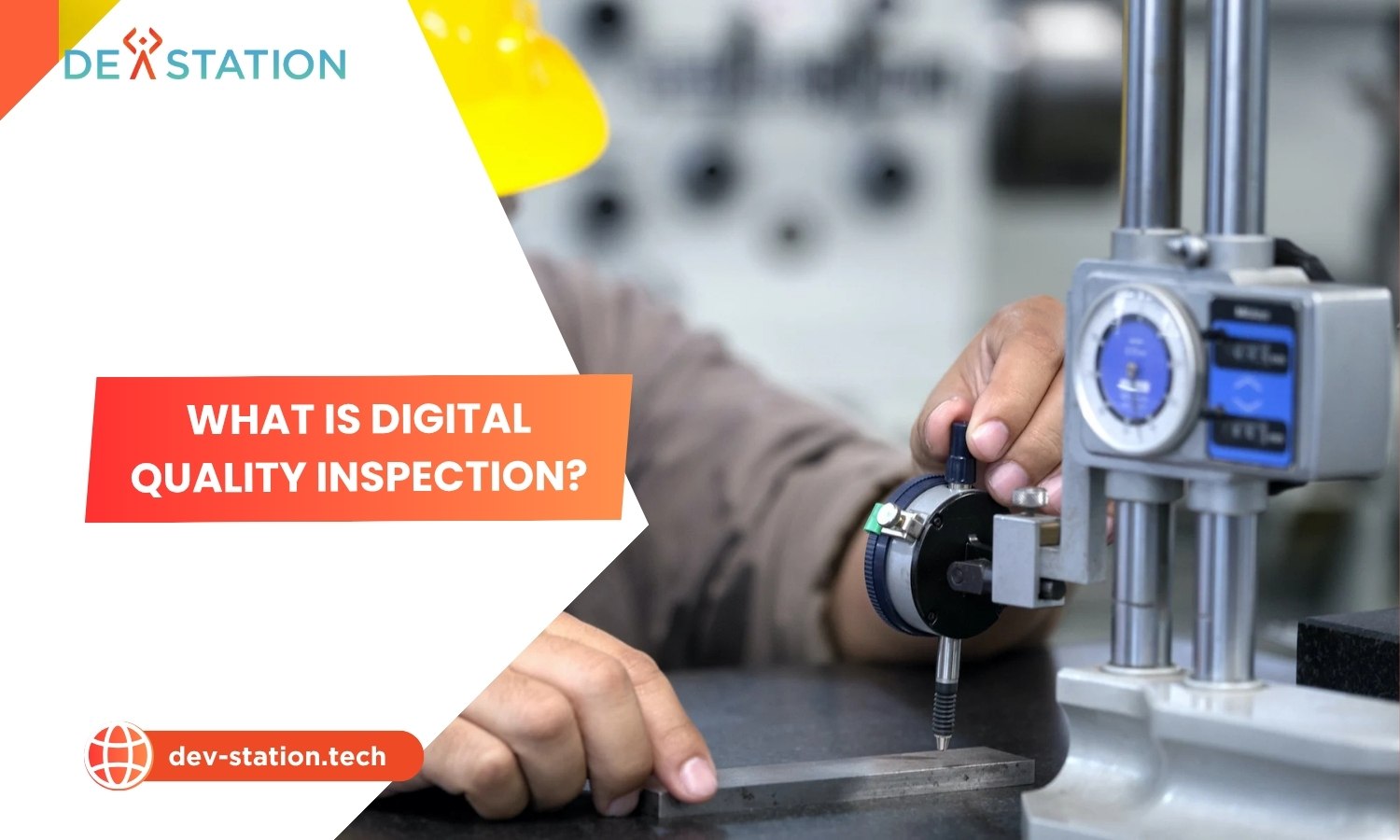
In the era of smart manufacturing, product quality is no longer a final checkpoint — it is a continuous, data-driven journey that happens in real time. Digital Quality Inspection has emerged as a quiet revolution, fundamentally changing how businesses monitor, verify, and guarantee the quality of every unit that rolls off the production line.
This article explores what digital quality inspection is, why digital quality inspection software is becoming the backbone of intelligent factories, and why AI inspection manufacturing is no longer a distant future — it is the competitive standard of today.
- 90% Defect reduction with AI vision systems
- 3× Faster than manual inspection
- $6.3B Global market size by 2028
What is Digital Quality Inspection?
Digital Quality Inspection (DQI) is the application of digital technologies — including artificial intelligence (AI), computer vision, the Internet of Things (IoT), and advanced data analytics — to automate and optimize product quality checking throughout the manufacturing process.
Rather than relying entirely on human inspectors whose attention inevitably drifts and whose judgment may vary from shift to shift, modern digital systems can analyze thousands of units per hour with consistent, measurable accuracy. This forms the technological foundation for the Zero-Defect Manufacturing model that leading global producers are actively pursuing.
At its core, digital quality inspection replaces subjective human judgment with objective, repeatable machine analysis — then layers intelligence on top of that analysis to continuously improve over time.
Core Components of Digital Quality Inspection Software
A production-grade digital quality inspection software platform integrates multiple layers of technology working in concert:
Why AI Inspection Manufacturing Is a Paradigm Shift?
Traditional quality control faces three structural problems: human fatigue, subjective judgment, and throughput bottlenecks. AI inspection manufacturing eliminates all three simultaneously.
Tireless consistency, 24 hours a day
AI vision systems operate continuously with identical precision regardless of the time of day, shift change, or production volume. There are no night-shift blind spots, no attention lapses after lunch — particularly critical in electronics, pharmaceuticals, and automotive manufacturing where a single overlooked flaw can trigger costly recalls.
Objective and fully auditable decisions
Every AI judgment is rooted in the same trained model and is fully logged. This eliminates the inspector-to-inspector variation that plagues manual QC, and provides a verifiable decision record that satisfies even the most rigorous regulatory frameworks.
Predictive defect prevention
Advanced AI inspection systems go beyond reactive detection. By analyzing patterns in historical inspection data, they identify early warning signals — subtle drift in machine output, tool wear patterns, humidity correlations — and alert operators before a defective batch ever materializes. This shift from detect and reject to predict and prevent is where the deepest ROI is found.
Measurable Benefits for Manufacturing Operations
- Reduced quality costs: Catching defects at the start of the line costs up to 10× less than handling customer returns or product recalls downstream.
- Higher throughput: Automated inspection removes the inspection bottleneck, increasing line throughput by 15–35% in documented deployments.
- Standards compliance: Digitized inspection data simplifies conformance with ISO 9001, IATF 16949, FDA 21 CFR Part 11, and sector-specific frameworks.
- Enhanced customer satisfaction: Fewer field defects mean fewer complaints, stronger brand trust, and longer customer lifetime value.
- Data-driven capital decisions: Quality analytics reveal which machines, materials, or suppliers generate the most defects — enabling smarter investment allocation.
- Workforce redeployment: Inspection personnel are freed from repetitive visual checks and can focus on higher-value process improvement tasks.
Industries Leading the Adoption Curve
While digital quality inspection software is applicable across virtually every manufacturing vertical, several sectors have documented the highest deployment rates and return on investment:
Electronics & Semiconductors
Automated optical inspection (AOI) of PCBs, solder joint analysis, and sub-millimeter component verification where human eyes simply cannot maintain the required resolution and speed at scale.
Automotive
Body panel inspection, safety-critical component verification (brake pads, airbag assemblies), and powertrain part measurement against tolerances that leave no margin for human approximation.
Pharmaceuticals & Food
Label integrity verification, foreign particle detection, fill-level consistency, and packaging seal inspection — all operating under the strictest hygiene and regulatory constraints.
Textile & Apparel
Fabric defect mapping, color uniformity grading, and dimensional accuracy checking across high-speed weaving and cutting lines where defect detection must happen at machine speed.
- Electronics
- Automotive
- Pharmaceuticals
- Food & Beverage
- Textile
- Aerospace
- Medical Devices
- Metal Fabrication
Frequently Asked Questions
Ready to Upgrade Your Quality Operations?
Dev Station Technology designs and deploys tailored digital quality inspection software solutions — from hardware selection and AI model training to MES/ERP integration and ongoing support.