Front ends in React and Angular
Dashboards and consoles, as on the dispatch console and the education platform.

Our front ends are React and Angular and our back end runtime is Node.js, all JavaScript underneath. We have no case study of plain JavaScript, and we say so.
Dashboards and consoles, as on the dispatch console and the education platform.
APIs beside .NET services, serving React and React Native clients.
Plain scripts moved to TypeScript when they grow past a few files.
Codebases left by another vendor, documented before anything changes.




From the core development team built for a German cloud-native company. The case names React, React Native and Node.js. It does not name a plain-JavaScript project, so that node is dashed.
The 16th edition of ECMA-262.
The 17th edition, which defines the general-purpose language.
Source: Ecma International, ECMA-262, checked 5 November 2026. The page gives the month and not an exact day.
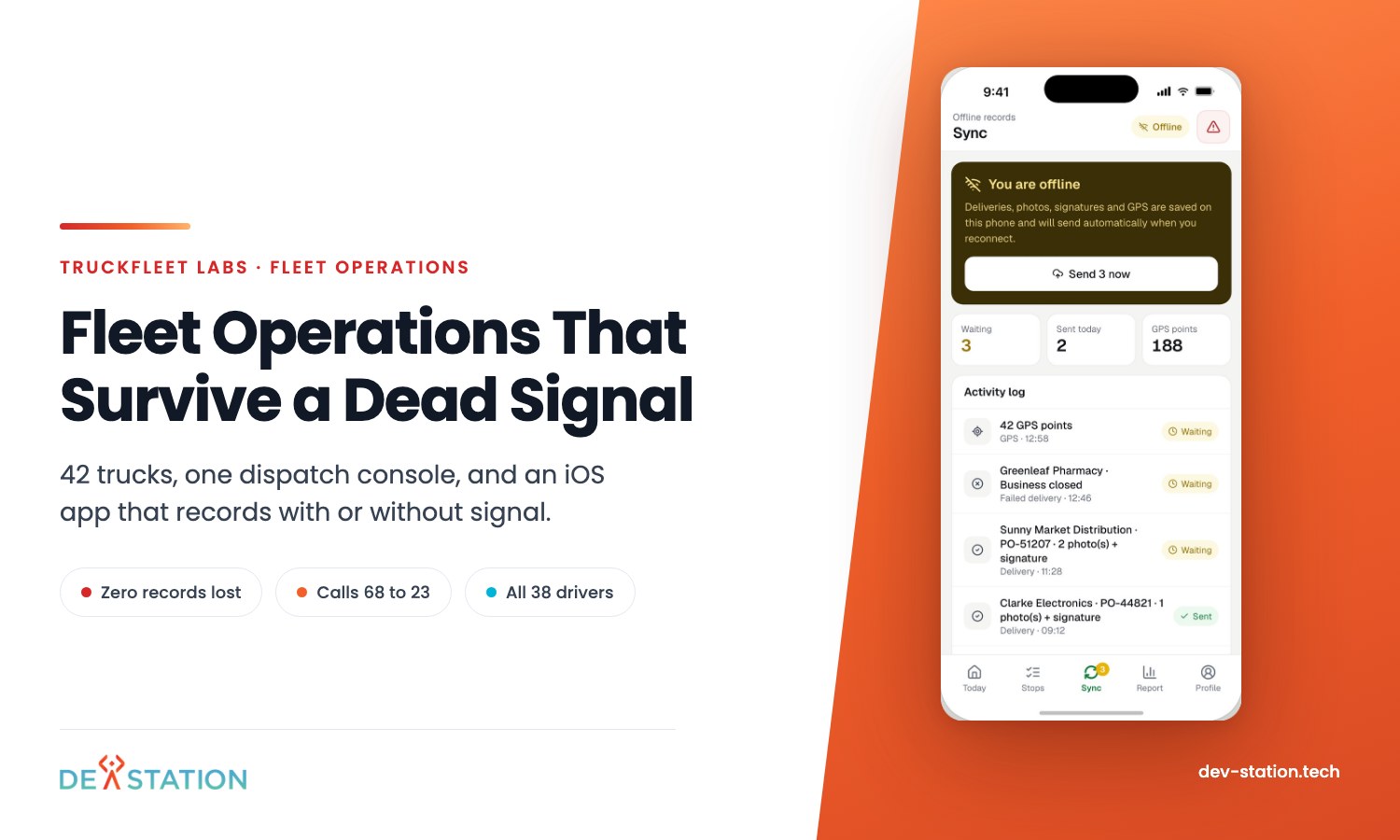
A React 18 and TypeScript dispatch console with sixteen live screens.

React and React Native front ends beside Node.js and .NET back ends.

An Angular front end on Azure, recovered from an abandoned codebase.
 TypeScriptReactNode.js
 Angular
 Vue.jsReact Native
ECMAScript 2026, the 17th edition of ECMA-262, published in June 2026. The 16th edition, ECMAScript 2025, came out in June 2025.
No. We say so on the first call and show the nearest work, which is React, Angular and Node.js builds.
Our published console is written in TypeScript. We say on the first call when plain JavaScript is enough and when typing pays for itself.
You do, from the first commit. Repositories and cloud accounts stay in your name.
Thirty minutes on your code, your runtime and your team. No sales pitch.